

Pelagic Search, depth and integrity in search
Brand Identity & Lifecycle · 2026Client
Pelagic Search
Year
2026
Sector
Retained executive search
Industry
B2BProject direction
Brand Strategy, Logo, Visual Identity, Design System, Motion, Applications, Customer Journey, Lifecycle Automation
Pelagic Search is a retained search firm that partners with high-growth companies to unlock impact through talent. It works across supply chain, operations, and commercial functions, and it competes on trust, integrity, and transparency rather than on volume.
The name is already the positioning. Pelagic means the open sea — vast, untapped, full of potential — and it describes the method: navigating the professional landscape to find exceptional people beyond the obvious shortlist.
We built the identity and the system that carries it, then re-engineered the client journey underneath — the onboarding, the health signals, and the intervention playbooks that decide whether a search firm keeps the relationships it wins.
The Problem
Distinct in a category that all looks the same
Executive search is corporate, competitive, and visually interchangeable. Pelagic Search needed a brand that could speak to private-sector and smaller-enterprise clients without sounding overly corporate or generic — and it needed the experience behind that brand to hold up once a client said yes.
Inconsistent Onboarding
- 6 different onboarding paths with no governance
- 14 day average time-to-first-value
- 48% of accounts stalled before activation
Reactive Support Model
- Health scoring relied on quarterly surveys
- Playbooks triggered only after churn signals
- Client success coaching was entirely manual
Fragmented Collaboration
- Delivery, marketing, and success teams in silos
- No shared journey map or success KPIs
- Insights trapped inside support transcripts
Pre-Optimization Drop-off Funnel
The Solution
A mark plotted like a chart of open water
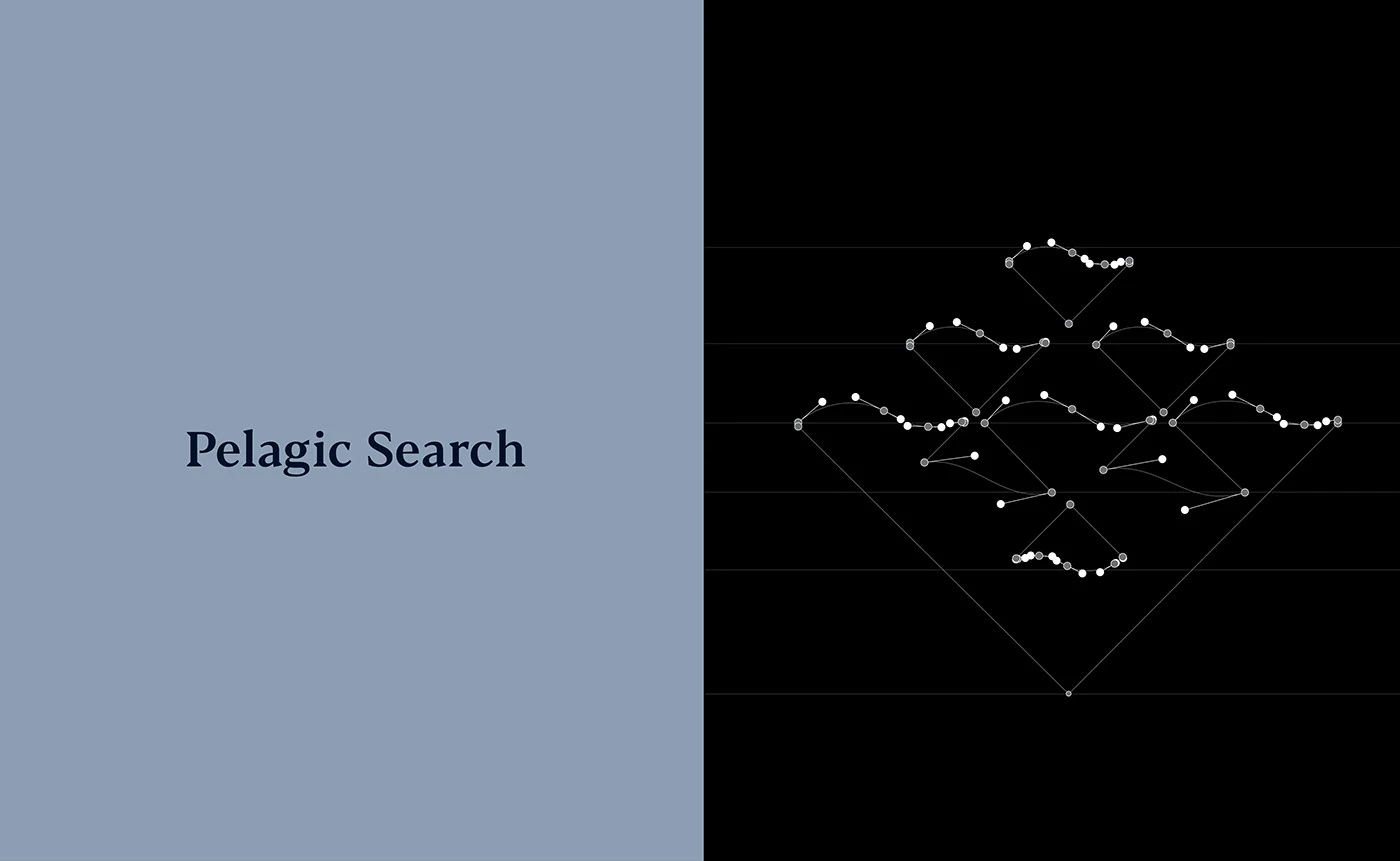
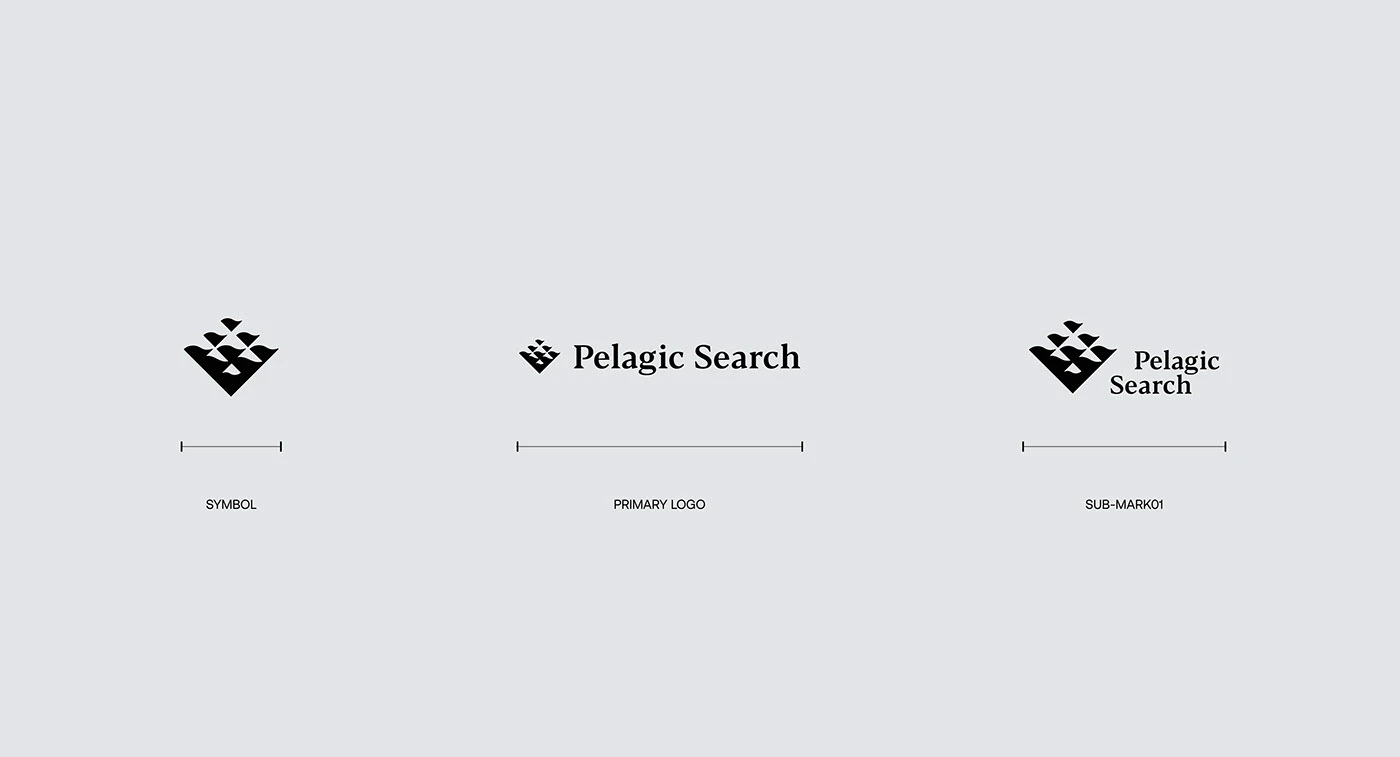
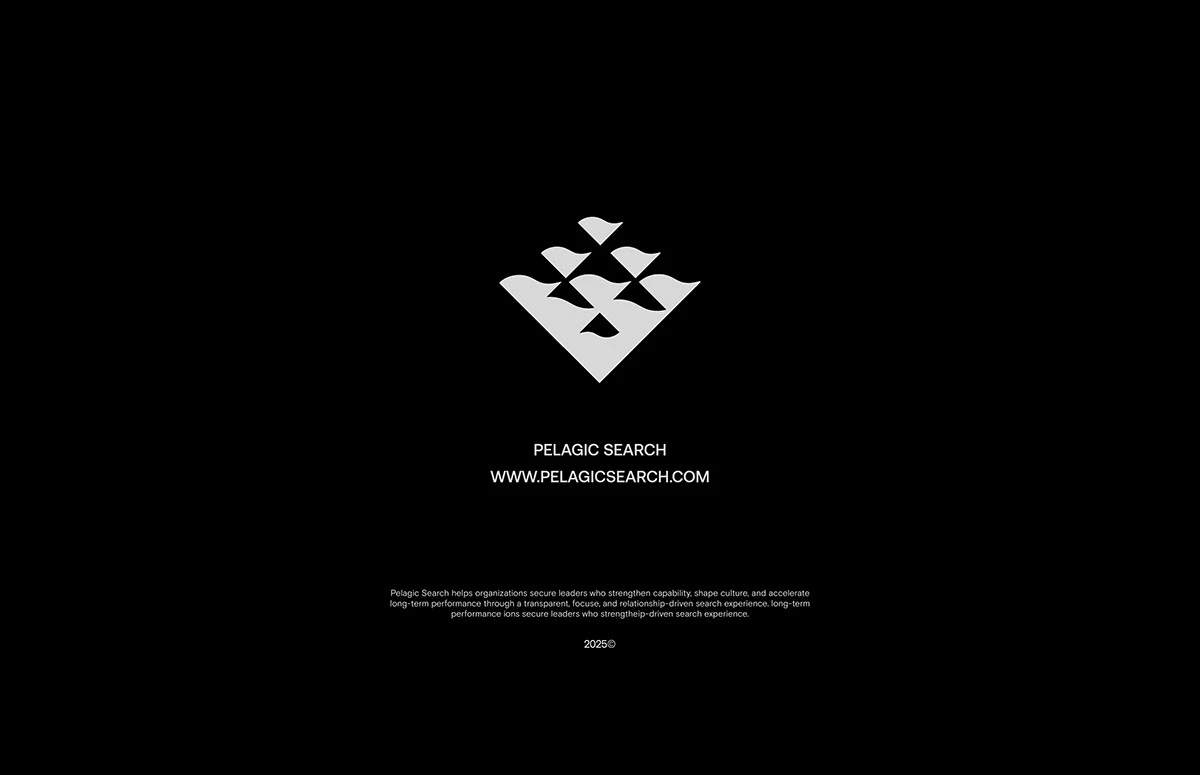
The identity is built on the idea the name already carries: exceptional talent, identified across a wide and open landscape. The symbol is a triangle assembled from repeating wave forms — plotted from points on a horizon grid, so it reads as sails, as swell, and as a sounding taken at depth. Modern and minimal inside a traditionally formal sector, and deliberately warmer than the category it competes in.
The System
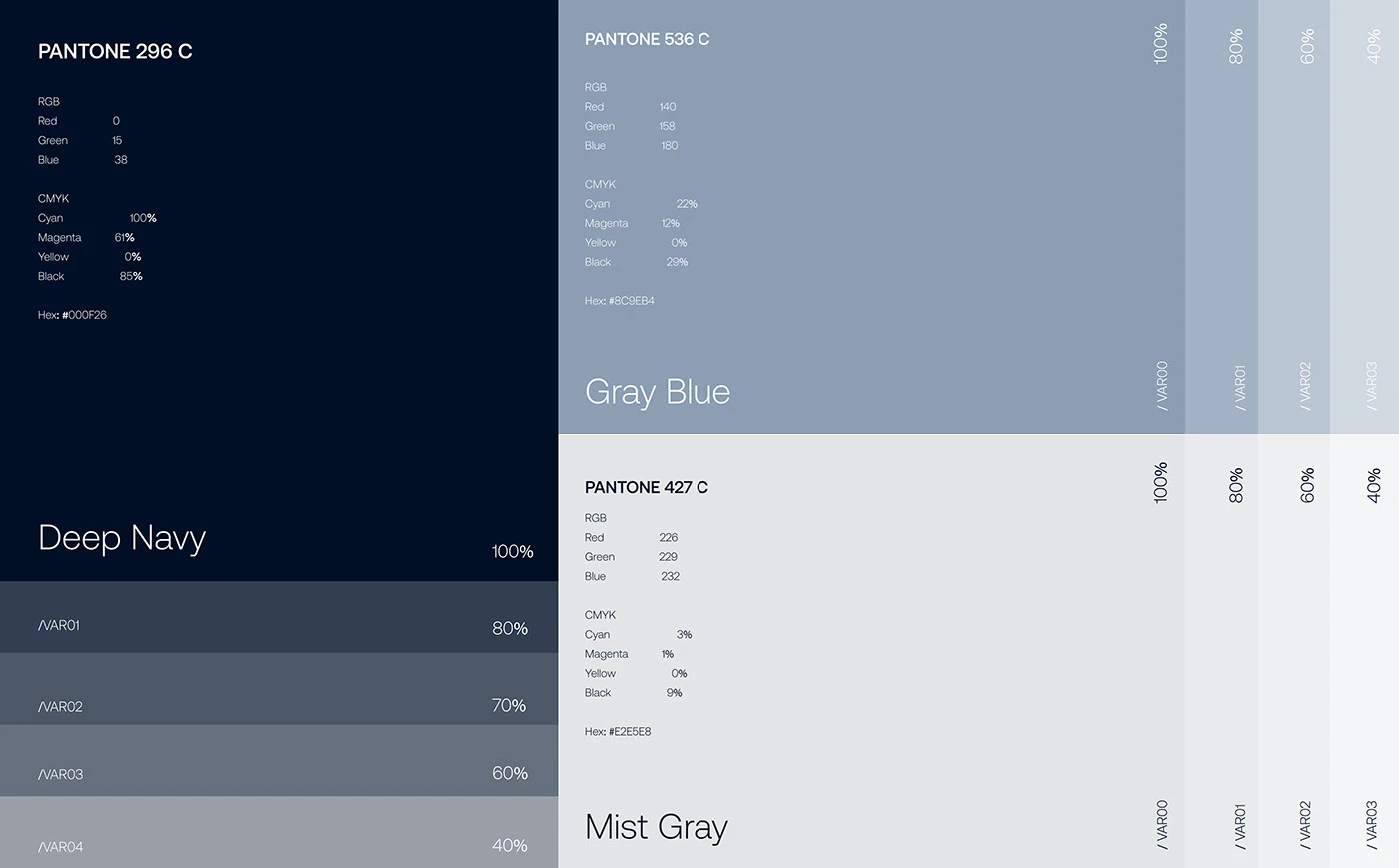
Three colours, taken from open water
A near-black navy for depth, a gray blue for the surface, a mist gray for air. Each ships with a tint ladder rather than a second hue, so the system has range everywhere it lands without ever introducing a colour that wasn't in the sea it came from.
Typography
One working voice, one signature voice
Aeonik — a neo-grotesque on a geometric skeleton, from Cotype Foundry — carries everything operational: headlines, decks, signage, interface. The serif is held back for the wordmark and for the single italicised word that lifts a headline. Used that sparingly, it still means something when it appears.
Applications
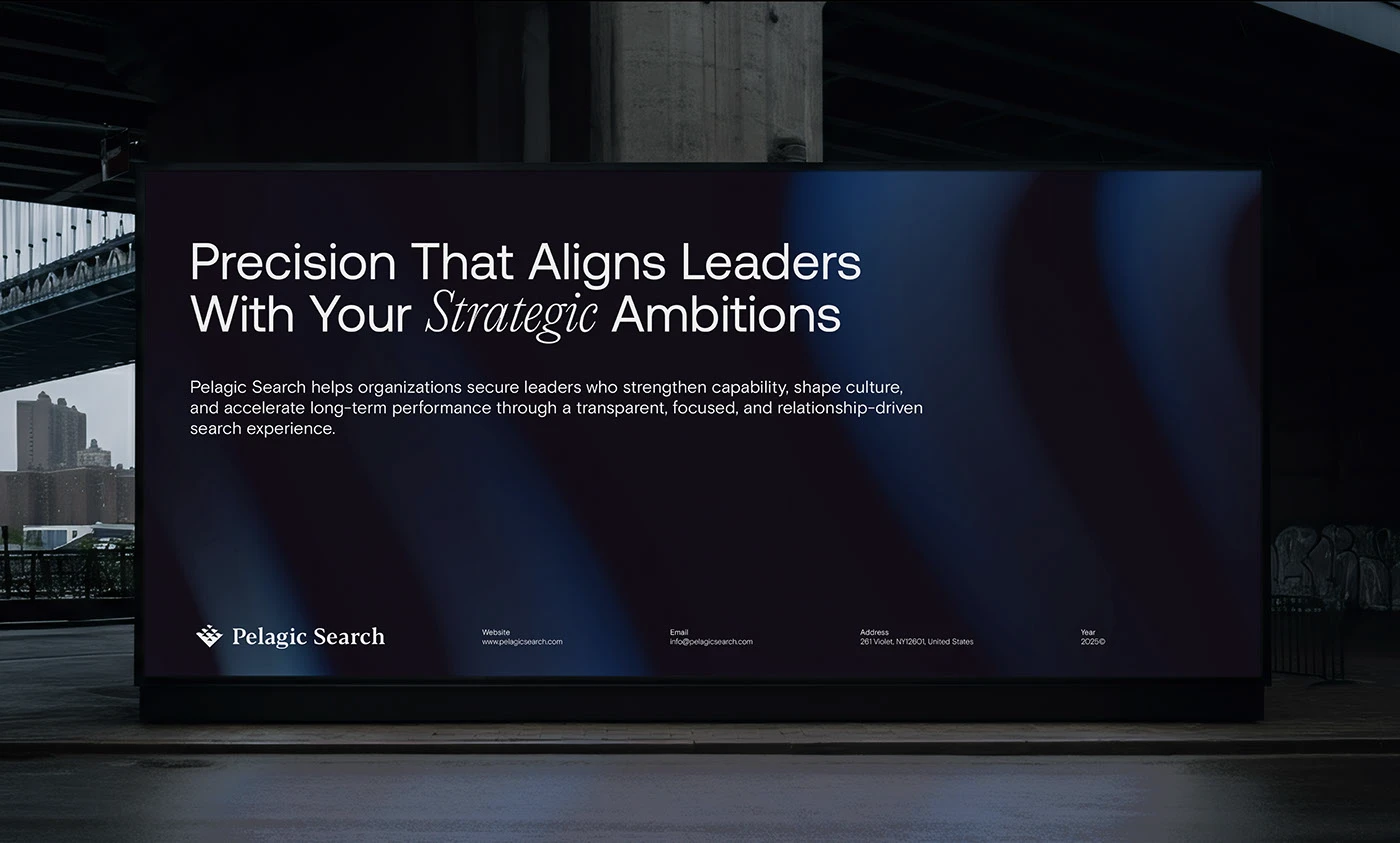
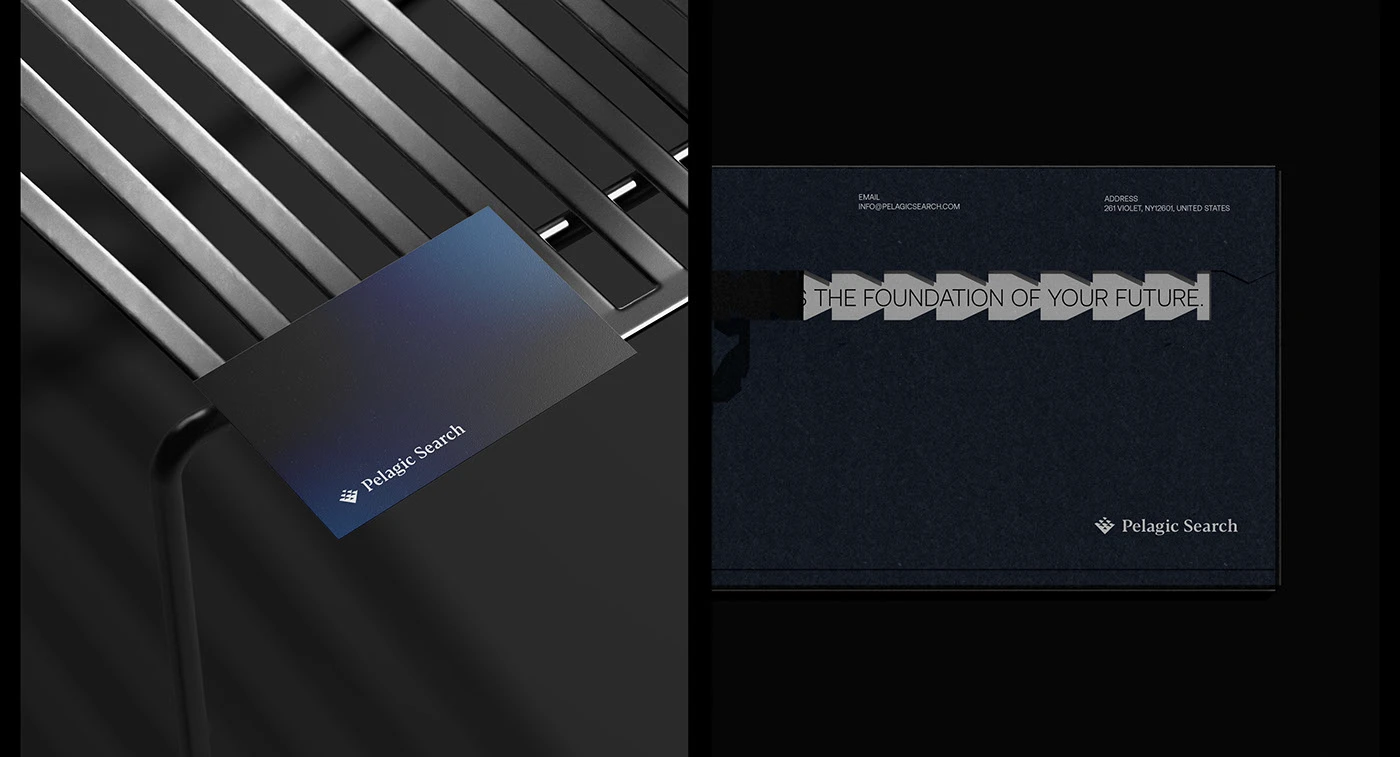
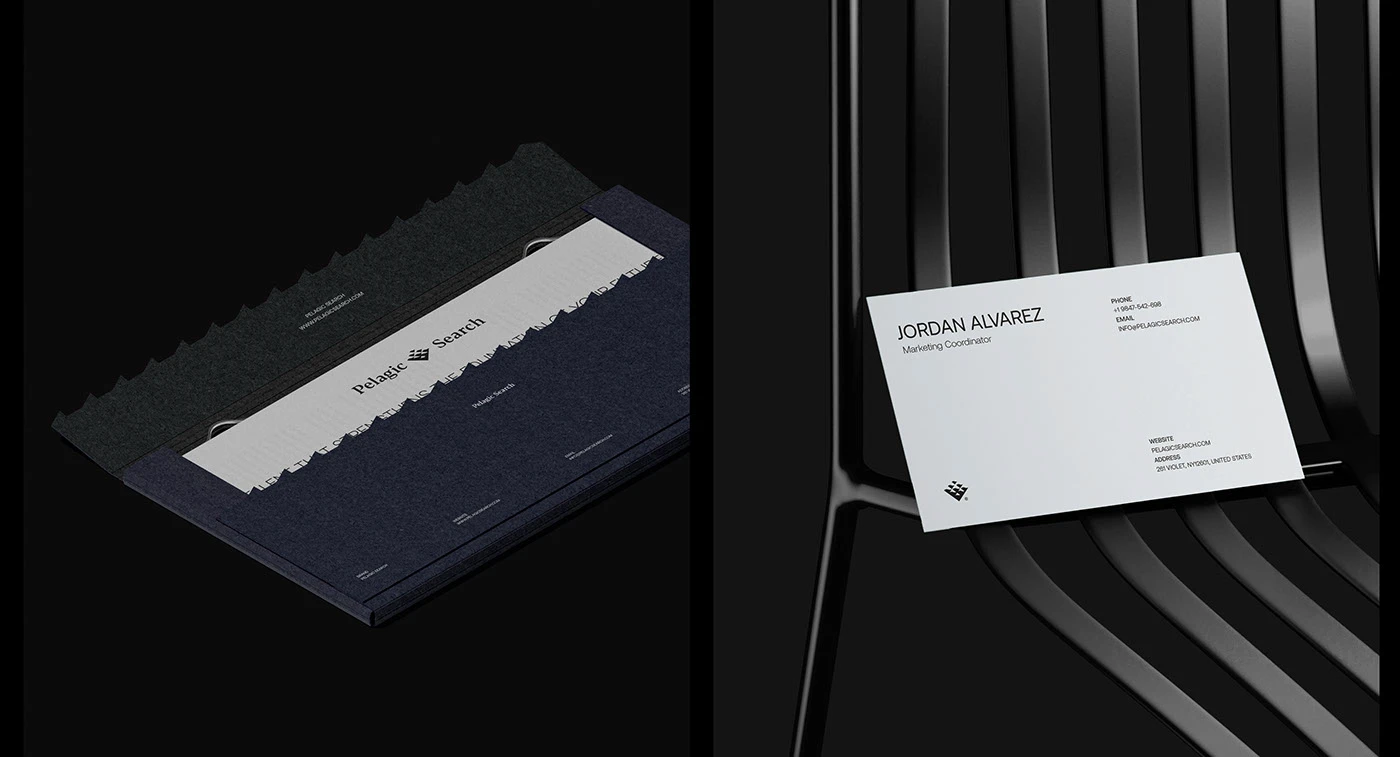
Built to survive the places search firms are actually seen
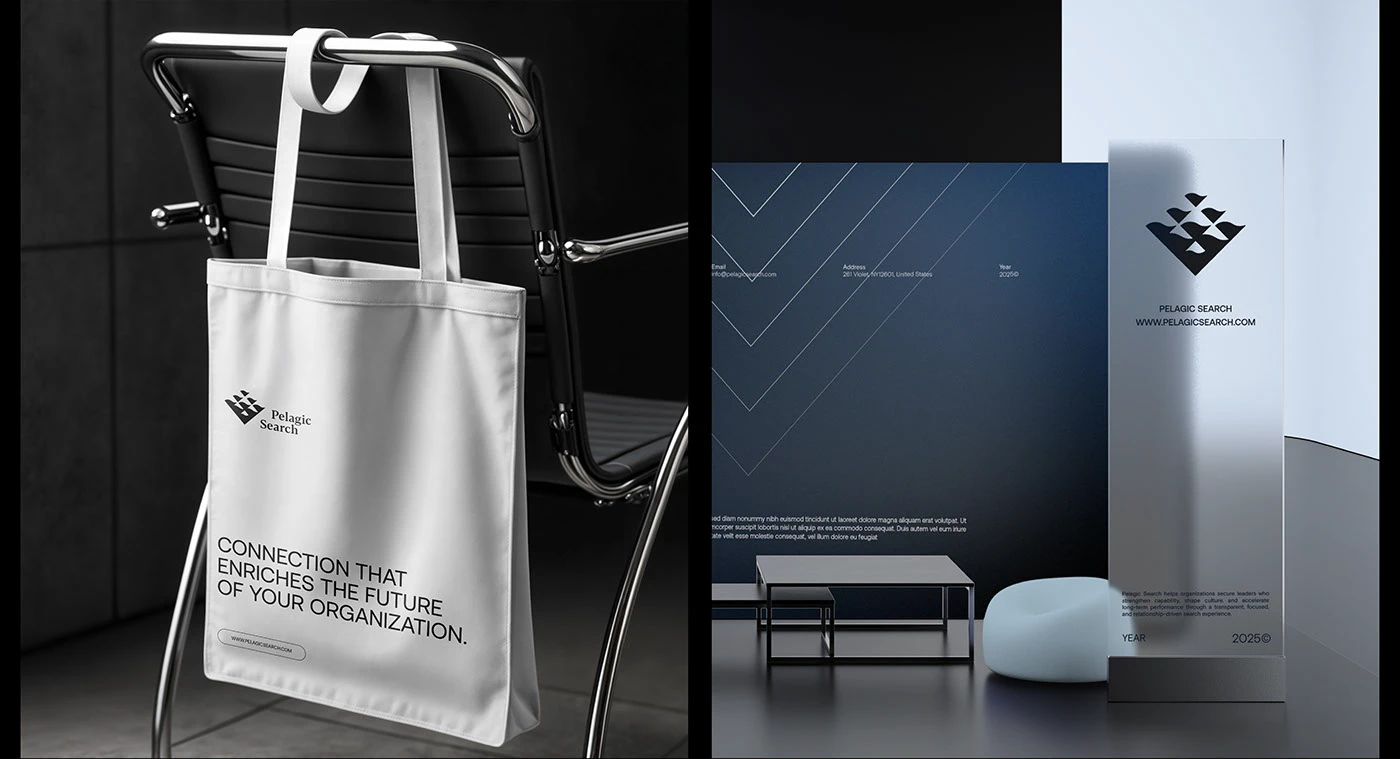
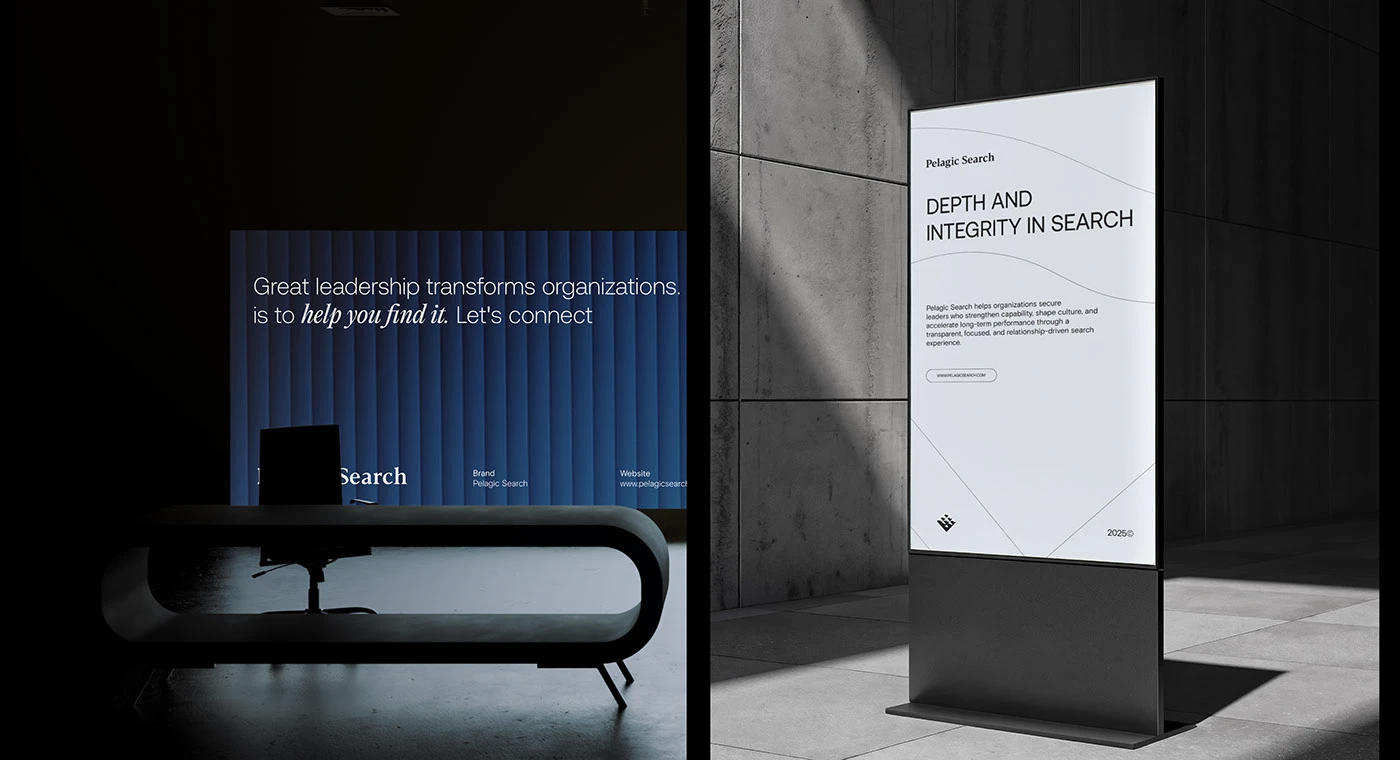
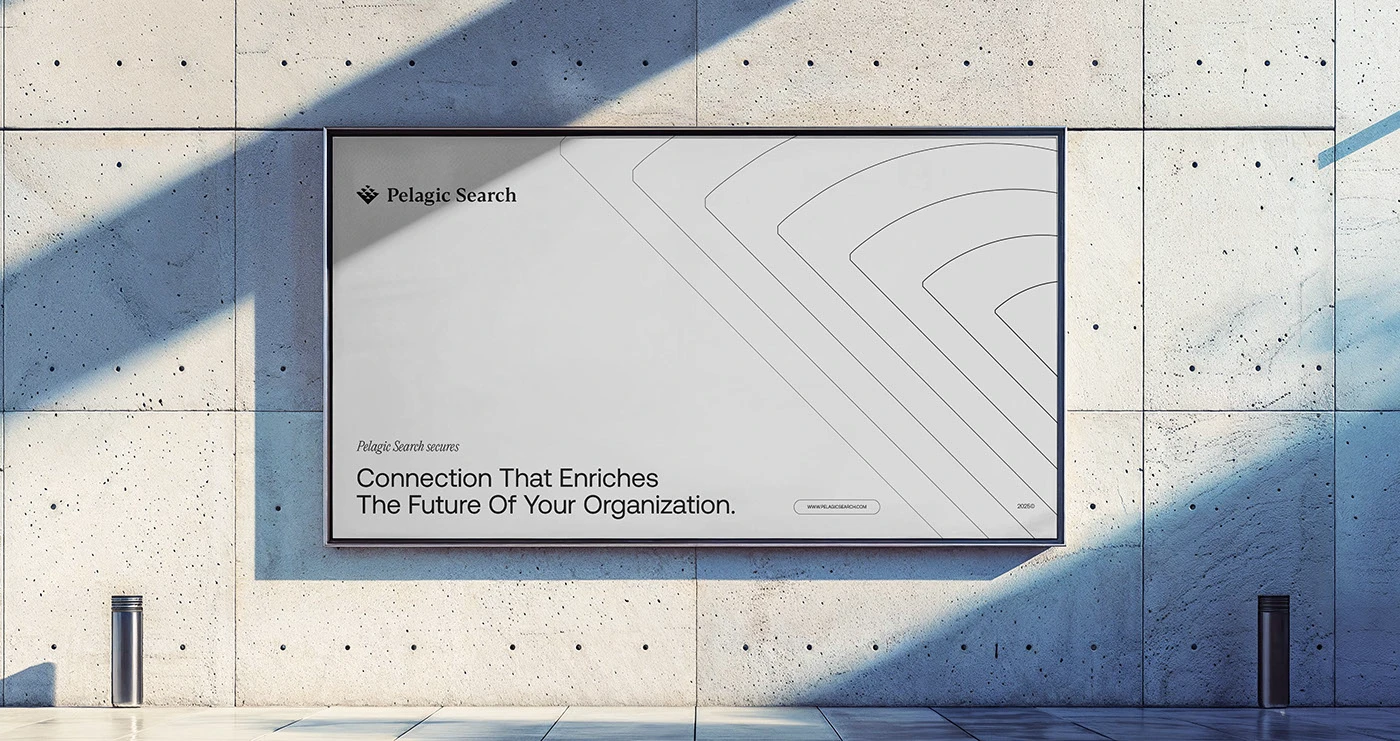
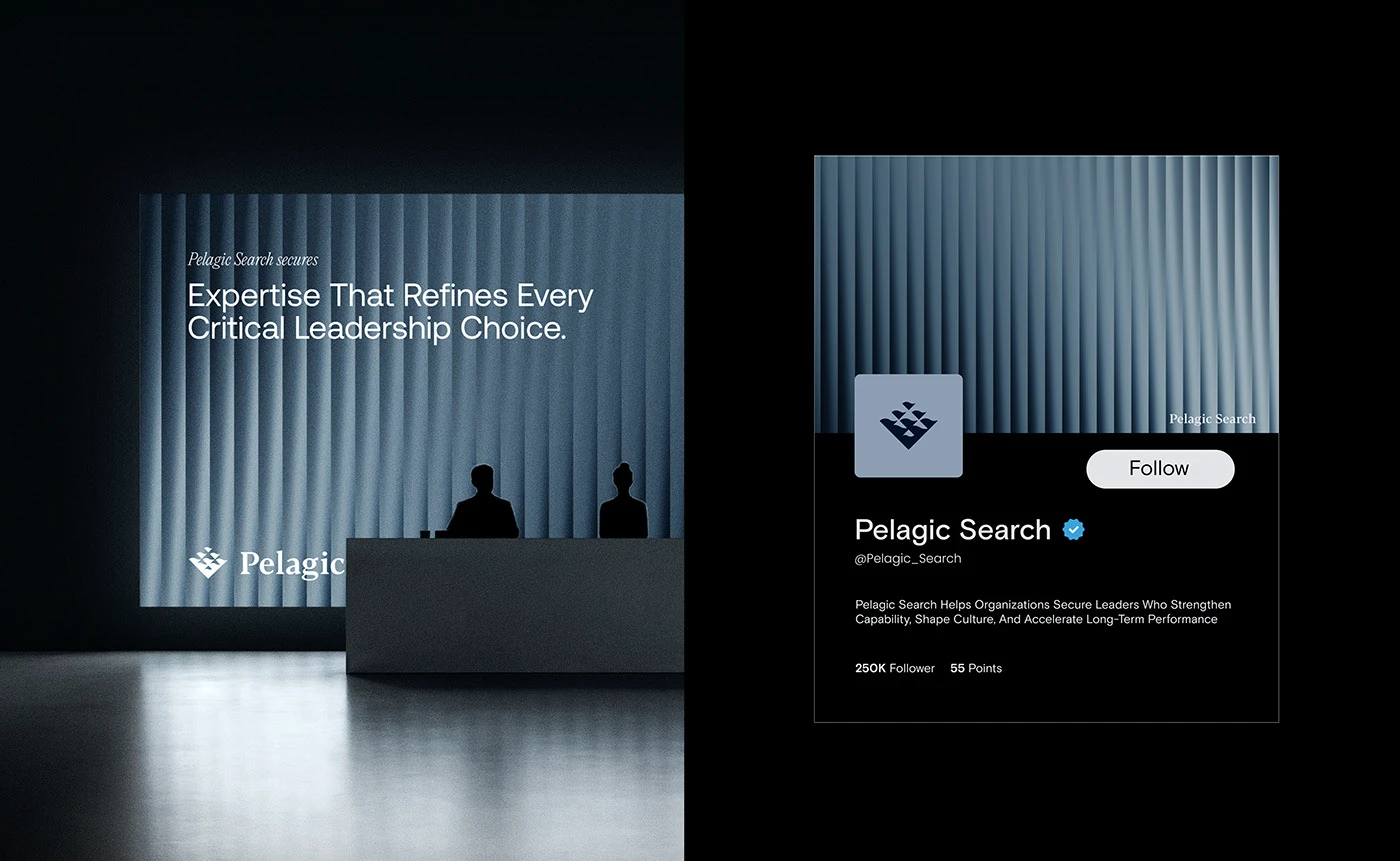
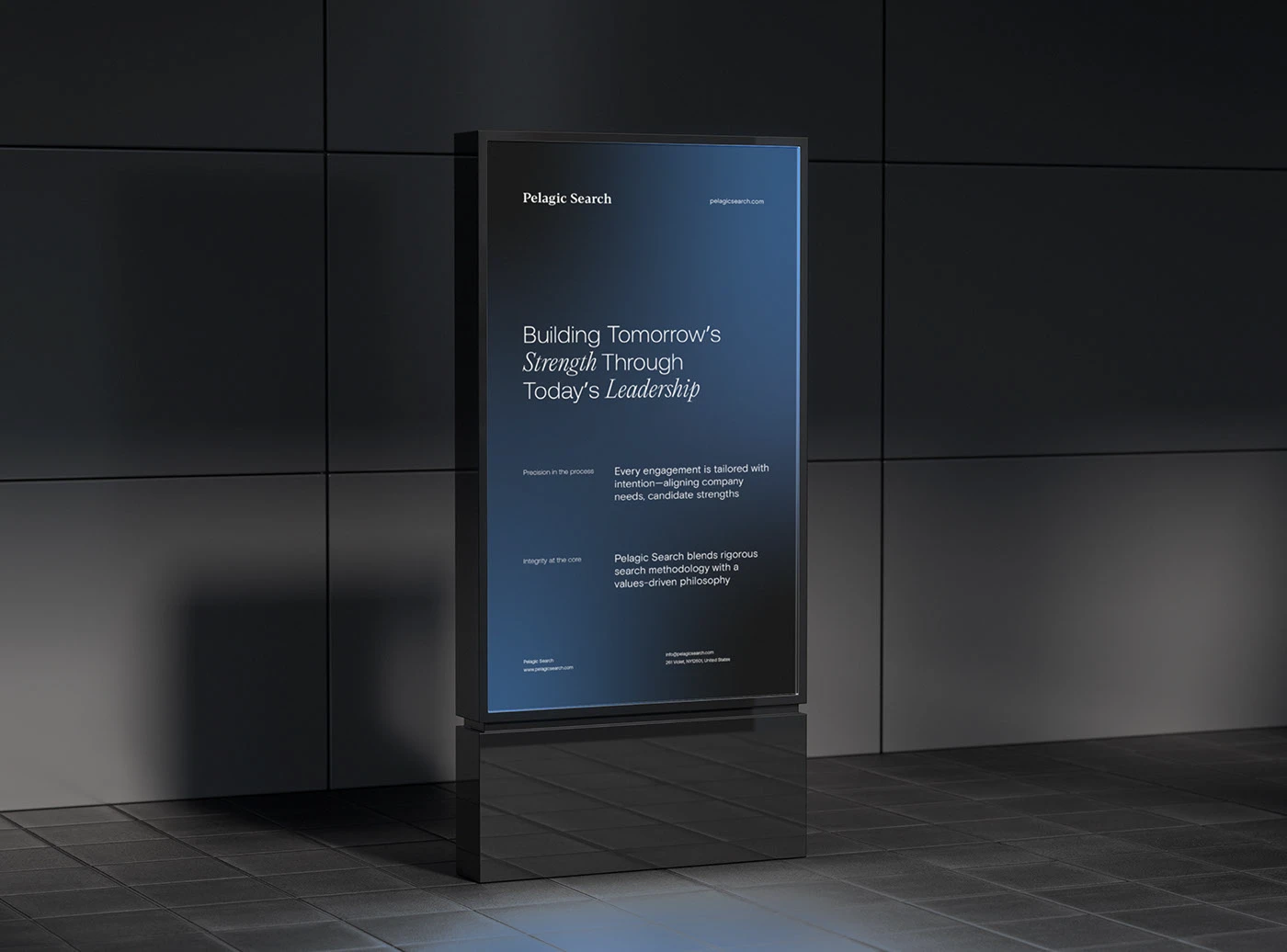
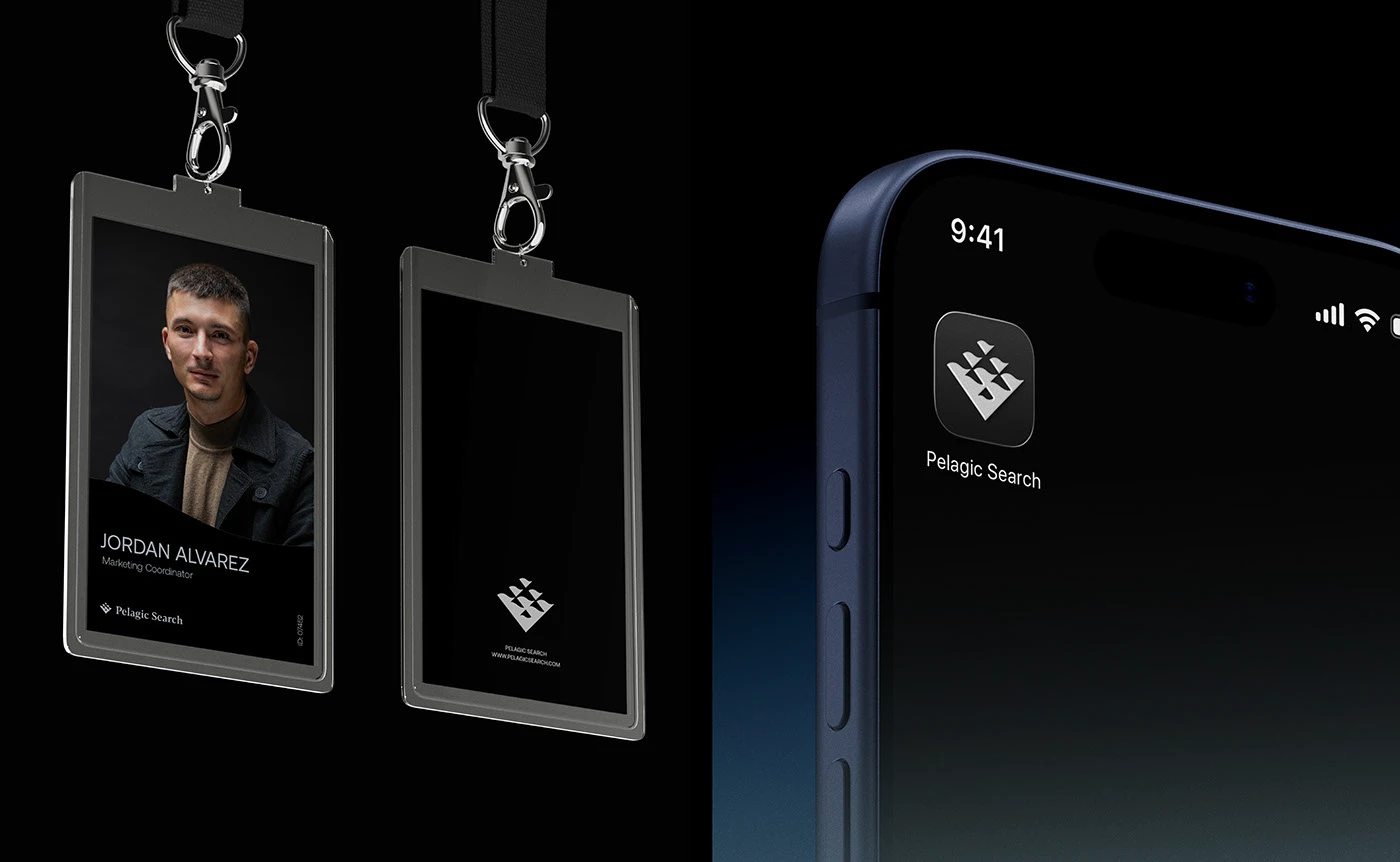
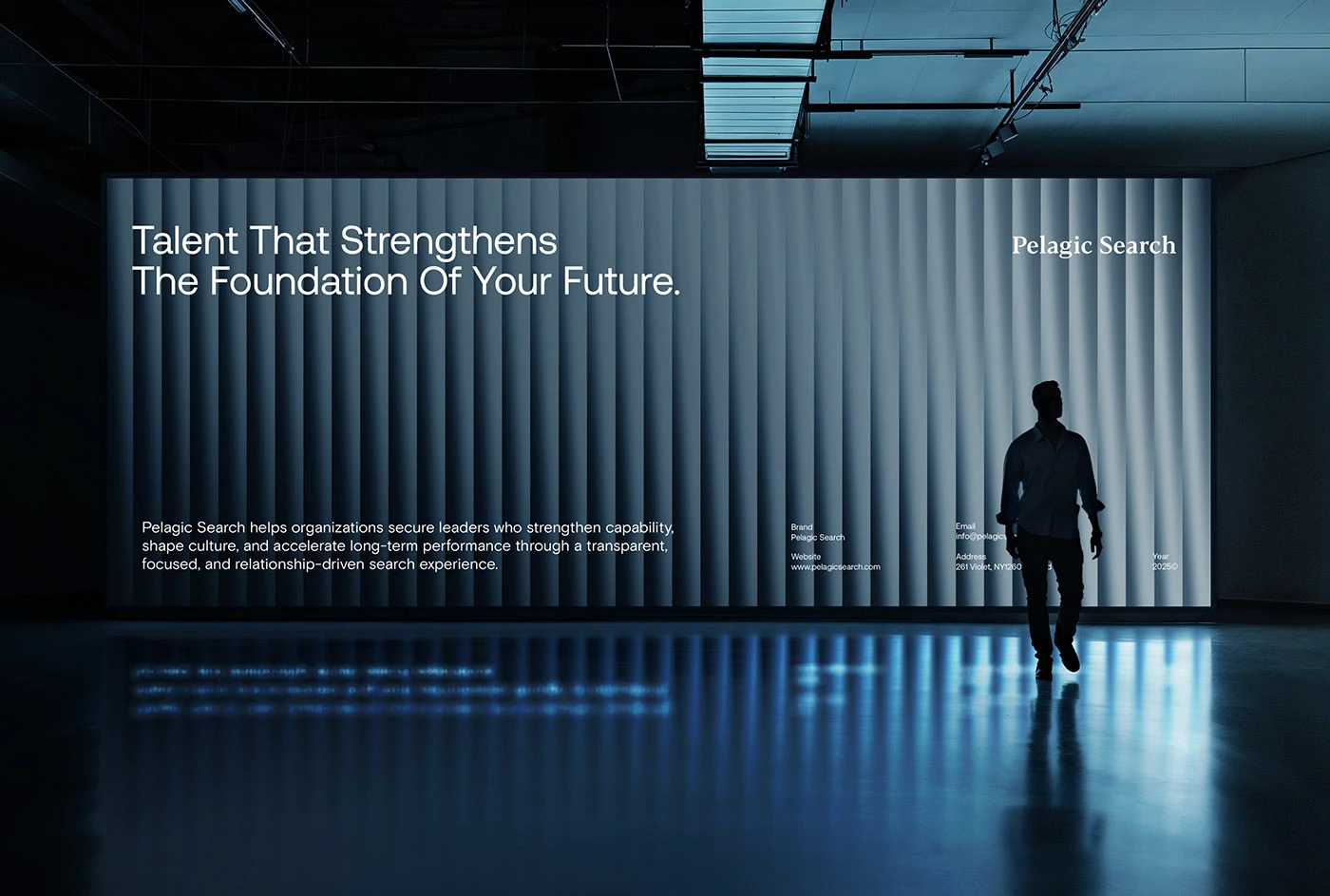
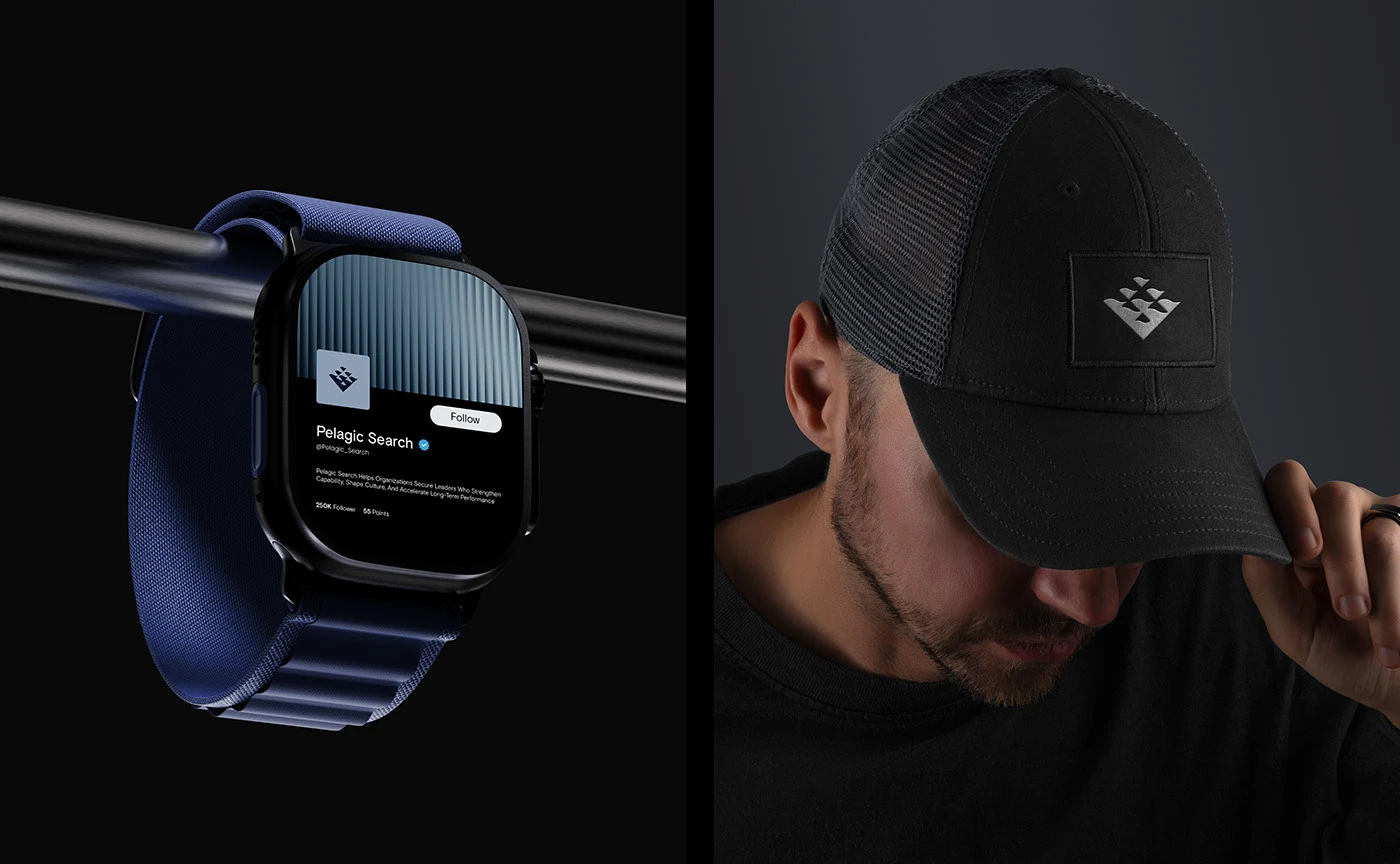
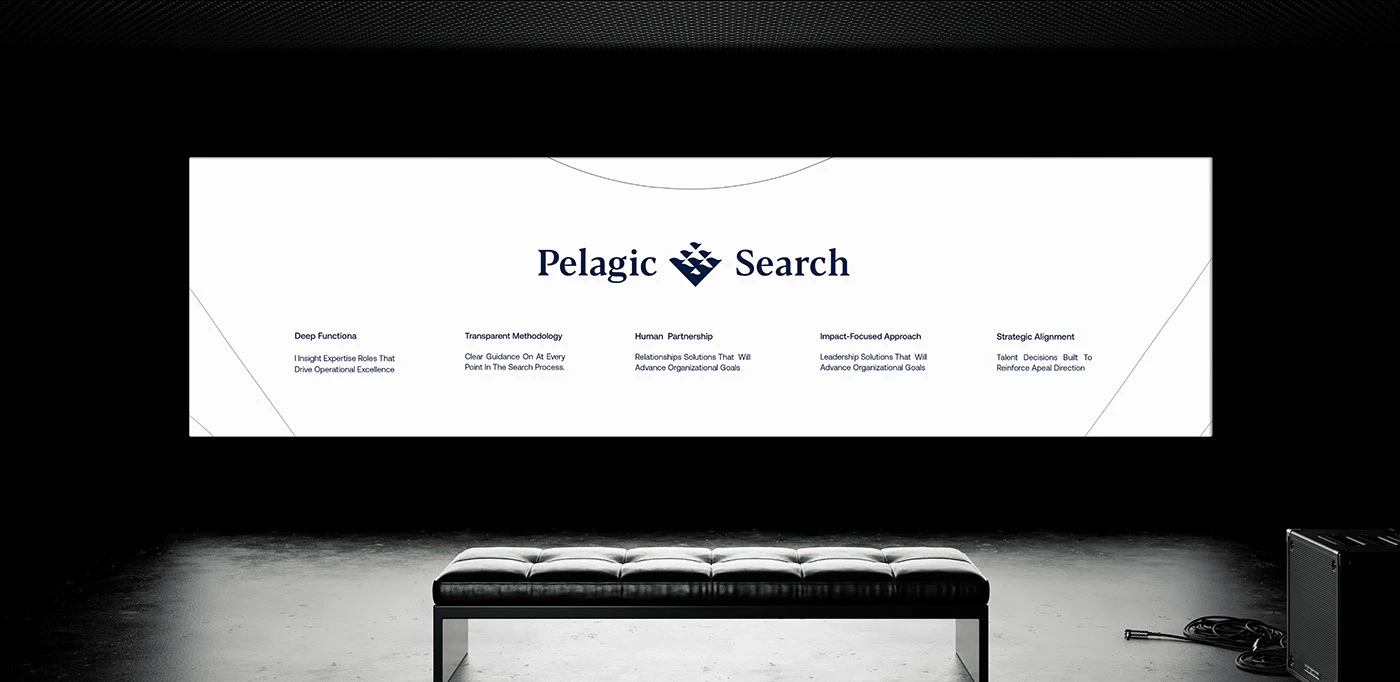
Airport walls, lobby screens, transit lightboxes, a lanyard at a conference. The same grid, the same two type voices, one line of copy each. Nothing on any surface that doesn’t earn the space.

Methodology
The journey underneath the brand
A new identity wins the first meeting. Keeping the relationship is a different problem — so we built a three-pillar framework that turned reactive account management into a proactive, signal-driven system.
Journey Intelligence
Mapped the end-to-end journey with voice-of-client research, quantified drop-off points, and aligned teams on a single source of truth.
Experience Design
Built personalized onboarding paths, lifecycle communications, and client-facing education for each segment.
Proactive Success Ops
Automated health scoring, intervention playbooks, and cross-functional alerts to keep teams ahead of risk.
Implementation Timeline
Discovery & Diagnosis
Weeks 1–3Analyzed engagement data, support transcripts, and conducted 60 qualitative interviews to expose journey friction and sentiment trends. Mapped all 6 onboarding paths and quantified the cost of inconsistency.
Experience Blueprints
Weeks 4–7Designed segmented onboarding flows, in-journey prompts, and communication cadences aligned to client goals. Created persona-specific playbooks and messaging frameworks for each lifecycle stage.
Activation Build
Weeks 8–12Implemented 5 personalized onboarding flows, 12 automated touchpoints, and piped engagement signals into the CRM for real-time coaching. Built signal-based health scoring combining usage, sentiment, and support velocity.
Optimization Loops
Weeks 13–18Established weekly journey reviews, predictive churn scoring, and executive dashboards tying experience metrics to revenue. Created feedback loops that close within 24 hours.
Deep Dive
Journey Architecture
We redesigned the entire client lifecycle — from first engagement to advocacy — with personalized paths, signal-based automation, and cross-functional alignment.
Lifecycle Blueprint
Onboarding
Guided setup tailored to role-based objectives, with milestone tracking and a walkthrough of the search process.
Adoption
Lifecycle campaigns encouraging deeper engagement, triggered by activity and intent signals rather than a calendar.
Expansion
Lifecycle scoring surfaced readiness for additional mandates and routed opportunities straight to the search leads.
Advocacy
Automated NPS follow-ups and champion enablement nurtured case studies, reviews, and reference programs.
Signal-Based Automations
Engagement, support, and billing signals feed one health model that elevates the right playbook every time — forecasting churn risk 30 days earlier than the quarterly survey it replaced.
Health Scoring
Combined engagement, sentiment, and support velocity to forecast churn risk 30 days earlier
Automated Playbooks
Triggered 12 lifecycle touchpoints spanning welcome series, value check-ins, QBR prep, and renewal nudges
Team Alerts
Routed high-severity signals directly into Slack with context, owner, and next-best action
Signal Library
Tactical Execution
Conducted comprehensive client journey mapping to surface qualitative pain points and quantify their impact on churn across every touchpoint.
Created 5 personalized onboarding flows aligned to client segments, roles, and desired outcomes — replacing the previous 6 ungoverned paths.
Implemented 12 automated client success touchpoints across onboarding, adoption, expansion, and renewal stages with signal-based triggering.
Developed a proactive intervention system that prioritized at-risk accounts and surfaced recommended actions to account leads instantly via Slack.
Established cross-functional collaboration rituals connecting delivery, marketing, and support around shared journey KPIs and weekly review cadences.
Outcomes
Impact & Results
Within 18 weeks, the re-engineered journey moved every key experience metric — from onboarding completion to churn, satisfaction, and expansion pipeline.
Before vs After Optimization
Before
After
Additional Impact Metrics
Key Learning
A brand sets the expectation. The journey is what has to meet it.
The identity gave Pelagic Search a way to look as considered as its method. But when every team owns a slice of the relationship, clients feel the seams — and no amount of art direction covers that. A shared journey model, clear swimlanes, and real-time feedback loops closed the gaps, so the experience finally reads the way the brand promises it will.
The Engagement
What we did for Pelagic Search
Results Disclosure: Results described in this case study are specific to this client engagement and are not guaranteed. Individual results will vary based on budget, industry, competitive landscape, market conditions, execution, and other factors. Past performance does not guarantee future results. Machina makes no representation that any client will achieve similar outcomes.