

Moniveo, a funnel for the company that builds funnels
Web Design & Automation · 2026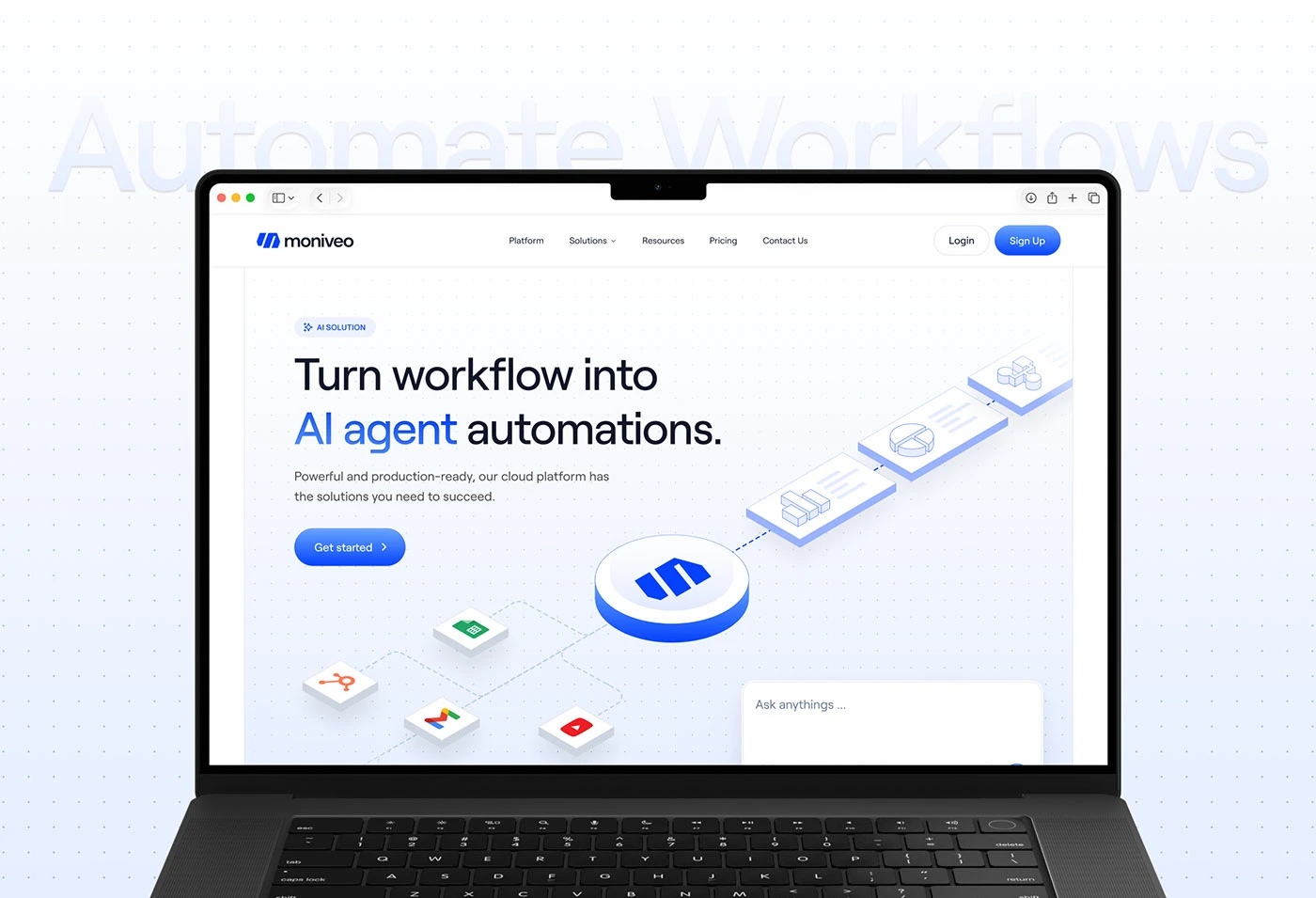
Client
Moniveo
Year
2026
Sector
AI workflow automation platform
Industry
AIScope
Web Design, UI/UX, Design System, Information Architecture, Marketing Automation, Lead Scoring, CRM Integration
Design Team
Dipa Inhouse
Moniveo turns manual workflows into AI agents. Its whole promise is that the repetitive parts of a business — routing, enrichment, follow-up, ticket triage — stop needing a person. It sells that promise to operations teams, and it sells it well.
Its own pipeline was the exception. Inbound leads sat 48 hours before anyone followed up, and the team spent six-plus hours a day sorting, enriching, and copying records by hand — the exact work the product exists to abolish. A prospect could read “automate your workflows” on the homepage, fill in the form, and wait two days for a human to get round to it.
So the engagement had two halves that were really one argument. We built the funnel — the marketing site, the design system behind it, and every page from homepage to pricing to login. Then we automated the funnel, with eight workflows that score, route, and answer inbound leads without anyone touching them. The company that automates funnels now runs one.
The site had to carry that credibility on sight. An automation platform whose own contact form feels slow has already lost the argument, so response time became a design constraint, not a follow-up project.
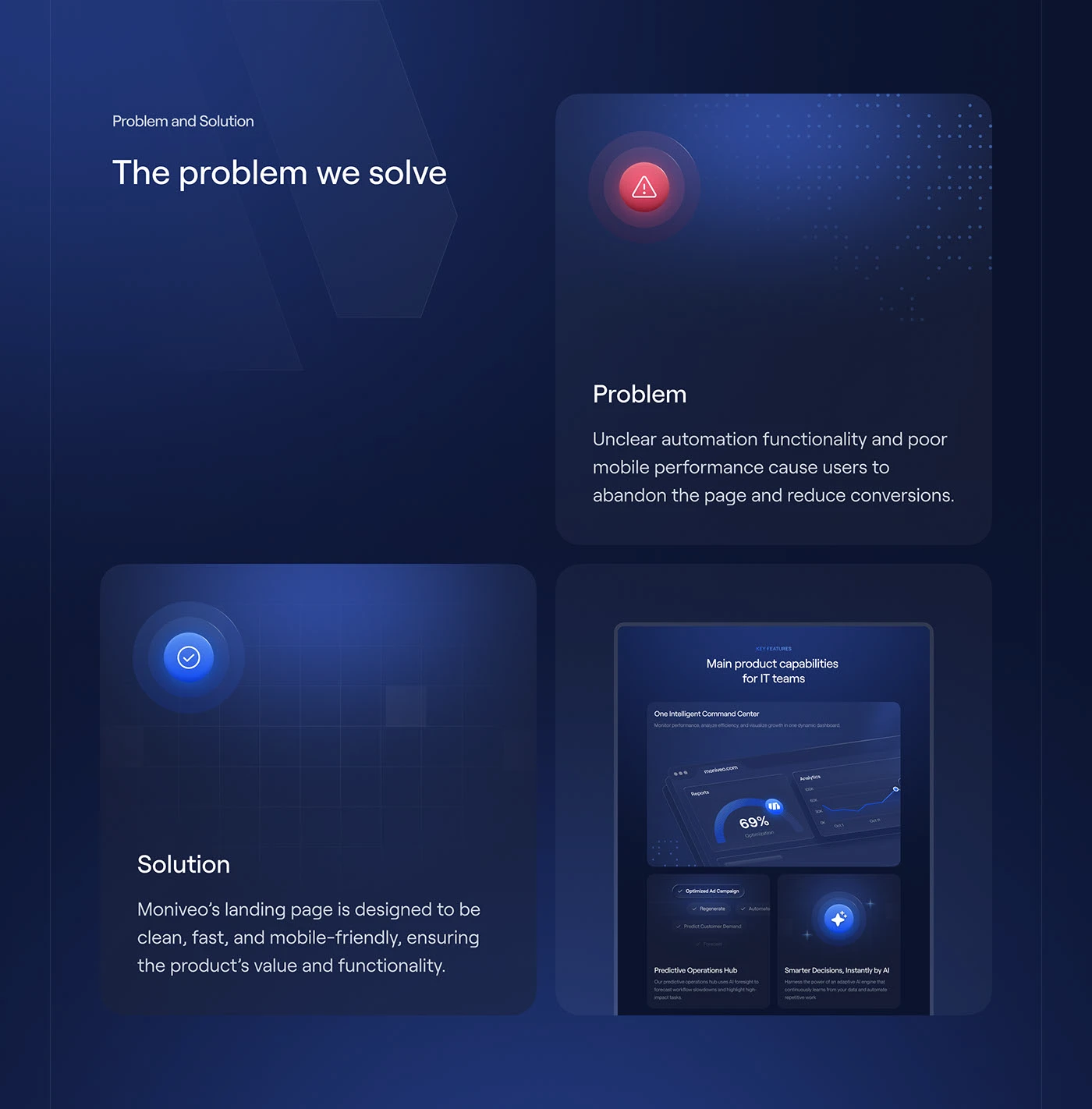
The Problem
Selling automation while doing it by hand
Moniveo's team spent more time qualifying leads than talking to them, and the best prospects went cold in the queue. Nothing about the pipeline matched what the product promised.
Inefficient Processes
- 6+ hrsdaily on manual lead qualification
- 48 hrsaverage response time to new leads
- 35%lead qualification accuracy
Poor Lead Management
- Inconsistent follow-up timing and messaging
- No automated lead scoring or prioritization
- High-value prospects falling through cracks
- Sales team wasting time on unqualified leads
- No visibility into lead engagement behavior
Lead Response Time: Before vs After
Positioning
Say what it does before you say what it is
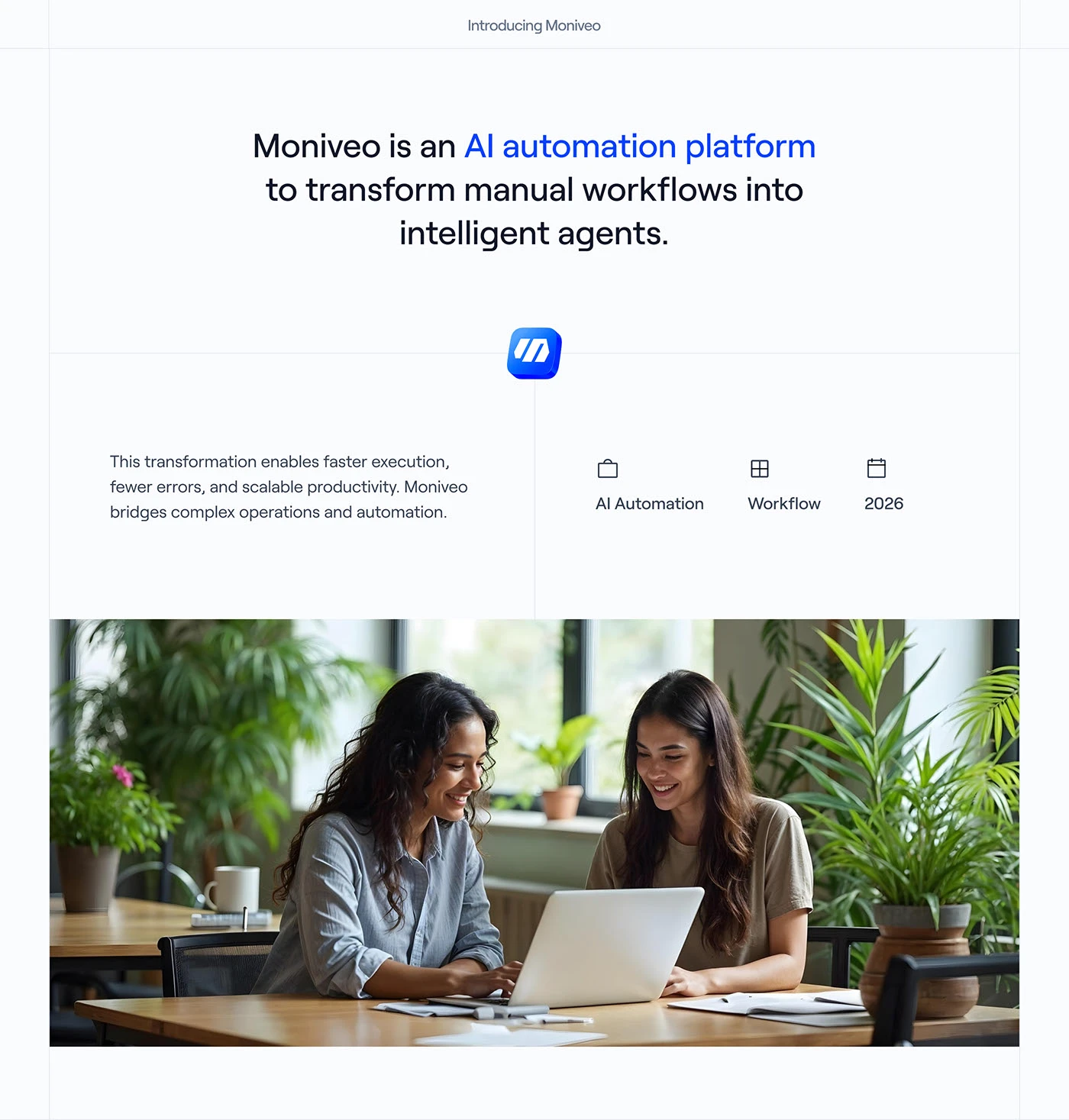
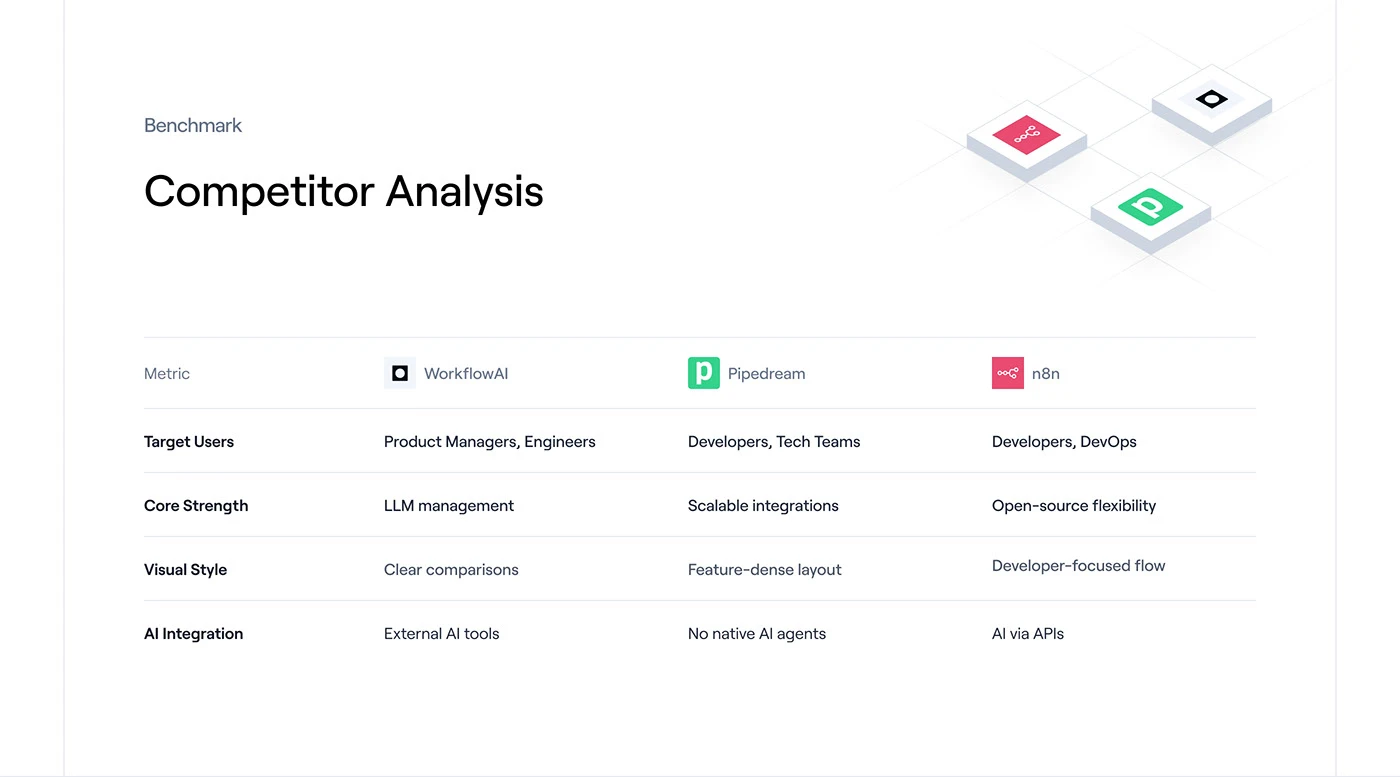
The category is crowded with tools that describe themselves in their own vocabulary. We benchmarked the field, then built the site around the one sentence a visitor needs: turn workflow into AI agent automations. Everything below it is evidence.
The System
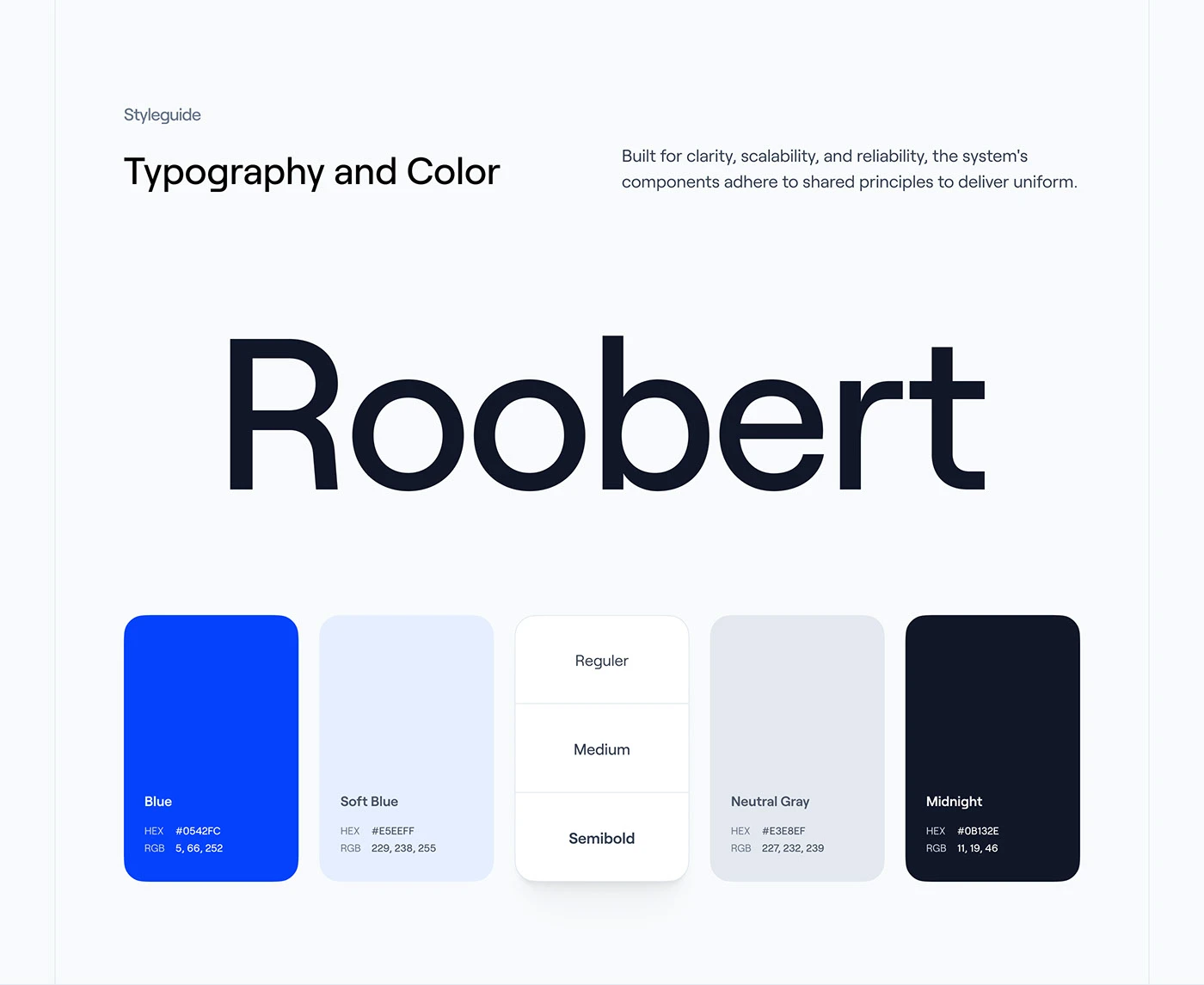
One blue, and the discipline to stop there
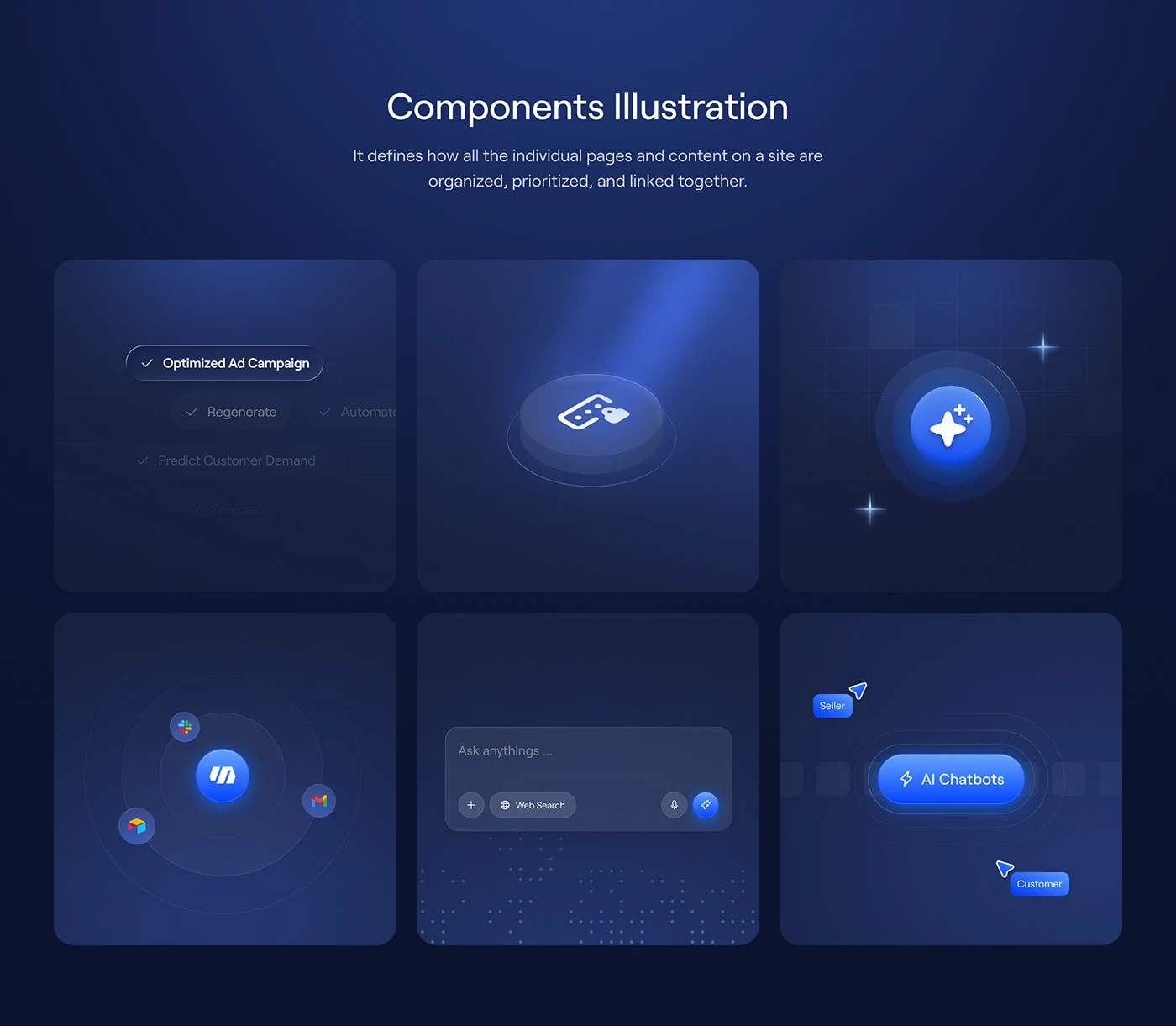
Roobert for everything, four colours, and a component set built so a marketing page and a product screen can sit on the same slide without either looking borrowed. A restrained system is also a fast one — every page after the first is assembly, not design.
Structure
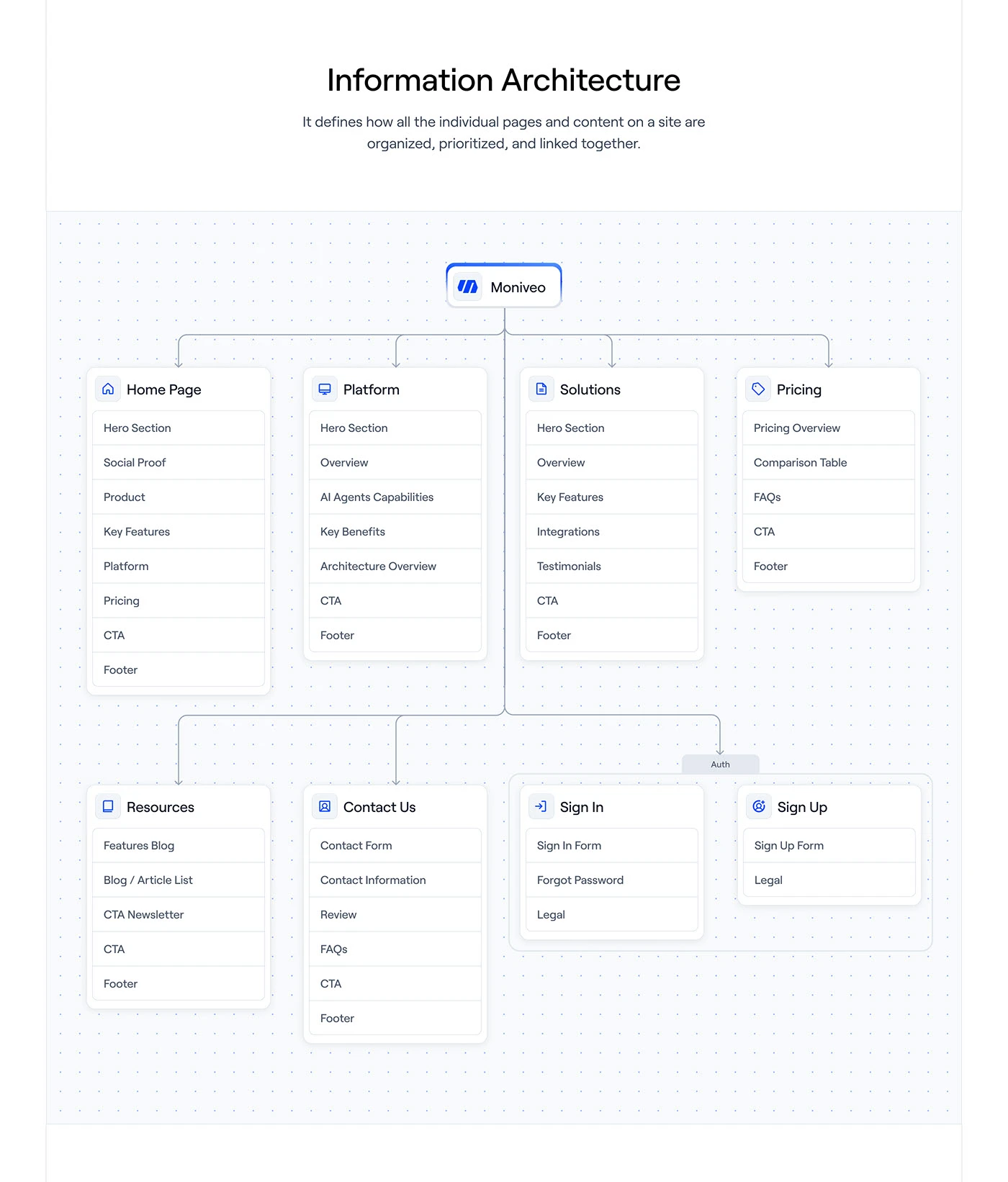
The sitemap is the sales argument
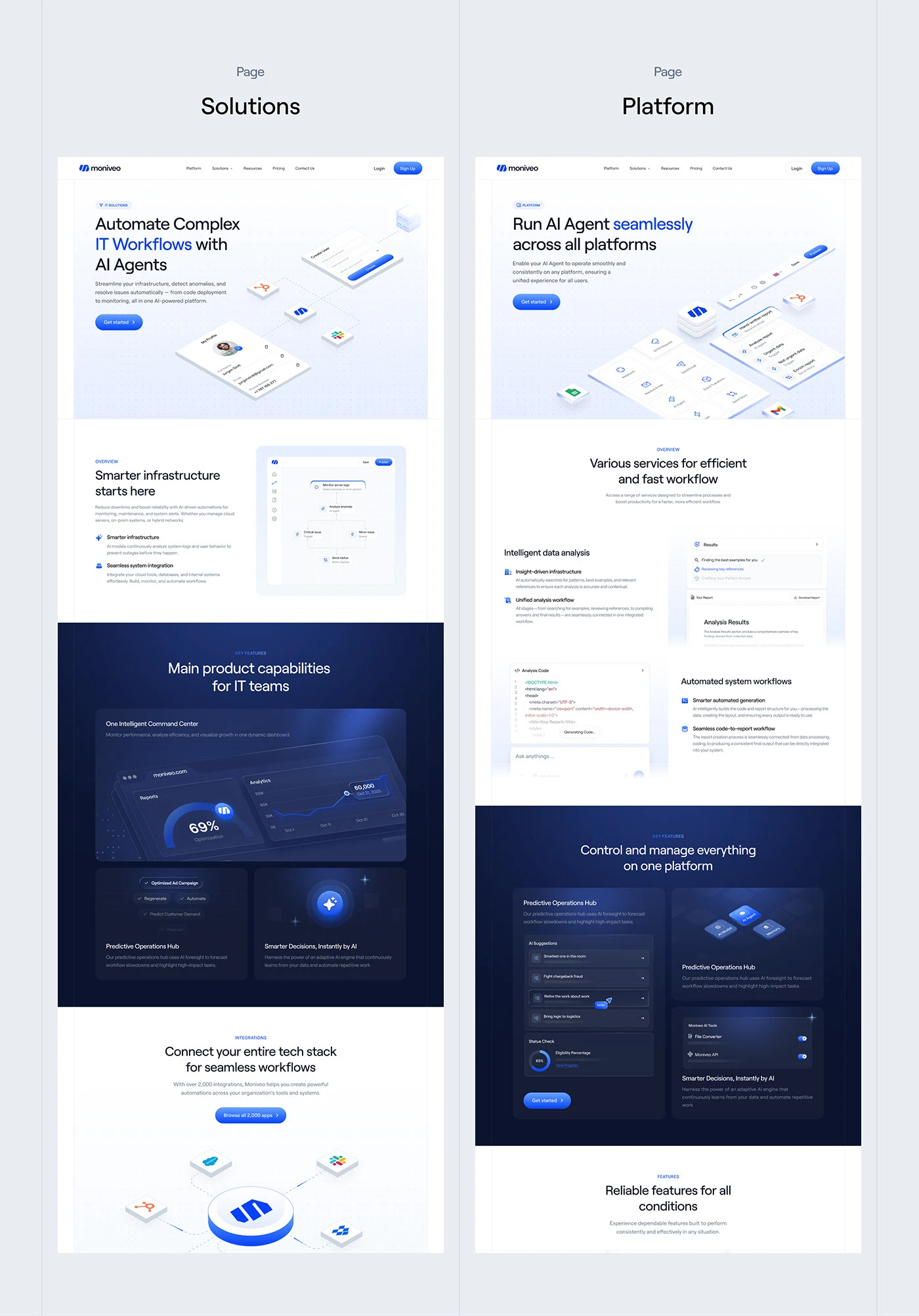
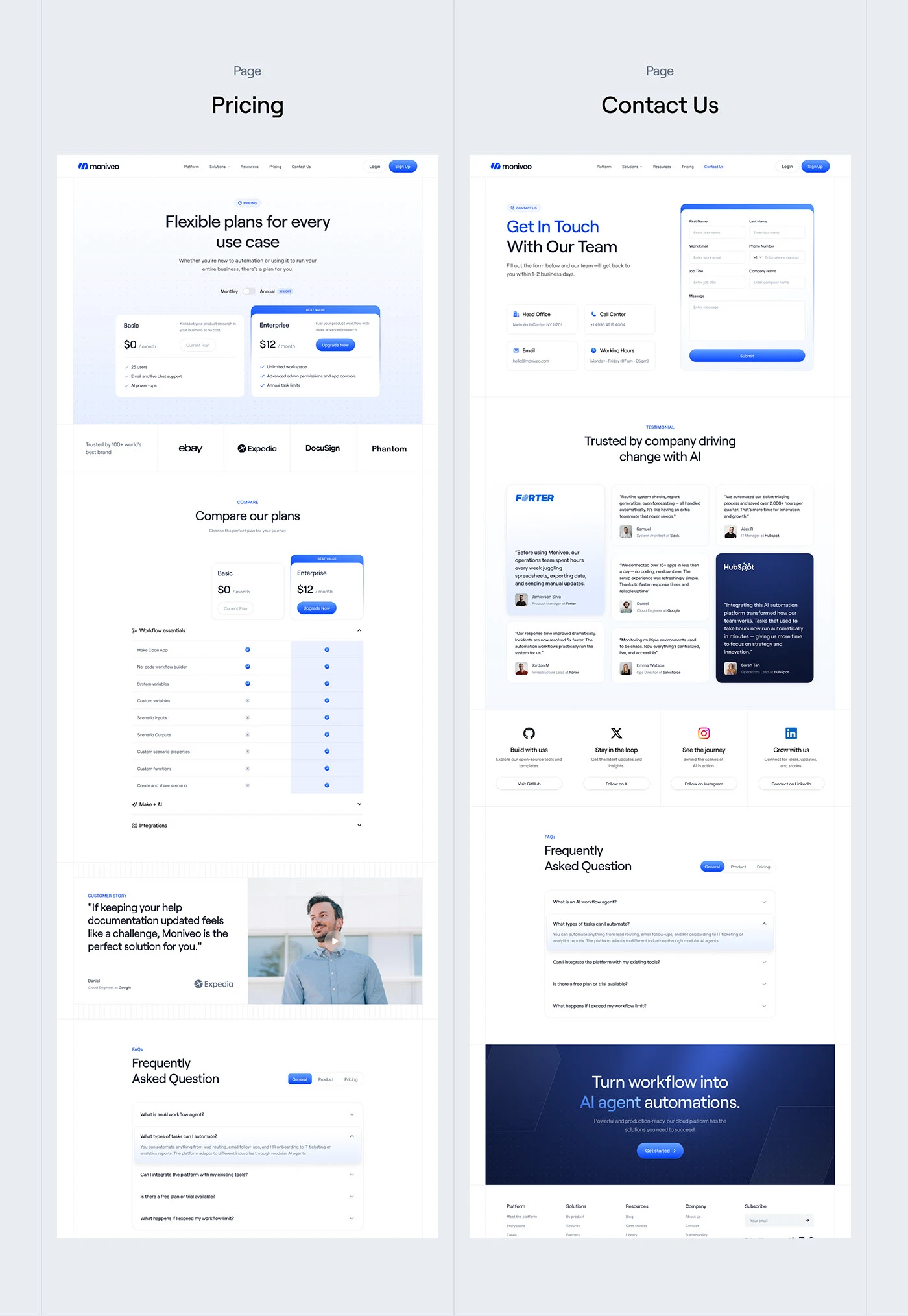
Seven templates, mapped section by section before a pixel was drawn. Where a visitor lands decides which proof they need, so Platform, Solutions and Pricing each open on a different objection rather than repeating the homepage in a new order.
The Pages
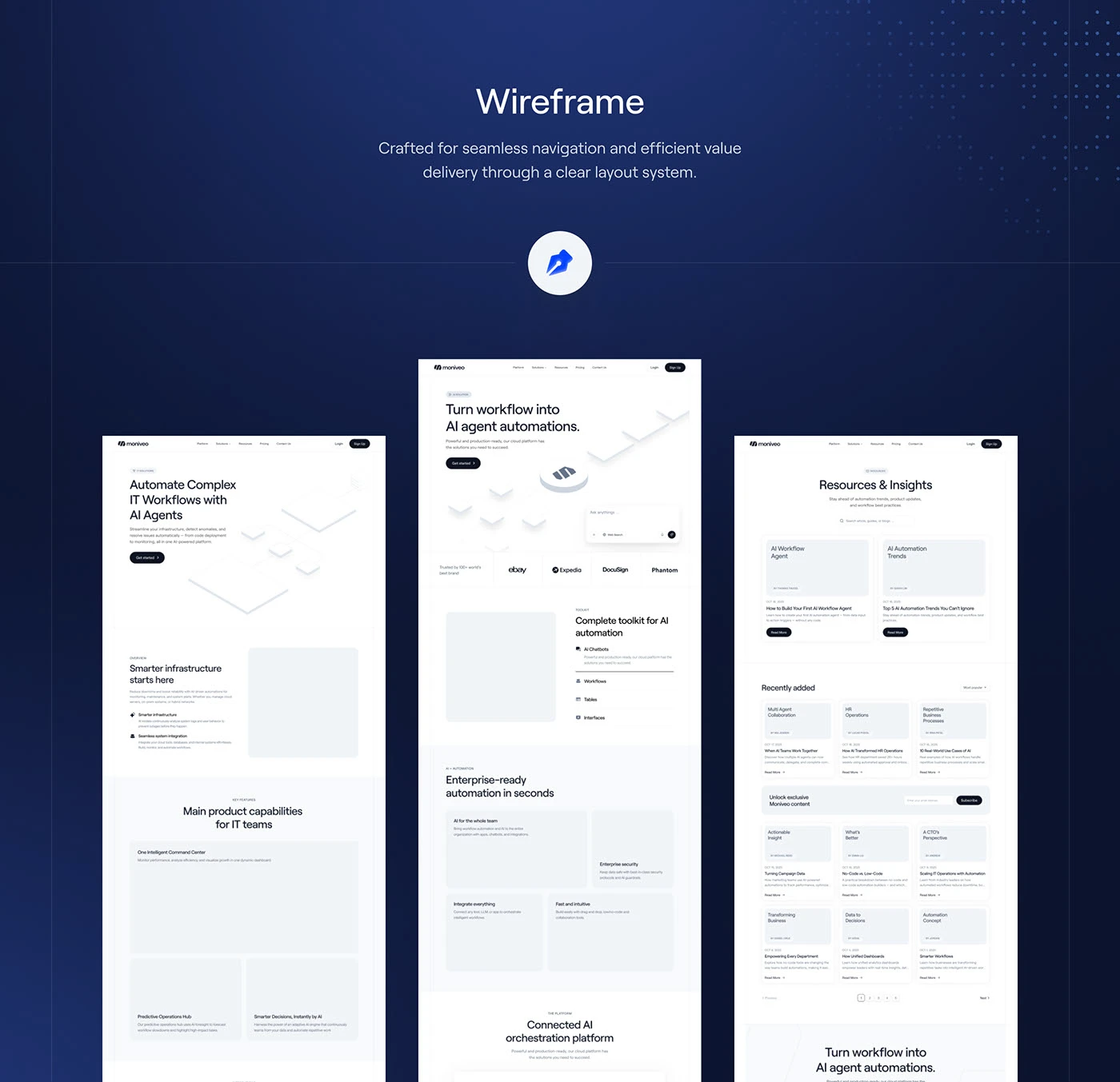
A homepage that demonstrates instead of describing
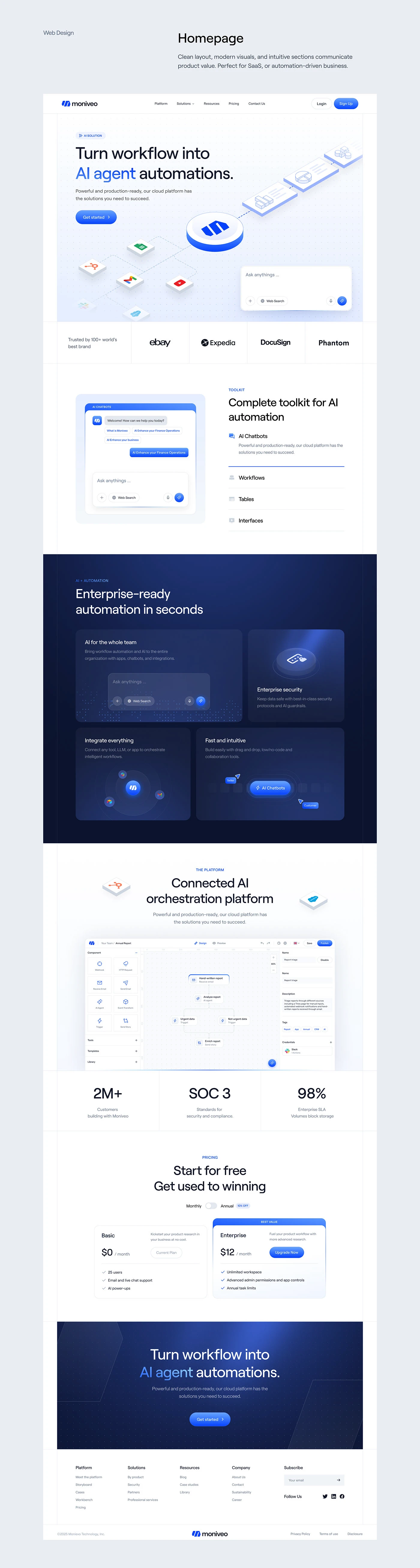
Product surfaces do the talking: a live toolkit panel, the orchestration canvas, real numbers on the platform strip. The dark enterprise band in the middle is where the argument shifts from what it does to whether you can trust it with production.
In Motion
Where the funnel actually converts
The resources library and the sign-up flow are the two places a visitor stops reading and starts doing. Both were prototyped in motion, because a three-step onboarding either feels effortless or it doesn't, and a static comp can't tell you which.
Responsive
Most of the pipeline arrives on a phone
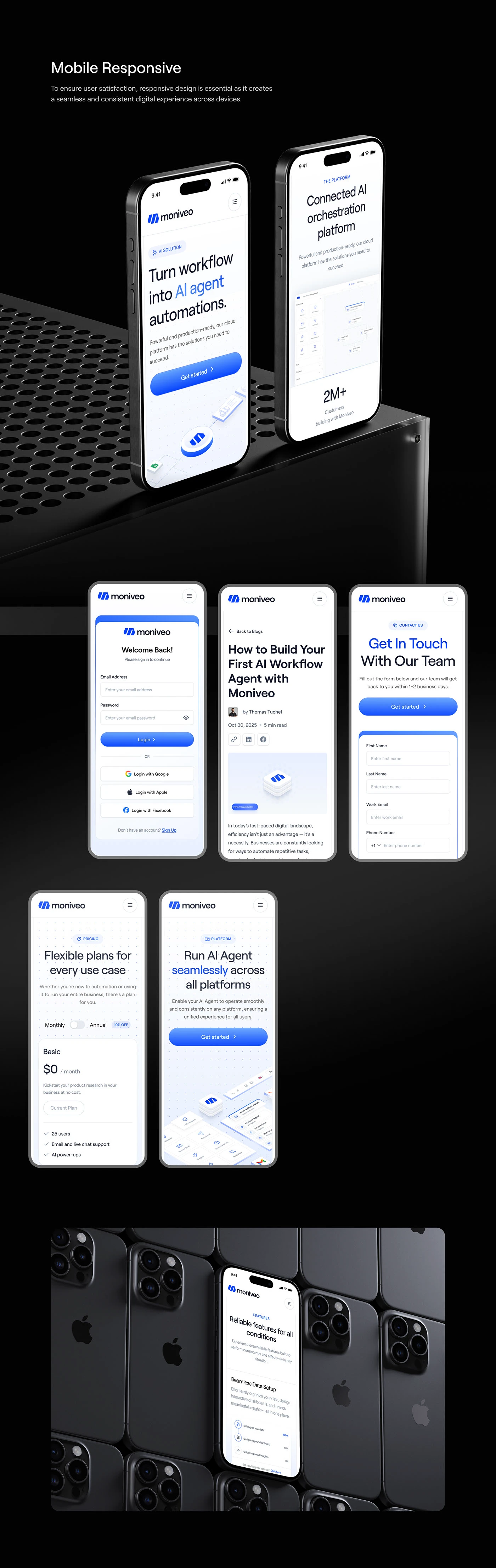
Every template was drawn for the small screen in parallel, not adapted afterwards. The forms are the part that matters: the contact and sign-up flows had to be completable one-handed, because that is how half the leads that trigger the automation actually arrive.
Brand
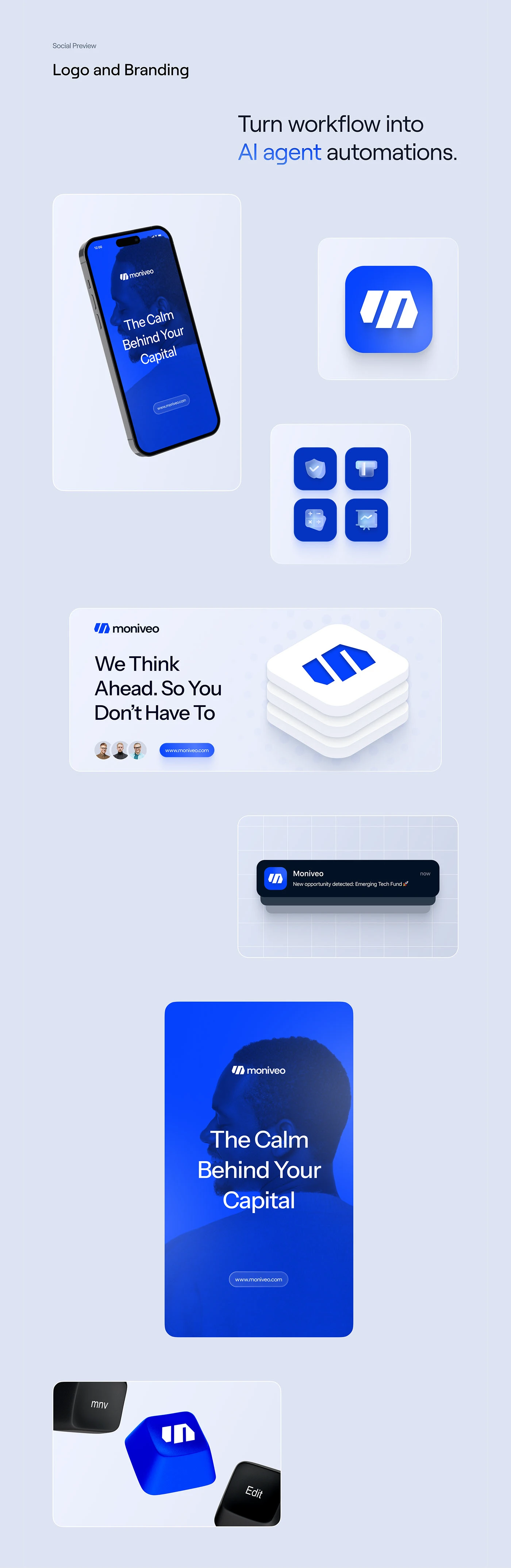
The mark at the sizes the funnel actually uses
App icon, social preview, notification, keycap. The wordmark's leading form is a single geometric shape, which is what lets it survive a 32-pixel avatar and still read as the same company at the top of the homepage.
Methodology
Then we automated the funnel
A site that converts just moves the bottleneck downstream. The second half of the engagement built the system that catches what the site sends — qualifying, routing, and answering without anyone in the loop.
Process Mapping
Documented every manual workflow to identify automation opportunities.
System Integration
Connected CRM, marketing automation, and communication tools.
AI Lead Scoring
Built behavior and demographic-based qualification model.
Workflow Build
Created 8 automated workflows covering the entire lead lifecycle.
8-Week Implementation
Process Audit & Mapping
Week 1Comprehensive analysis of existing marketing workflows, pain point identification, and ROI calculation for automation opportunities.
System Integration
Weeks 2–3Connected CRM with marketing automation platform, mapped data fields, and configured API connections for real-time sync.
Workflow Creation
Weeks 4–6Built 8 automated workflows including lead scoring, nurture campaigns, demo request handling, and sales handoff sequences.
Optimization & Reporting
Weeks 7–8Set up analytics dashboards, performance tracking, and team training. Fine-tuned scoring models based on initial data.
Deep Dive
8 Automated Workflows
A complete system covering every stage of the lead lifecycle — from the form on the site we built through to sales handoff and beyond.
Lead Scoring
AI-powered qualification based on behavior, demographics, and intent signals.
Welcome Series
New lead onboarding with personalized content and next-step guidance.
Nurture Campaign
Educational content delivery based on engagement and interest signals.
Demo Requests
Instant response system with calendar booking and prep materials.
Re-engagement
Dormant lead activation with personalized win-back sequences.
Event Follow-up
Post-event engagement with relevant content and meeting requests.
Sales Handoff
Qualified lead transfer with full context and engagement history.
Post-Conversion
Customer success onboarding and expansion opportunity identification.
AI-Powered Lead Scoring
Behavioral Indicators
40%- Page views & time on site
- Content downloads
- Email engagement
- Video watch time
Demographic Data
35%- Company size
- Industry vertical
- Job title & seniority
- Geographic location
Intent Signals
25%- Demo requests
- Pricing page visits
- Contact form submissions
- Chat interactions
Tactical Execution
Mapped all existing manual processes to identify automation opportunities, calculating potential time savings and ROI for each workflow.
Integrated CRM with marketing automation platform enabling real-time data sync, unified contact records, and automated field updates.
Created 8 automated workflows covering lead scoring, nurture campaigns, demo scheduling, sales handoff, and post-conversion onboarding.
Implemented AI-powered lead scoring combining behavioral data, demographic information, and intent signals into a single qualification score.
Built comprehensive reporting dashboards with real-time visibility into workflow performance, lead quality, and team efficiency metrics.
Outcomes
Impact & Results
Within 8 weeks the automation system cut manual work by 70% while improving lead quality and response times — and Moniveo’s own pipeline finally ran the way its product promises.
Before vs After
Before
After
Additional Impact
Key Learning
A funnel and the automation behind it are one product, not two projects
Design and operations get scoped separately and it shows: a site that converts beautifully into a queue nobody works. Building both in one engagement meant the form fields were chosen for what the scoring model needed, and the routing rules were written against pages that already existed. Understanding every manual step is what unlocked the 70% — the automation had somewhere specific to go.
The Engagement
What we did for Moniveo
UI design executed by Dipa Inhouse.
Results Disclosure: Results described in this case study are specific to this client engagement and are not guaranteed. Individual results will vary based on budget, industry, competitive landscape, market conditions, execution, and other factors. Past performance does not guarantee future results. Machina makes no representation that any client will achieve similar outcomes.