


Machina
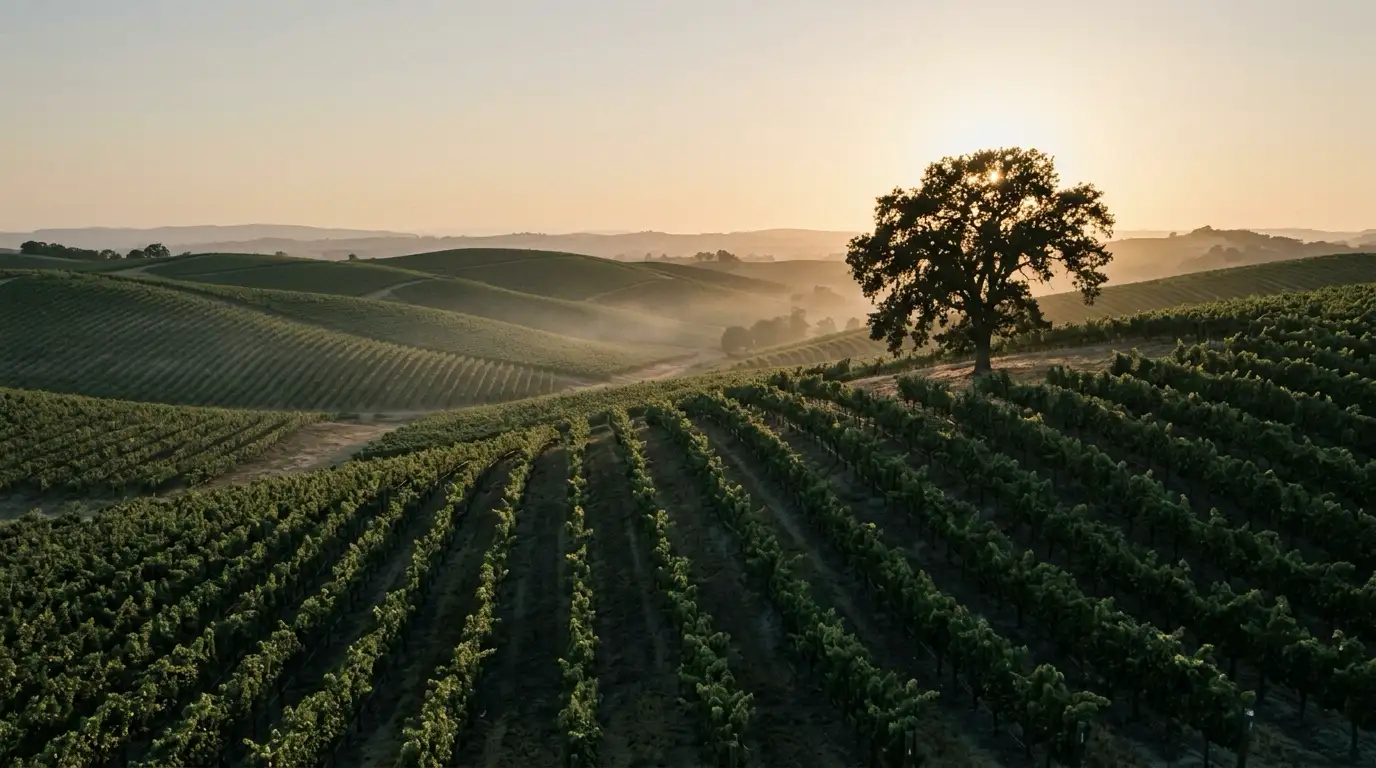
Rolling Paso Robles vineyard hills at golden hour, vine rows curving over the hills toward a lone oak tree silhouetted in warm, hazy low sun

Agriculture & Wine

Agriculture & Wine Marketing Agency That Fills Tasting Rooms and Wine Clubs

Machina is a growth marketing agency in Hollister, inside San Benito wine country, that fills tasting rooms and wine clubs across California's Central Coast: reservation-first SEO, geo-targeted ads for in-market tourists, and club retention email measured in member LTV. Our last membership build went from zero to 14,000 members and $541K in email revenue.

What makes Agriculture & Wine different

The conditions wineries sell under

Wine is one of the most regulated products sold online: DTC shipping rules differ across 47 states, the three-tier system governs everything else, and Google and Meta require alcohol certification, 21+ targeting, and restrict purchase-link promotions. The channel shrank too: DTC shipments fell 15% by volume in 2025, the worst year Sovos ShipCompliant has recorded, West Coast tasting room visits dropped about 6%, and club churn runs 25–30% a year. We build plans that hold up under all of it.

What we hear

What winery owners tell us on the first call

Four complaints we hear from owners and DTC managers across the Central Coast, and what we do about each.

Walk-ins used to fill the club. Now Saturdays are quiet

West Coast tasting room visits fell about 6% in 2025, Paso Robles 4.5%, so Highway 46 drive-by traffic no longer feeds the funnel. We fill the reservation book instead: a Google Business Profile with booking links, review velocity, and itinerary pages that put you among the three wineries a visitor picks.

SEO

We sign members at the pickup party and lose them by month 30

Average club churn runs 25–30% a year, and member tenure has slipped from 36 to 30 months. We build first-90-days onboarding, pre-shipment customization prompts that cut first-year cancellation likelihood about 34%, and win-back flows off your Commerce7 or WineDirect data.

Email Marketing

We can't outspend the Napa brands bidding on the same searches

You don't have to: wine CPCs run about $1.50–$3, and the tourist searching "wine tasting near me" from a Paso hotel is a local auction, not a national one. Geo-targeted search and Meta campaigns pointed at reservations and club offers turn that local auction into bookings, while broad awareness budgets just buy impressions.

Paid Ads

During crush, nobody answers the tasting room inbox for weeks

August through October the cellar wins and the inbox loses, so pre-visit questions and reservation requests sit unanswered. AI answering handles hours, fees, group size, and dog policy, and at-risk-member flags keep save offers going out while you're on the crush pad.

AI Automation

What we do

Five services, priced in DTC wine economics

Tasting fees, club LTV, shipping compliance, and the harvest calendar. Every service below is built around the numbers a winery runs on.

Web Development

Most winery sites run on Commerce7 or WineDirect templates with performance scores under 50, and they bury the two actions that pay: book a tasting and join the club. We rebuild for speed and mobile reservation flow, connect POS, club software, and Tock or CellarPass so a visit becomes a trackable customer record, and design the age gate so compliance doesn't kill checkout. Food and beverage ecommerce converts 4–5%; most winery sites come nowhere close.

SEO

Winery discovery is local and same-day: "wine tasting near me" gets searched from a Carmel hotel the night before the visit. We optimize your Google Business Profile with reservation links and fresh photos, build review velocity, and publish the AVA, varietal, and itinerary pages Google AI Overviews now cite. Visitors pick three wineries out of Paso's 200+, and the picking happens on a phone, not on Highway 46.

Paid Ads

Wine clicks are cheap: CPCs run $1.50–$3, a fraction of most local verticals. We aim geo-targeted search and Meta campaigns at in-market tourists (Paso Robles alone draws about 2.5 million visitors a year) and point them at tasting reservations and shipping-included club offers, the funnel behind 72% of winery DTC revenue. We handle Google and Meta alcohol certification so campaigns don't get disapproved mid-season.

Email Marketing

Email is the retention engine in a vertical where club churn runs 25–30% and tenure has fallen to 30 months. We build lifecycle flows off Commerce7 or WineDirect purchase history: post-visit follow-ups, first-90-days club onboarding, pre-shipment customization prompts that cut first-year cancellation likelihood about 34%, allocation and release sequences by tier, and win-backs. Wineries running three or more segmentation strategies see roughly 16% higher club renewal rates.

AI Automation

We automate the DTC operations that eat a two-person team: at-risk-member detection from POS and club data (skipped shipments, declined cards, twelve months without a visit) that triggers save offers before the cancellation email; review requests after every tasting; SMS reservation reminders and no-show recovery; and AI answering for the pre-visit questions that go dark during harvest. Every flow reports saves and revenue, not tickets closed.

Who we work with

Who we work with

Wineries, tasting rooms, and clubs from Paso to the Santa Cruz Mountains. Row-crop growers and agtech belong on our Agriculture page; this one covers the wine side.

Boutique wineries (under 10,000 cases)

The producers who define Central Coast AVAs: Paso Robles counts 250+ wineries on 40,000 vineyard acres, the Santa Cruz Mountains 70–80 boutique houses on about 1,600 planted acres. Napa-scale agencies skip this tier; we built for it.

Tasting rooms & wine trails

The average visitor spends $197 per tasting room visit nationally, and the room feeds the club. We fill reservation books along River Road, Carmel Valley Village, and Highway 46.

Wine clubs & allocation programs

Churn runs 25–30% a year and tenure has slipped to 30 months. Onboarding, shipment customization, and at-risk flows return more than any acquisition campaign; preference-based clubs retain about 18% better than vintage-based ones.

Growers & custom-crush labels

Monterey County wine grape value fell 22% to $152 million in 2024, and oversupply is pushing growers to launch their own labels with zero marketing infrastructure. We build the DTC stack from the first vintage.

San Benito & Cienega Valley wineries

Our home AVA: vines since 1849, Calera and Eden Rift down the road from our Hollister office. The overlooked corner of Central Coast wine is our backyard.

AI visibility

AI Search Visibility for Wineries

Wine tourists plan with AI now. Itinerary questions ("two-day Paso Robles wine tasting itinerary", "dog-friendly wineries near Monterey") that used to return ten links now return one answer. The wineries getting cited publish specifics in plain, crawlable HTML: hours, tasting fees, reservation policy, varietals, AVA context. Most Commerce7 and WineDirect templates bury those details in scripts AI crawlers never execute. We format your pages, entity data, and review corpus so the machines can read and cite you. When someone asks ChatGPT for the best winery in Paso Robles, we make sure it's you. Our free SEO report scores your AI visibility before we touch anything.

$541K

Email revenue in six months, from a membership program built from zero.

72%

of winery DTC revenue comes from the tasting room and wine club (SVB)

30 mo.

average club member tenure, down from 36 months

Tasting room traffic is not coming back on its own. The top-quartile wineries grew DTC revenue 22% last year by taking visitors and members from the ones waiting for the tide.

Case study

A 14,000-member program from zero, worth $541K in email revenue

The client is a DTC apparel brand, and the build is a wine club with different labels on the tiers. The brand had a large list and no membership program. We fixed deliverability first, then built a VIP program from zero: tiered membership, a launch sequence that pulled 3,000 signups in three days at a 67% open rate, onboarding flows, and A/B-tested templates. Six months later: 14,000 members, $541K in email revenue, and email's share of total revenue up from 20% to 24%. Every mechanic transfers to wine. The launch sequence is your club drive, the onboarding flow is your first-90-days sequence, the segmentation is your allocation list, the product drop is your library release. This is the program we build on Commerce7 or WineDirect data for Central Coast wineries.

Read the case study
$541K
Email revenue in six months

The Club-LTV System

How we work

The Club-LTV System: three phases, one metric. Lifetime value per club member.

01

Audit the funnel

A free audit of the whole DTC machine: site speed on your Commerce7 or WineDirect template, Google Business Profile and reservation links, club churn cohorts, and email segmentation. Most wineries lose more revenue to month-30 cancellations than to weak acquisition, so we measure tenure first.

02

Fill the tasting room

Geo-targeted campaigns and a rebuilt Google Business Profile go live first, for reservations within weeks. Itinerary content, review velocity, and AVA pages compound underneath, because 72% of DTC revenue starts in the room where someone pours.

03

Keep the member

First-90-days onboarding, shipment customization prompts, at-risk flags, and win-backs run off your club data. Every cancellation gets a cohort and a cause, so tenure and revenue per member climb instead of drifting down with the channel.

Playbook

The Agriculture & Wine Marketing Playbook

DTC wine shipments fell 15% by volume in 2025, the worst year Sovos ShipCompliant has recorded, yet SVB data shows top-quartile wineries grew DTC revenue 22% while the median stayed flat. Execution separates them. Ten tactics we run for Central Coast wineries, each with the math attached.

01

Fill the reservation book before you touch anything else

The tasting room and wine club account for 72% of all winery DTC revenue, per SVB's State of the Wine Industry (2026), and the average visitor spends $197 per tasting room visit nationally. Every other channel feeds this one: the website exists to book the visit, the visit exists to sign the member, the member carries the year. So the first audit question is never "how is the ecommerce converting", it is "how many reservation slots went unfilled last Saturday". Put booking links on the Google Business Profile, the homepage hero, and every itinerary page. Measure reservation conversion as its own funnel, separate from checkout.
02

Win the map pack the night before the visit

Winery discovery happens in-market and same-day: "wine tasting near me" gets typed from a hotel room in Paso or Carmel the night before, while the group plans the route. Visitors then pick about three wineries from a region holding 200+, and they pick from maps, photos, and reviews. That makes the Google Business Profile your highest-leverage page: correct categories, a live reservation link, photos fresh this season, and steady review velocity with responses to match. Paso Robles draws roughly 2.5 million visitors spending about $485 million locally, per Beacon Economics (2025). The wineries they skip are rarely worse. Their profiles are.
03

Publish the itinerary pages AI engines cite

Queries like "Paso Robles wine tasting itinerary", "Santa Lucia Highlands Pinot Noir wineries", and "dog friendly wineries Paso Robles" now get answered by Google AI Overviews and ChatGPT, and the engines cite pages with specifics in crawlable HTML: hours, tasting fees, reservation policy, group limits, varietals, AVA context. Brochure sites with the details buried in scripts get skipped, because AI crawlers do not execute JavaScript. Build one page per question your tasting room staff answers every weekend, keep it structured and current, and add Winery and LocalBusiness schema with a reservation link on every page. This is standard SEO work with a new judge.
04

Treat the first 90 days as the membership decision

Club churn averages 25–30% a year, and average tenure has slipped from 36 to 30 months, per Private Club Marketing's DTC analyses (2025–2026). Most of that loss gets decided early, which makes onboarding the highest-ROI sequence in wine email: a welcome from the winemaker, the story behind the first shipment, a pickup-party invite, and a customization prompt before the box ships. The measured effects are large: customizable shipments cut first-year cancellation likelihood about 34%, and preference-based clubs retain roughly 18% better than traditional vintage-based clubs. A member kept to month 42 instead of 30 is an extra year of shipments you never had to sell.
05

Segment the list or decline with the channel

Wine and wine-club emails earn open rates around 27%, the highest category Mailchimp tracks, so the audience is listening. The failure is what gets sent: one monthly newsletter to the whole list, the same release offer to a Cabernet buyer and a Rosé-only customer. Wineries using three or more segmentation strategies see about 16% higher club renewal rates, and targeted emails pull roughly double the clicks of batch-and-blast, per Wine Glass Marketing's benchmark data. Segment on what Commerce7 and WineDirect already know: last order date, club tier, varietals bought, visit history. The 2021 blast playbook now produces declining revenue in a declining channel.
06

Build the SMS list at the tasting bar

Wine SMS runs 15–25% click-through against 2–5% for email, converts 8–12% on promotional offers, and about 300 SMS subscribers can generate as much DTC revenue as a 10,000-name email list, per Highway 29 Creative and VinterActive. The list gets built where the goodwill peaks: a QR code at the tasting bar, offered with the pouring-fee waiver, opted-in before the guest reaches the parking lot. Then use it sparingly and for urgency only: release drops, allocation last-calls, pickup-party reminders, reservation confirmations and no-show recovery. Texts are the channel for the message that cannot wait for Tuesday's send. Guard the list; the scarcity is what keeps it converting.
07

Point cheap clicks at reservations, not cold ecommerce

Wine CPCs run roughly $1.50–$3.00, per Highway 29 Creative and WordStream (2025), among the cheapest in local marketing, but winery ecommerce converts only 1–2% on cold paid traffic. The fix is where you send the click: tasting reservations and shipping-included club offers, not a bottle-shop page for someone who has never tasted your wine. Target in-market tourists ("things to do in Paso Robles", hotel geofences) and retarget site visitors on Meta with the club offer once they know the label. Get Google and Meta alcohol certification handled before the season, because a mid-July disapproval costs the exact weekends the campaign existed for.
08

Automate the save before the cancellation email

Community Benchmark data showed active club memberships down 10% and attrition up 13% in 2025, and most cancellations telegraph themselves months ahead: a skipped shipment, a declined card, no tasting room visit in twelve months. Wire those signals from POS and club software into automated at-risk flags that trigger a save offer (a shipment swap, a pickup invitation, a call from the owner) before the member writes in. Automate the rest of the calendar's leaks too: review requests after visits, reservation reminders, no-show recovery by SMS, and AI answering for the pre-visit questions that go dark during the August–October crush.
09

Sell to the drinker wine has now

Millennials are now the largest US wine-drinking cohort at 31%, passing Boomers at 26%, and Gen Z jumped from 9% to 14%, per the Wine Market Council (2025). Wine tourists skew under 35, urban, and affluent. This buyer researches on Google, Instagram, and TikTok, books online, and buys the experience before the bottle, so a critic score means less than a reservation flow that works on a phone. Story-driven content and social proof outperform traditional wine-critic marketing with this cohort. The marketing built for the drinker of 2015 (critic scores, print, a static site) misses the cohort that decides whether your club base ages out or refills.
10

Run the marketing calendar on the wine calendar

Winery budget decisions cluster post-harvest, November through January, once the year's DTC numbers are in; nobody evaluates anything during crush. Marketing should front-run the seasons the same way: site fixes and SEO in winter, campaign buildout in spring, funnels live before the May–October visitation peak, club and allocation pushes timed to release schedules and festival weekends. Pricing follows the calendar too: the average DTC bottle hit $52.68 in the first half of 2025, up 8% year over year per Sovos ShipCompliant, as volume shifted premium. Ride that mix-shift with offers built on tiers and library releases instead of discounting against it.

Agriculture & Wine

Let's have your club funnel running before the May crowds reach Highway 46

Start with a free audit. We'll pull your Google Business Profile, reservation funnel, club churn cohorts, and email segmentation, and show you where members and tasting fees are leaking. Twenty minutes, no obligation.

Free audit first No long-term contracts Central Coast based

Last updated July 4, 2026