


Machina
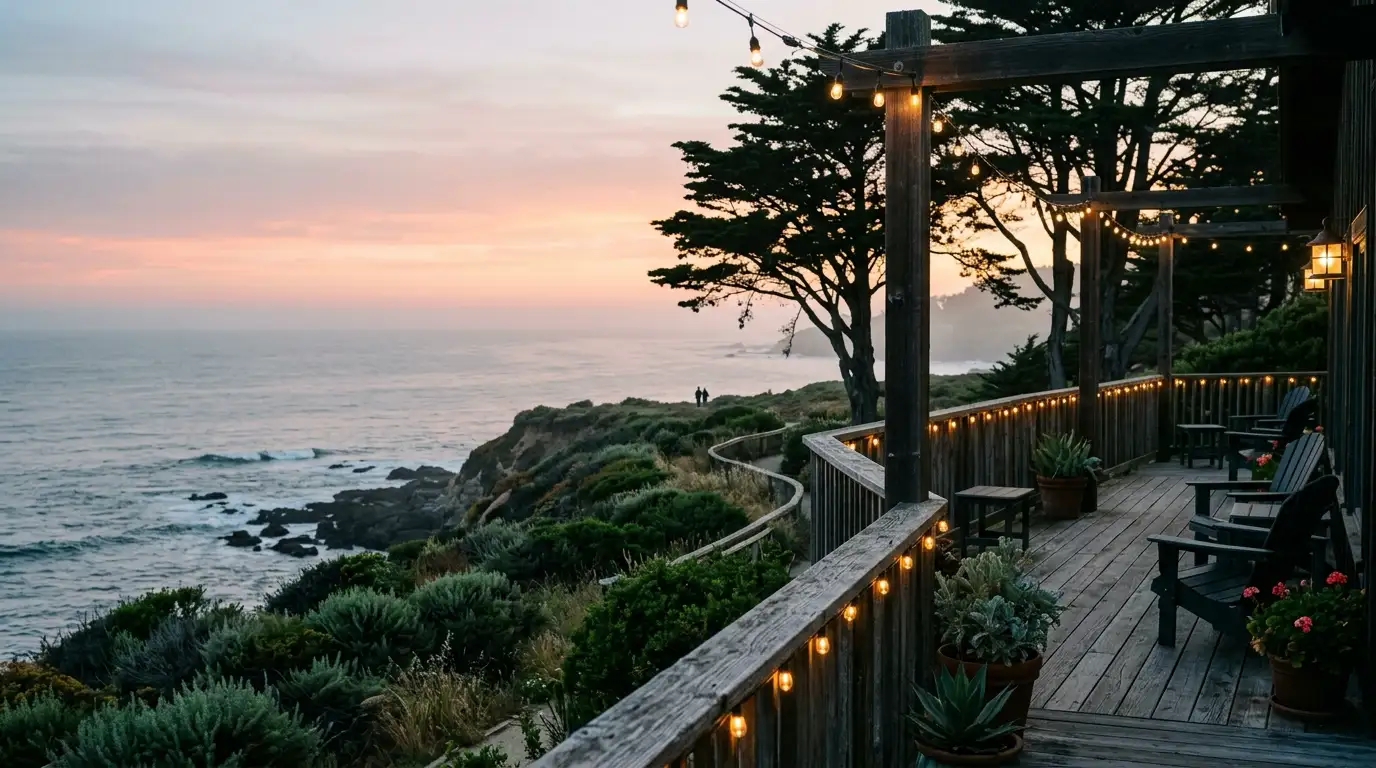
Coastal California inn terrace at dusk overlooking the Pacific: weathered wood railing, warm string lights, Monterey cypress silhouettes, ocean haze

Hospitality & Tourism

Hospitality & Tourism Marketing Agency That Grows Direct Bookings

Machina is a growth marketing agency in Hollister, forty minutes from Fisherman's Wharf, moving Central Coast inns, restaurants, and tour operators off 15–30% OTA commissions: booking-first websites, Google Hotel Ads, and guest email that runs at hospitality's 56.6% automated open-rate benchmark. Our journey-automation build cut one client's churn 45% in 18 weeks.

What makes Hospitality & Tourism different

The conditions this business runs under

OTAs hold roughly 55% of hotel bookings and take 15–30% of each one, while rate-parity clauses stop you from publicly undercutting them. Demand peaks in July and craters in February; Carmel short-term rentals average a $606 ADR at 51% occupancy. And the road itself is a risk: the 2023–2025 Highway 1 closures cost the Big Sur corridor an estimated $438 million. We build plans that survive all three.

What we hear

What owners tell us on the first call

Four complaints we hear from innkeepers, restaurateurs, and operators around Monterey Bay, and what we do about each.

Booking.com takes 18% of every room night they send us

OTA commissions run 15–30%, and the effective cost climbs toward 30–35% once promotional placements and higher cancellation rates are counted, against 5–12% for a direct booking won through search. Google Hotel Ads and brand-defense campaigns put your own rate next to the OTA listing and reclaim the comparison shopper.

Paid Ads

The OTA keeps the guest. We keep the housekeeping.

OTA bookings arrive with masked relay emails, so you can't market a second stay to a guest you already hosted. We capture real addresses at booking, check-in, and WiFi login, then run pre-arrival upsells worth about $73 per booking and winter win-back campaigns at hospitality's 56.6% automated open rates.

Email Marketing

We're invisible for 'things to do in Monterey' while OTAs rank with our own listing

Restaurant profiles get about 7x more views than the restaurant's own website, and 64% of diners check Google before visiting (MapLabs and Restroworks, 2025); travelers run the same Maps search for inns and tours, so the profile is the storefront. We run it as a weekly program and build itinerary-query pages ("Big Sur hotels," "whale watching Monterey Bay") that put your own site in the results.

SEO

I answer wedding inquiries at 10pm because there's nobody else to do it

At an independent property the GM is also the revenue manager, marketer, and breakfast cook, so group leads sit unanswered while the couple books elsewhere. AI answering handles "do you allow dogs" and "is Highway 1 open" in seconds and follows up every wedding and group inquiry the hour it arrives.

AI Automation

What we do

Five services, priced against an 18% commission

Commission math, booking windows, ADR, and the review war. Every service below is built on the numbers an operator runs on.

Web Development

Hotel websites convert at 1.5–2.5% on average, and mobile converts at half of desktop (1.4% against 2.9%), which is where most Monterey Bay trip research happens. We build booking-first sites: live rates on every page, a stated perk for booking direct, a 2–3 step checkout, and integrated engines (Cloudbeds, SevenRooms, OpenTable, FareHarbor) instead of "email us for availability." For restaurants, adding online reservations lifts website conversion about 19%.

SEO

Itinerary queries decide Central Coast revenue: "things to do in Monterey," "Big Sur hotels," "best restaurants Cannery Row." We build location and experience pages for those searches and run your Google Business Profile as a weekly program, because restaurant profiles get about 7x more views than the websites they point to and travelers run the same Maps search for inns and tours. Since Highway 1 reopened, Big Sur guest counts are up roughly 40%; fresh, structured content is what captures that surge.

Paid Ads

Travel runs the cheapest clicks in paid search, $1.40–$2.12 average CPC, and Google Hotel Ads converts at 2–8% on $1–3 clicks. On a $450 Monterey weekend booking, that is $15–50 to win a guest an OTA would charge $81 for. We run brand defense first, because OTAs bid on your property's name, metasearch second, and we time budgets to the booking window: spending February through May for the July peak, not during it.

Email Marketing

The anti-OTA machine. Automated hospitality campaigns average 56.6% open rates against 32.2% for one-off blasts (Revinate, 2025), and pre-arrival emails open at 50–70% while driving about $73 in upsell revenue per booking. We capture addresses at booking, check-in, WiFi login, and tour checkout, then run winter win-back offers to summer guests and cancellation-recovery flows for the next highway closure.

AI Automation

Roughly 40% of travelers now use AI tools to plan trips, and nearly 1 in 5 start there, so the first front is getting recommended: structured data, consistent listings, citable FAQ content. The second front is the front desk. AI answering handles "do you allow dogs" and "is Highway 1 open" in seconds, drafts review responses, and follows up the wedding and group inquiries that sit unanswered while you turn rooms.

Who we work with

Who we work with

Room nights, covers, and boat capacity price differently, and the plan changes with them.

Hotels & inns

Carmel and Monterey independents fight OTAs holding roughly 55% of hotel bookings while rate parity blocks public discounting. The counters: Google Hotel Ads, a real perk for booking direct, and a 40–60% direct mix target.

B&Bs & vacation rentals

Carmel short-term rentals average a $606 ADR at 51% occupancy, so the money is in the empty midweek and shoulder-season nights. Booking-engine websites and past-guest email fill them.

Restaurants

64% of diners Google a restaurant before visiting and 75% read at least four reviews first. Cover counts follow the Google Business Profile, review velocity, and a reservation widget worth a roughly 19% conversion lift.

Tour operators

Viator and GetYourGuide grew OTA share of experience bookings from 28% to 37% in two years. "Whale watching Monterey Bay" is still winnable; we rank it and put FareHarbor on your own site.

Event venues & weddings

A wedding lead is a five-figure booking decided by response speed and proof galleries. We build the follow-up automation and the venue pages ("Carmel Valley wedding venues") that win the site visit.

AI visibility

AI Search Visibility for Hospitality & Tourism

Travelers have started asking AI assistants to plan the whole trip: roughly 40% now use AI tools for trip planning, and nearly 1 in 5 start there. The models assemble itineraries from structured data, review corpora, and content they can quote, and they don't execute JavaScript, so room details rendered inside a booking widget never get read. We mark up your property with Hotel, Restaurant, and TouristAttraction schema, keep every listing consistent, and write pages that answer the questions travelers ask. When someone asks ChatGPT for the best inn in Carmel, we make sure it's you. Our free SEO report scores your AI visibility today, before we touch anything.

$3.1B

Monterey County visitor spending in 2024, a record year.

15–30%

commission OTAs charge on every booking they deliver

5–12%

cost of winning that same booking direct through search

Booking.com introduces you to a guest for 18%, then charges you 18% again next year for the same guest. We build the system that makes the second booking direct.

Case study

The journey rebuild that cut churn 45% in 18 weeks

The client is a SaaS platform, but the problem is one every innkeeper knows: customers arrive, transact once, and disappear. We mapped the full customer journey, rebuilt onboarding, and automated the lifecycle messaging in between. In 18 weeks, monthly churn fell from 8.2% to 4.5%, six-month retention rose 60%, onboarding completion climbed from 61% to 92%, time-to-first-value dropped from 14 days to 7, and NPS went from 18 to 42. The hospitality build is the same: map every touchpoint from first search to post-stay, capture the guest at each one, automate the messages that bring them back. A guest who books through Expedia once is a lead. A guest who returns through your own booking engine is a business.

Read the case study
8.2% → 4.5%
Monthly churn, in 18 weeks
The personalized onboarding experience completely transformed how our customers engage with our platform. Retention rates have never been higher, and our CS team finally has the tools and signals to be proactive instead of reactive.
Rachel Martinez, Head of Customer Success · SaaS Platform

The Second-Stay System

How we work

The Second-Stay System: three phases, one metric. Direct-booking revenue.

01

Audit the mix

A free audit of the whole funnel: your direct-versus-OTA booking mix, booking-path conversion on mobile, Google Business Profile, review velocity, and how much of your guest list you can email. Most properties are rebuying the same guests from Booking.com every year, so we measure that first.

02

Win the comparison

Brand-defense campaigns and Google Hotel Ads go live in week one, reclaiming shoppers at $1–3 a click instead of an 18% commission. Itinerary-query pages, profile work, and review systems compound underneath, so the organic side of the mix keeps growing.

03

Own the guest

Email capture at booking, check-in, and WiFi login feeds pre-arrival upsells, post-stay review asks, and winter win-back campaigns. Attribution ties every booking to its channel, so you watch the direct share climb month by month.

Playbook

The Hospitality & Tourism Marketing Playbook

Monterey County visitor spending hit a record $3.1 billion in 2024 (Travel And Tour World) and Santa Cruz County added $1.44 billion (Dean Runyan Associates), while OTAs held roughly 55% of hotel bookings at 15–30% commission. The market is growing; the question is how much of it you keep. Ten tactics we run for Central Coast properties, each with the math attached.

01

Put your own rate next to the OTA listing

OTAs captured roughly 55% of the global hotel booking market in 2024 and charge 15–30% per booking, while a direct booking won through search and ads costs 5–12% of booking value (HotelsSEO, 2025). Google Hotel Ads is where you fight that spread: your live rate appears beside Booking.com's in the same comparison box, at $1–3 per click and 2–8% conversion, typically the highest-ROI paid channel for independent lodging (BookingWhizz, 2025). On a $450 Carmel weekend, the OTA charges $81 for the introduction; metasearch wins the same guest for $15–50. Connect the booking engine, feed live rates, and start with your ten most-booked room-and-date combinations.
02

Defend your brand name from the OTAs bidding on it

Search your own property's name in an incognito window. The top ad is probably Expedia or Booking.com, which means a guest who already chose you gets rerouted through a 15–25% commission. Brand-defense campaigns end that tax, and travel makes them cheap to run: CPCs average $1.40–$2.12, among the lowest of any industry (WordStream, 2025), and clicks on your own name convert at the top of any account. Add sitelinks for rooms and dining, and put the book-direct value in the ad itself: free parking, late checkout, best-rate promise. This is the first campaign we launch for a property, and for most it pays for itself within the first month.
03

Fix the mobile booking path before buying more traffic

Hotel websites convert at 1.5–2.5% on average, but the split is the story: desktop runs about 2.9% while mobile manages 1.4% (RoomStay, 2025–2026), and mobile is where Monterey Bay trips get researched. Before spending another ad dollar, fix the path: live rates visible without a click, a 2–3 step checkout, a stated perk for booking direct, and a booking engine (Cloudbeds, SevenRooms, FareHarbor) embedded rather than linked. Restaurants get the same physics: adding online reservations lifts website conversion about 19% (Restroworks, 2025). A property that moves from 1% to 2% conversion has doubled every marketing channel it runs, at zero added spend.
04

Capture every guest's email, including the OTA's

An OTA booking arrives with a masked relay address, which is how Booking.com sells you the same guest every year. Capture the real address at every touchpoint you control: booking confirmation, check-in, WiFi login, tour checkout. Automated hospitality campaigns average 56.6% open rates against 32.2% for one-time blasts, and pre-arrival emails open at 50–70% while driving about $73 in upsell revenue per booking (Revinate 2025 Hospitality Benchmark Report). The sequence we install through email marketing: pre-arrival upsell, post-stay review ask, winter win-back to summer guests, and a cancellation-recovery flow for the next closure or evacuation. One recovered repeat guest per week out-earns the newsletter nobody sends.
05

Run the Google Business Profile like the storefront it is

64% of US diners Google a restaurant before visiting, and restaurant profiles get about 7x more views than the websites they point to (MapLabs and Restroworks, 2025). Travelers run the same search on Maps for inns and boat tours. So the profile gets run as a program, not a listing: weekly posts, fresh photos of food, rooms, and boats, complete services and attributes, and review velocity with responses, since 75% of diners read at least four reviews before choosing. Categories matter more than most owners think; an inn tagged only "hotel" loses the B&B and boutique searches. Our SEO program treats the profile as half the channel.
06

Spend in February for the July peak

Monterey Bay demand peaks in July and bottoms in February, and summer stays get booked 4–12 weeks out, so the calendar inverts most owners' instincts: paid campaigns run heaviest February through May, while peak-season dollars shift to capture (email signup, review generation) that funds the trough. Compression nights are the other lever. Car Week, the AT&T Pebble Beach Pro-Am, and the Monterey Jazz Festival sell the region out, so hold your rate and let overflow demand find you through metasearch. The trough has its own play: Carmel short-term rentals average a $606 ADR at 51% occupancy, so the real inventory problem is midweek and winter. Locals' offers, event packages, and win-back email fill what discounting can't.
07

Write the disruption playbook before the next closure

The 2023–2025 Highway 1 closures cost the region an estimated $438 million, with visitor spending down 42% in San Simeon and 20% in Big Sur (Pacific Coast Business Times, 2025). The recovery shows who was prepared: since the full reopening, Big Sur guest counts are up roughly 40% year-to-date and March lodging occupancy hit 96%, against 85% the prior year (Caltrans District 5, 2026). The difference between those two curves is owned channels: an email list you can message the same day, a website and profile updated with access details ("yes, we're reachable from the north"), and saved campaigns ready to redirect demand to the routes that stay open. Build them in the calm.
08

Tour operators: win the queries the OTAs can't lock up

Viator and GetYourGuide grew OTA share of tour and activity bookings from 28% in 2023 to 37% in 2025 while operator-website bookings fell from 29% to 25%, and only 22% of operators call their marketing very effective (Arival survey of 5,664 operators). The hotel playbook applies with one advantage: experience queries are winnable. "Whale watching Monterey Bay" is a rankable phrase in a way "hotels Monterey" no longer is. Rank for it, put a real-time FareHarbor widget on the page instead of a contact form, and ask every departing boat for the review. Referral email to past guests resells their friends, with the 20–30% commission saved.
09

Use the DMO marketing you already fund

Every room night on the Central Coast pays transient occupancy tax, and part of that funds destination marketing organizations most operators never use: See Monterey and its Tourism 2030 Roadmap, Visit Santa Cruz County, Visit SLO CAL. These DMOs market a serious economy: Monterey County visitor spending hit a record $3.1 billion in 2024 with 27,596 hospitality jobs (Travel And Tour World, 2024), and Santa Cruz County added $1.436 billion supporting 10,880 jobs (Dean Runyan Associates via Visit Santa Cruz County). The free inventory: business listings, events calendars, itinerary features, press trips, co-op campaigns. An hour of submissions per quarter puts your property inside campaigns with budgets no independent can match.
10

Get into the AI itinerary

Roughly 40% of travelers now use AI tools to plan trips, and nearly 1 in 5 start planning there. The models build itineraries from structured data, reviews, and content they can quote, and their crawlers do not execute JavaScript, so availability and room details rendered inside a booking widget never get read. The work: Hotel, Restaurant, and TouristAttraction schema on the right pages, consistent name-address-phone across every listing, and FAQ content that answers real traveler questions ("is Highway 1 open," "do you allow dogs") in plain HTML. Our free SEO report includes an AI Visibility Score, so you can see where you stand before spending anything.

Hospitality & Tourism

Summer gets booked in February. Let's make more of it direct.

Start with a free audit. We'll pull your direct-versus-OTA mix, booking-path conversion, Google Business Profile, and email capture, and show you where commission dollars are leaking. Twenty minutes, no obligation.

Free audit first No long-term contracts Central Coast based

Last updated July 4, 2026