

Mark OS: go-to-market for AI content review
Mark OS reviews marketing content for brand, legal, and performance issues before it goes live. We took it to market — the positioning, the identity, the website, and the demand behind it — reaching 300% user growth and $2.5M ARR within six months.
Industry: SaaS marketing
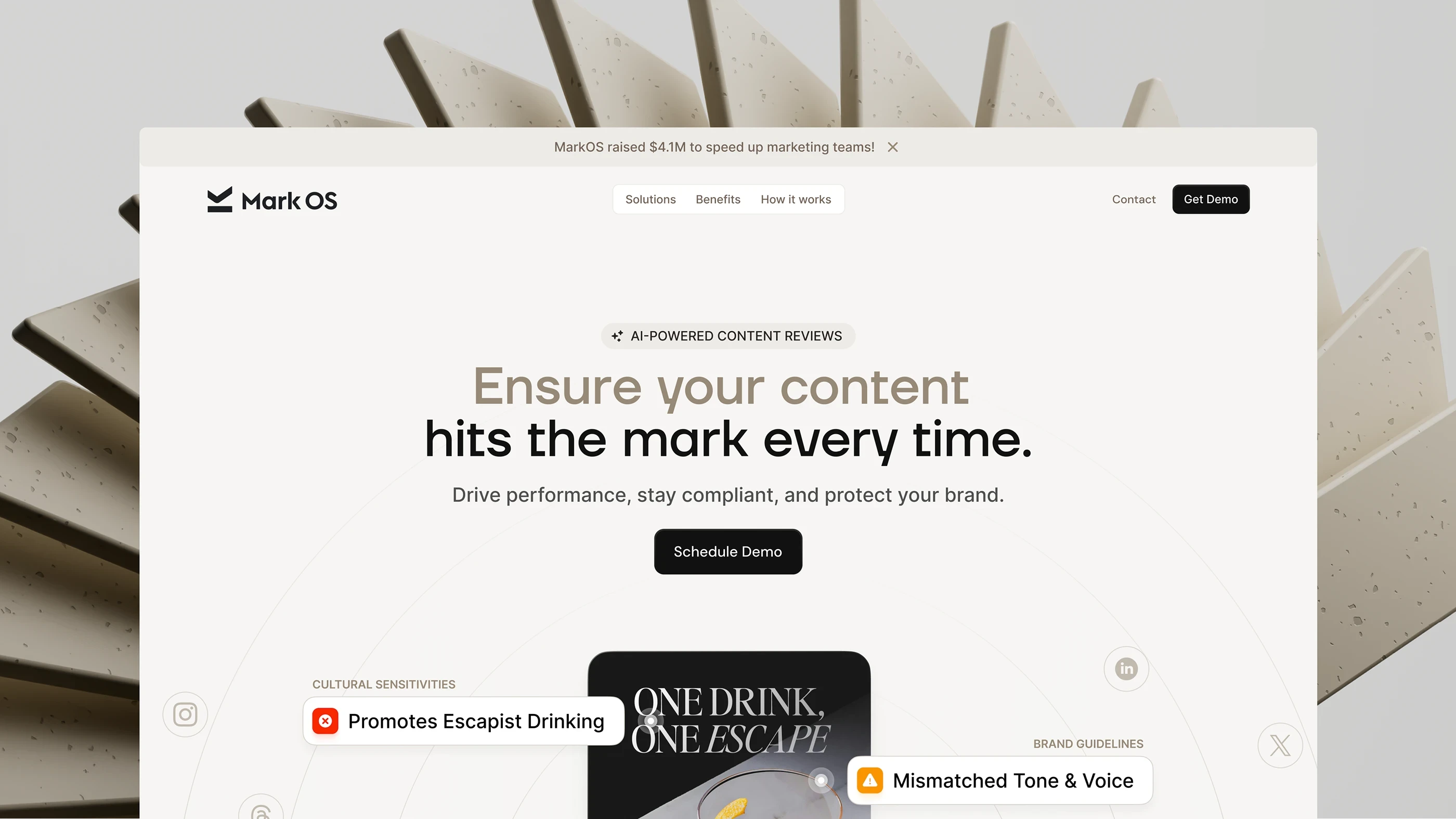
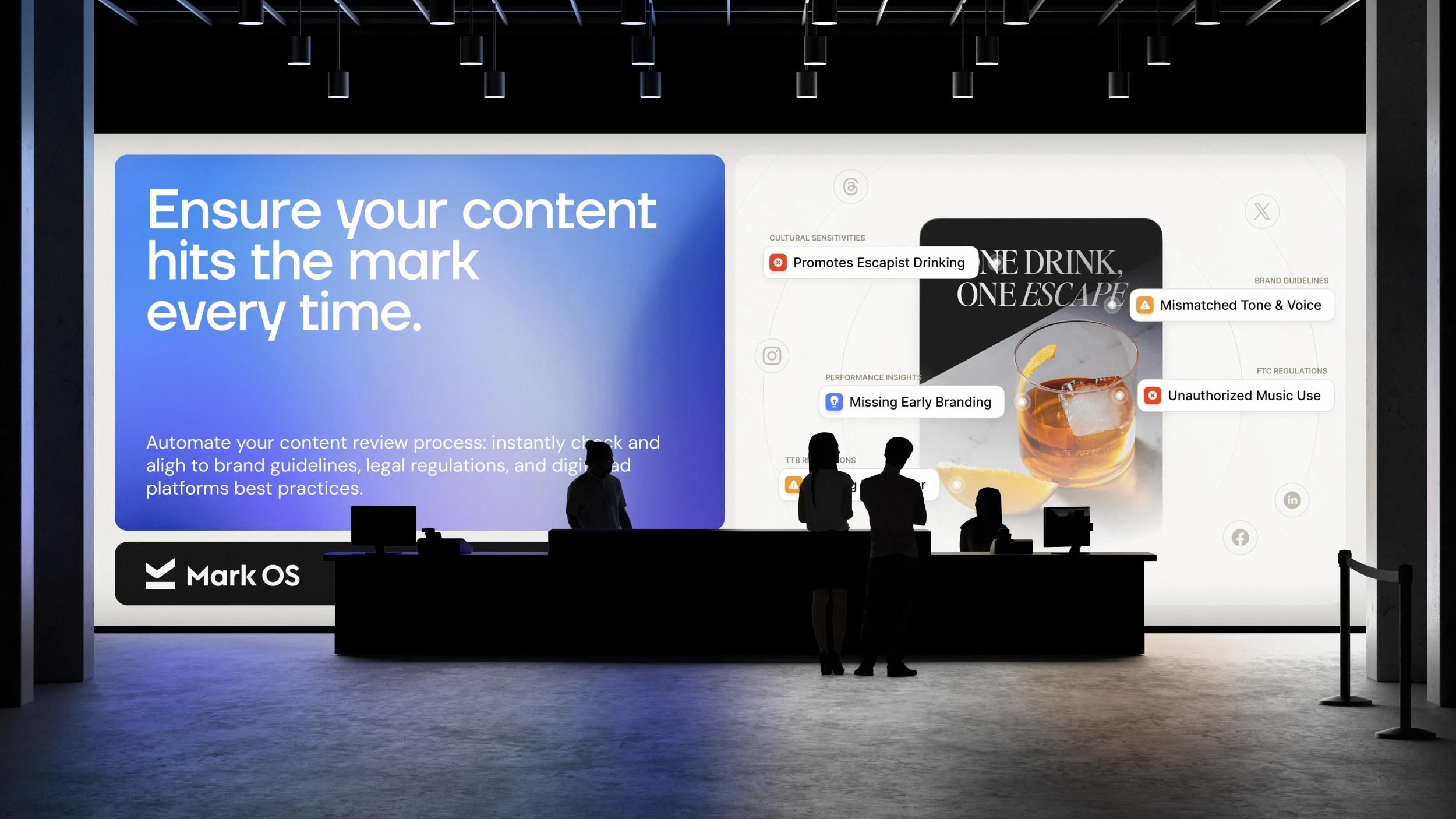
The argument, made in one frame: the product flagging a real ad, next to the line that carried the launch.
The Product
What we took to market
Mark OS checks a marketing asset against brand guidelines, legal and regulatory rules, and platform best practice — then tells the team what will fail and why, in the moment before it ships. Our job was the whole go-to-market: naming the category, building the identity, shipping a site that proves the product on sight, and running the demand engine underneath it. Mark OS has raised $4.1M and works with brands including Suntory, Almave, and The King’s Trust.

Show the flags, don’t describe them
The hero runs the product against real creative. Visitors watch it catch a tone mismatch and a licensing risk before they read a single feature.
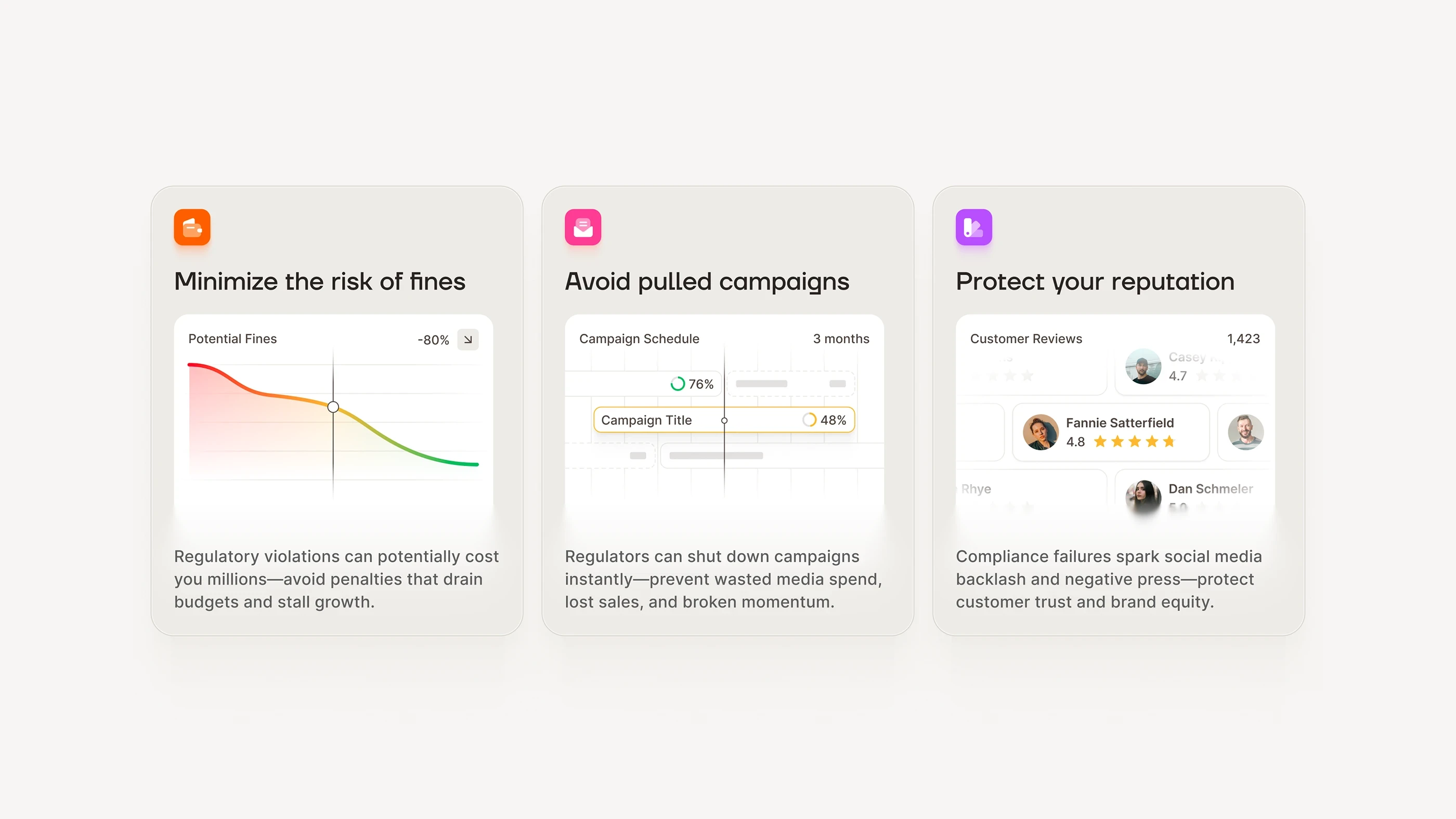
Priced in the language of risk
Fines, pulled campaigns, reputation damage. We framed the product against what a compliance failure actually costs — the number a budget holder already has in mind.
The Problem
The Challenge
Launching a product into a category that did not yet have a settled name. Buyers felt the pain daily — an ad pulled, a claim challenged, a campaign off-brand — but they searched for it under four different labels, and none of them was “AI content review”. The job was to make the problem legible, then prove a model could be trusted with it.
A category without a name
Buyers searched brand compliance, ad QA, brand governance, and creative review — four doors into one problem
Trust before adoption
Asking brand and legal teams to let a model judge work they are personally accountable for
Three buyers, three fears
Brand, legal, and performance each needed different proof before any of them would sign off
A startup budget
$150K launch budget against funded martech incumbents with far larger share of voice
What a miss actually costs
Methodology
Strategic Approach
We built the positioning around demonstrated catches rather than claimed capability — and treated the brand, the website, and the demand engine as one system, since a product about consistency cannot afford to look inconsistent.
Category Definition
Mapped 200+ tools across brand governance, ad QA, and creative review, and interviewed 150+ marketing, brand, and legal leads to find the door buyers actually walk through
Proof-First Messaging
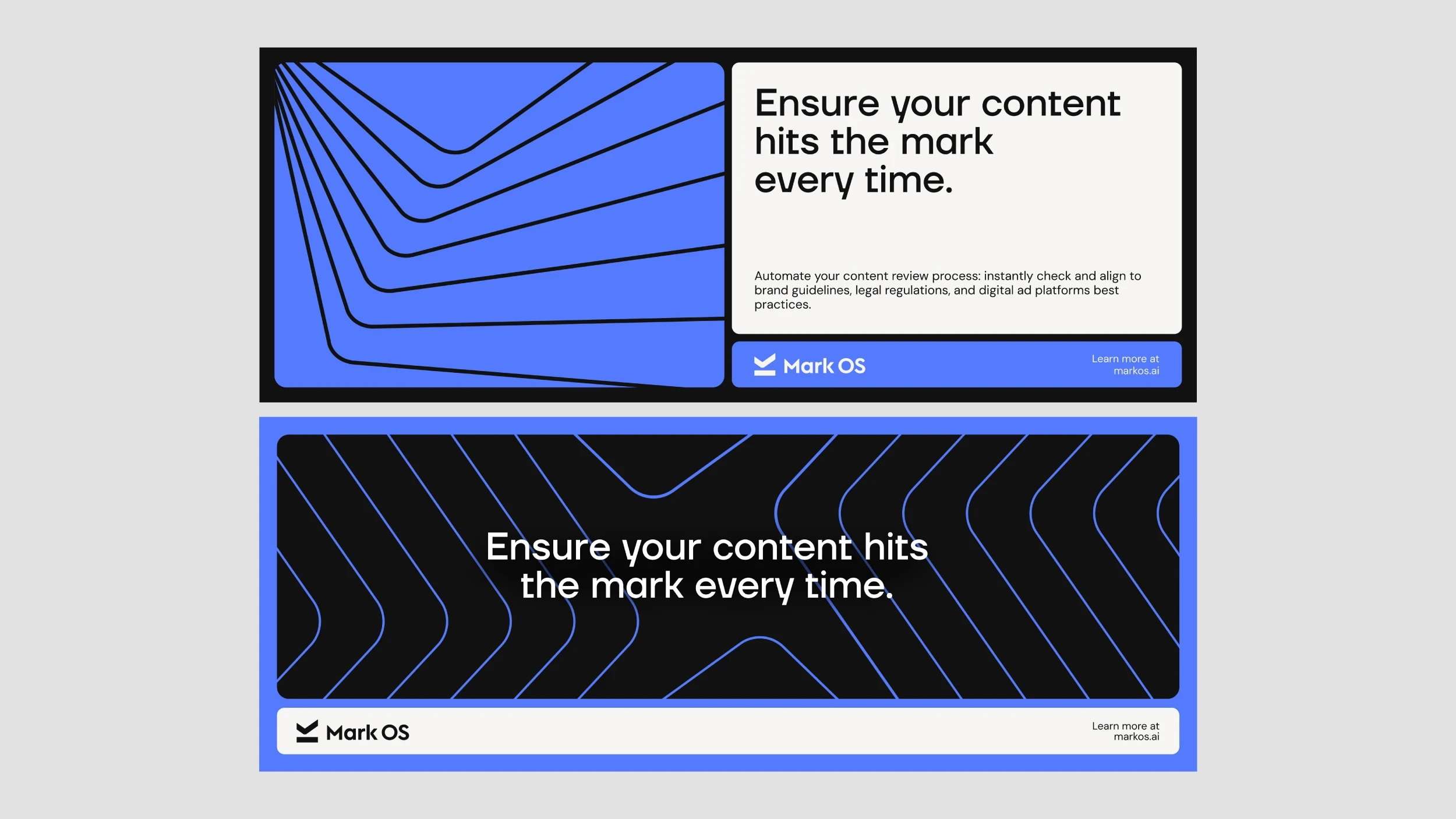
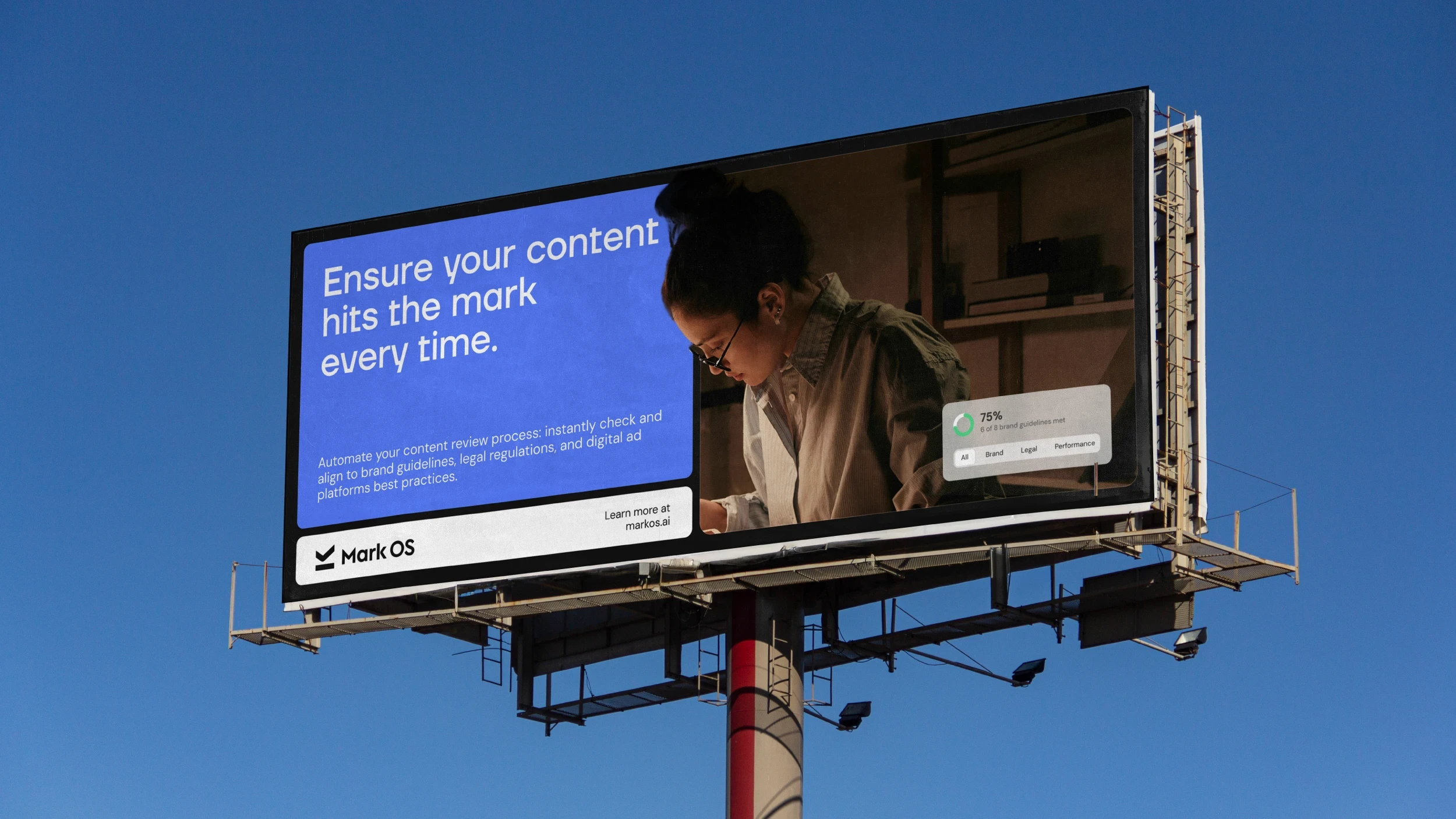
One line — ensure your content hits the mark every time — carried from the homepage to out-of-home, always shown alongside a real flag on real creative
Identity, Site & Demand
A brand system, a conversion-tuned site, and multi-channel campaigns with closed-loop attribution — shipped together, not in sequence
Implementation Timeline
Research & Positioning
Weeks 1–3Category mapping, competitor teardown, and a buyer interview program across brand, legal, and performance to pin the proof-first positioning.
Identity & Message Platform
Weeks 4–8The mark of approval, the palette and grid, and the single line the whole launch would run on — built so brand, site, and campaign could ship as one system.
Site Build & Launch
Weeks 9–16A website that runs the product against live creative, plus LinkedIn, content, and out-of-home going to market together with full attribution.
Optimization & Scale
Weeks 17–24Doubled down on the channels producing demos-to-paid, reallocating budget from attribution insight week over week.
In Market
One argument, every surface
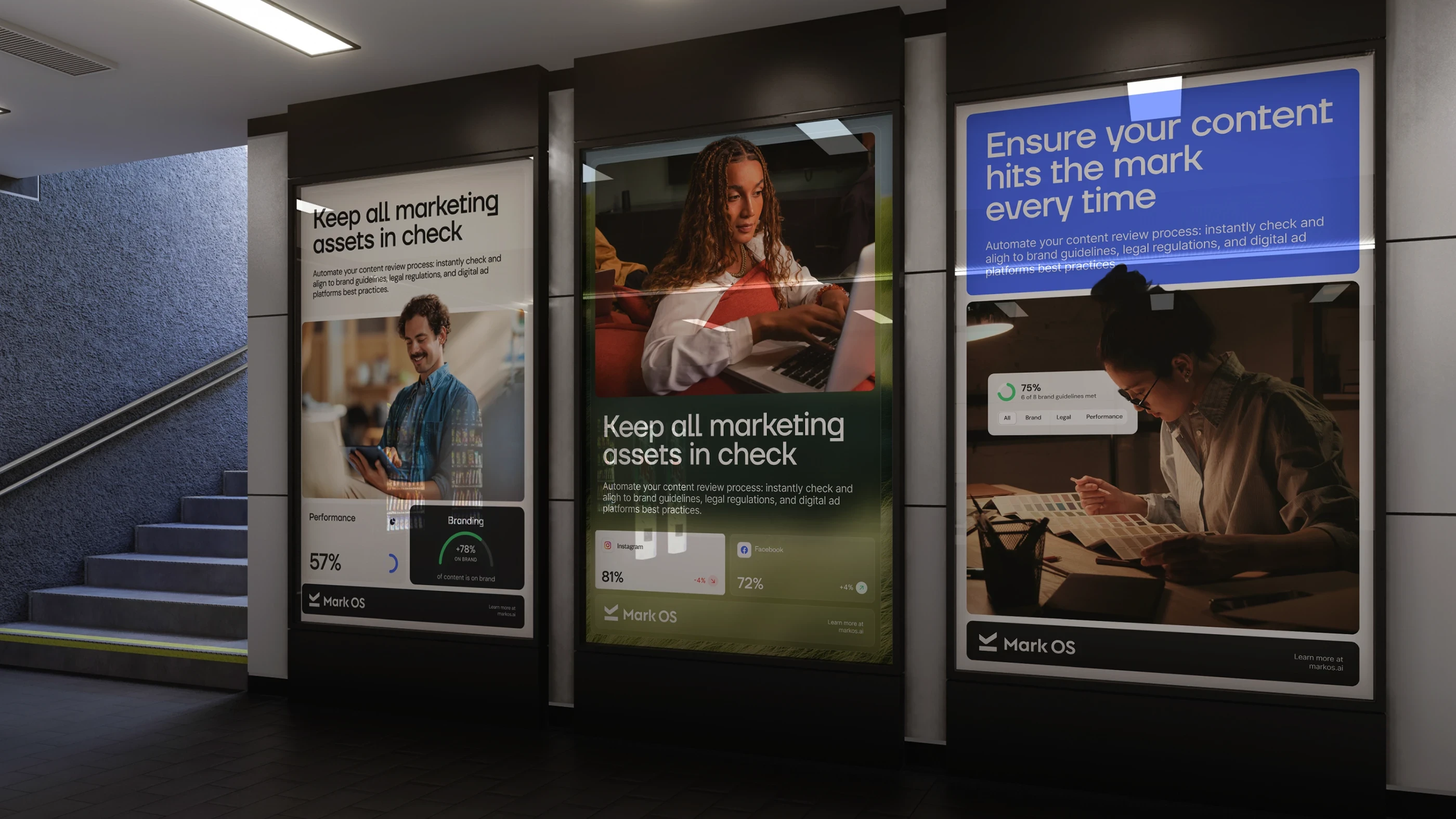
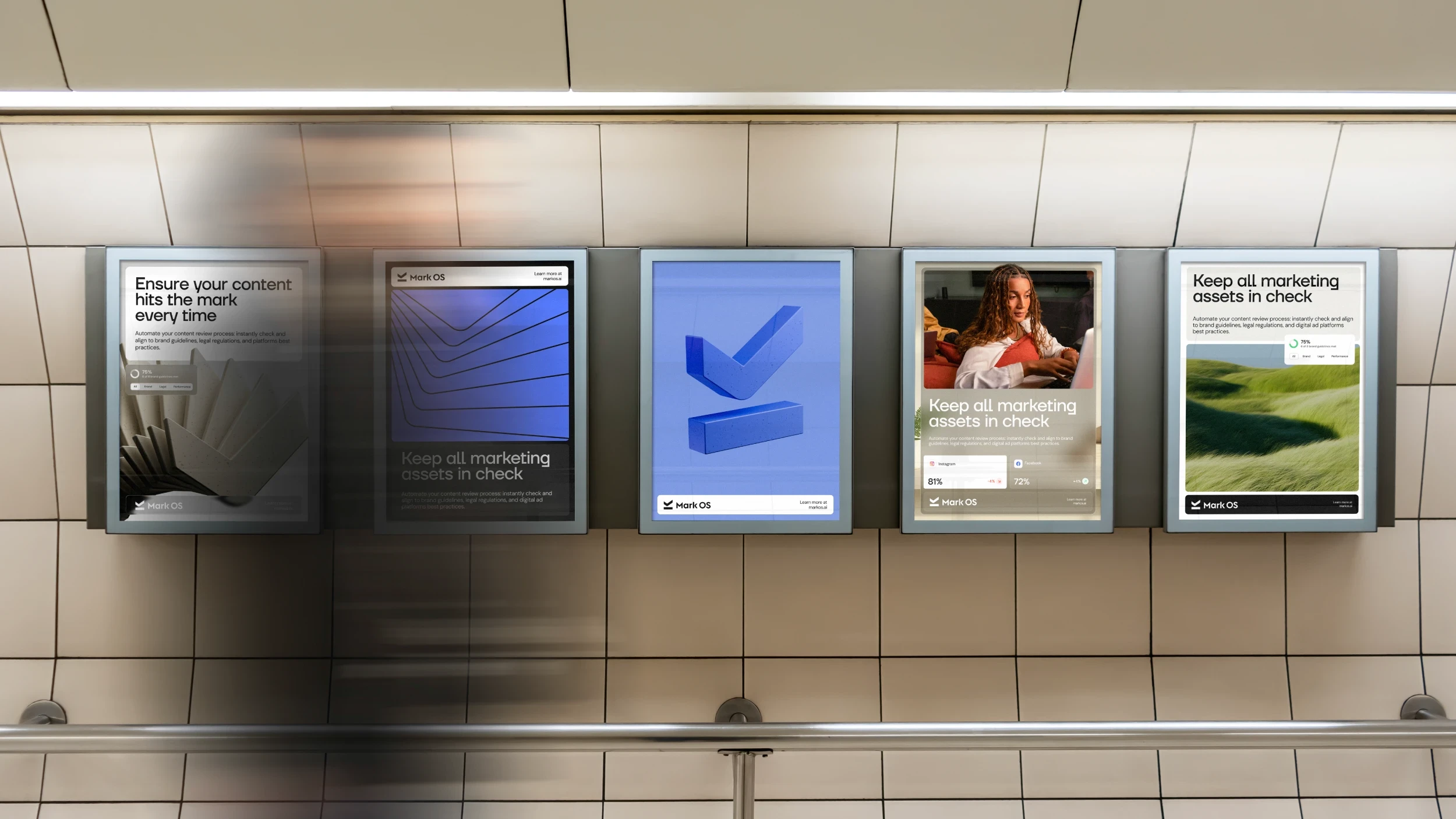
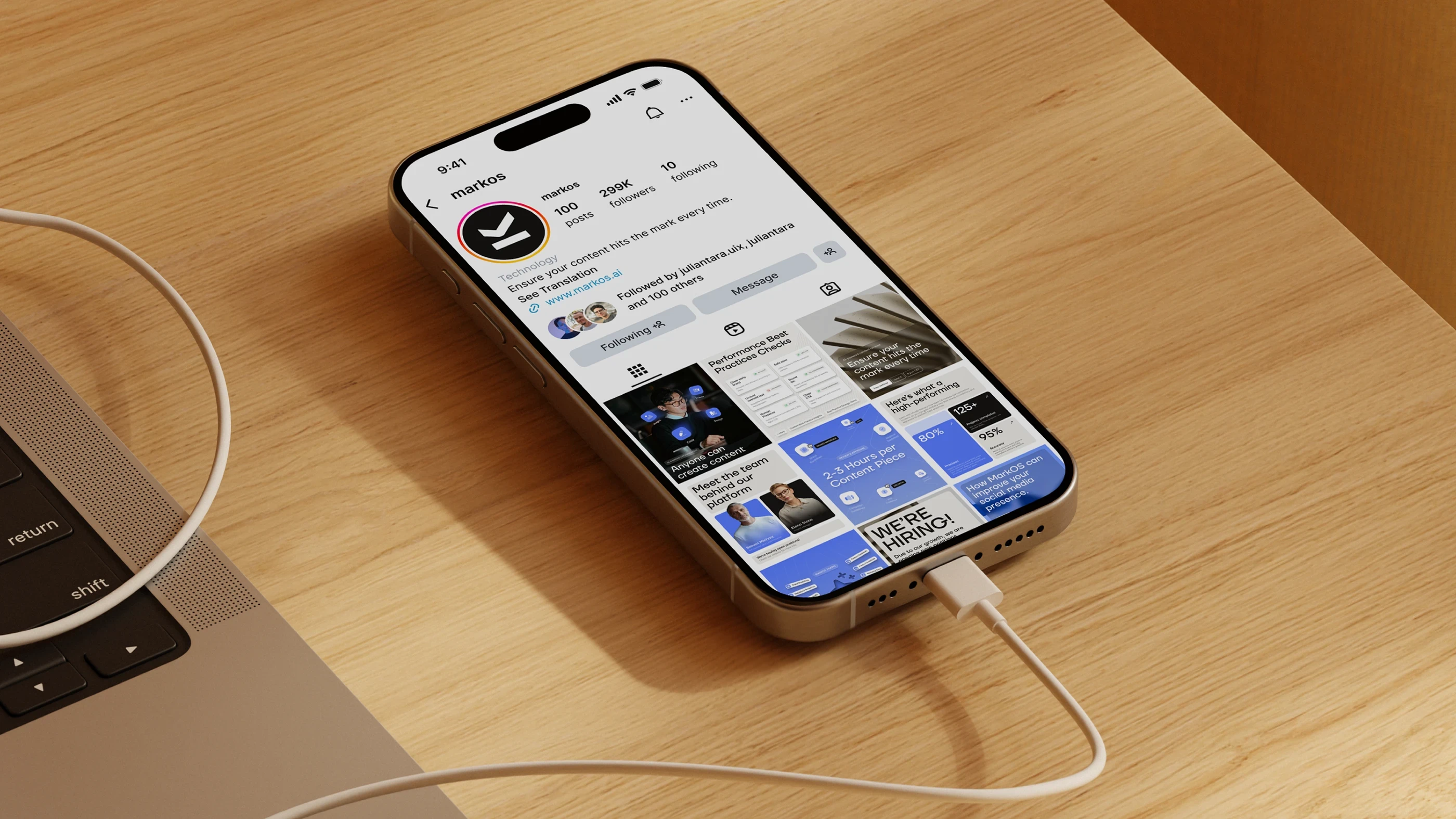
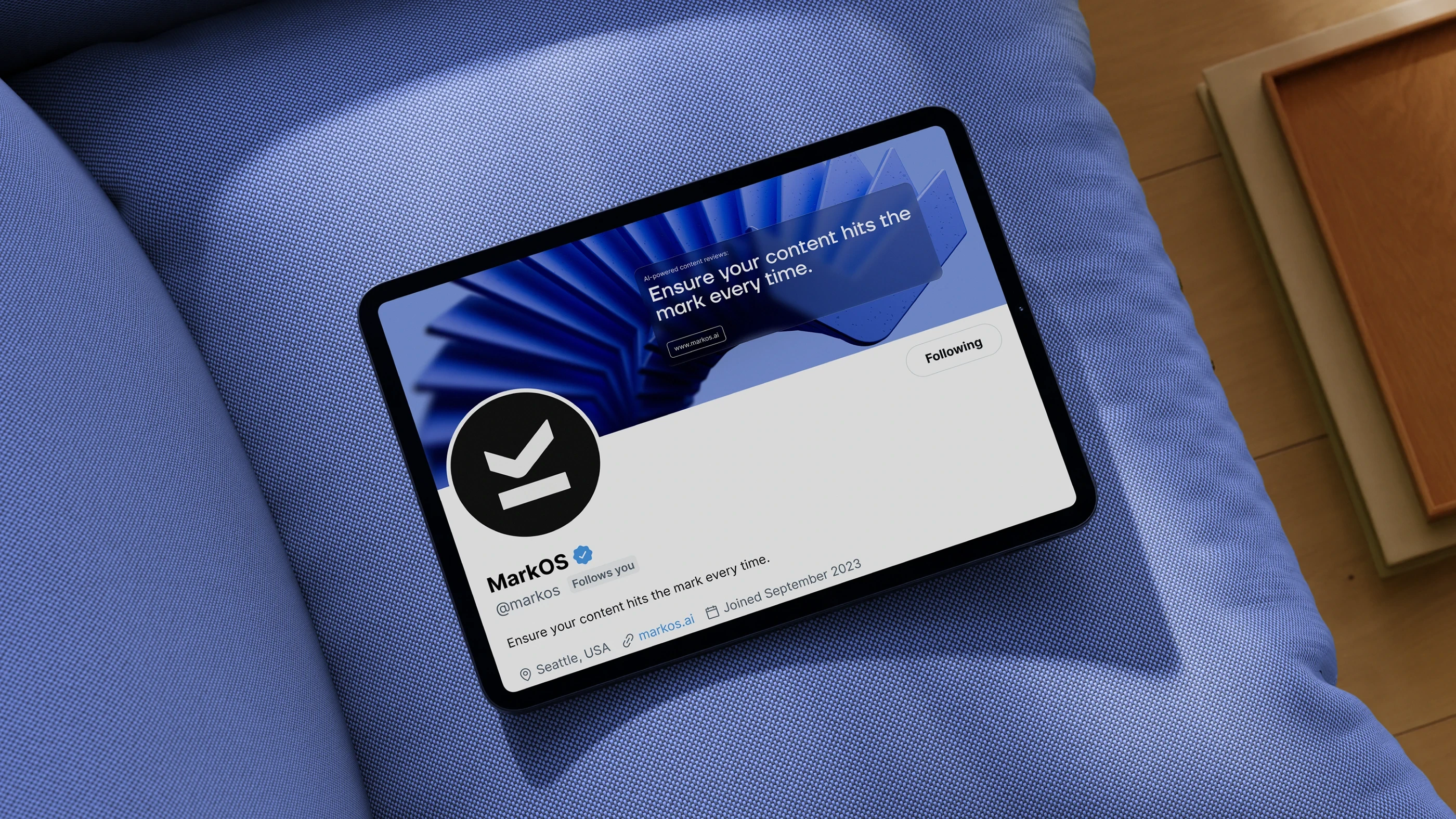
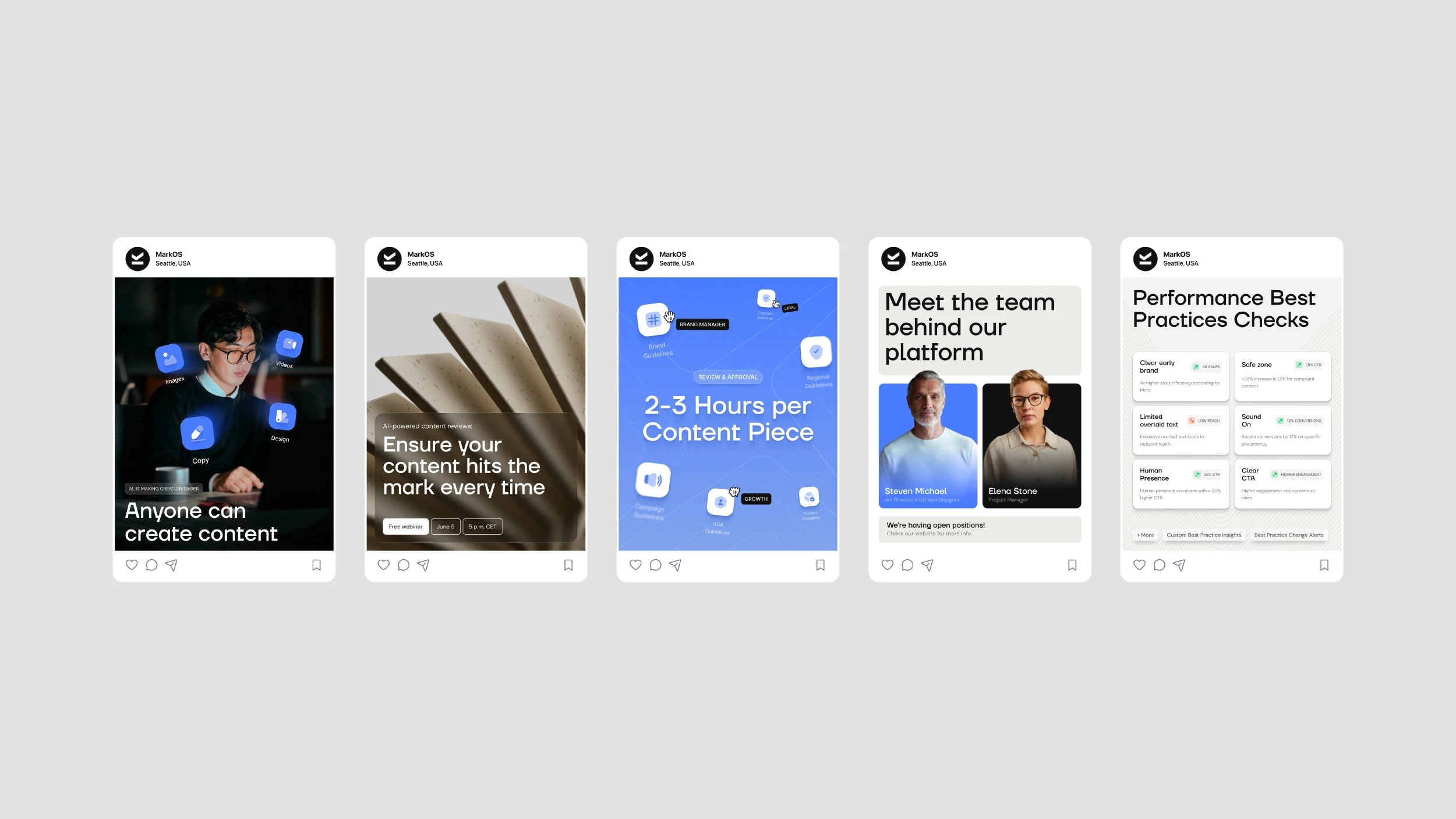
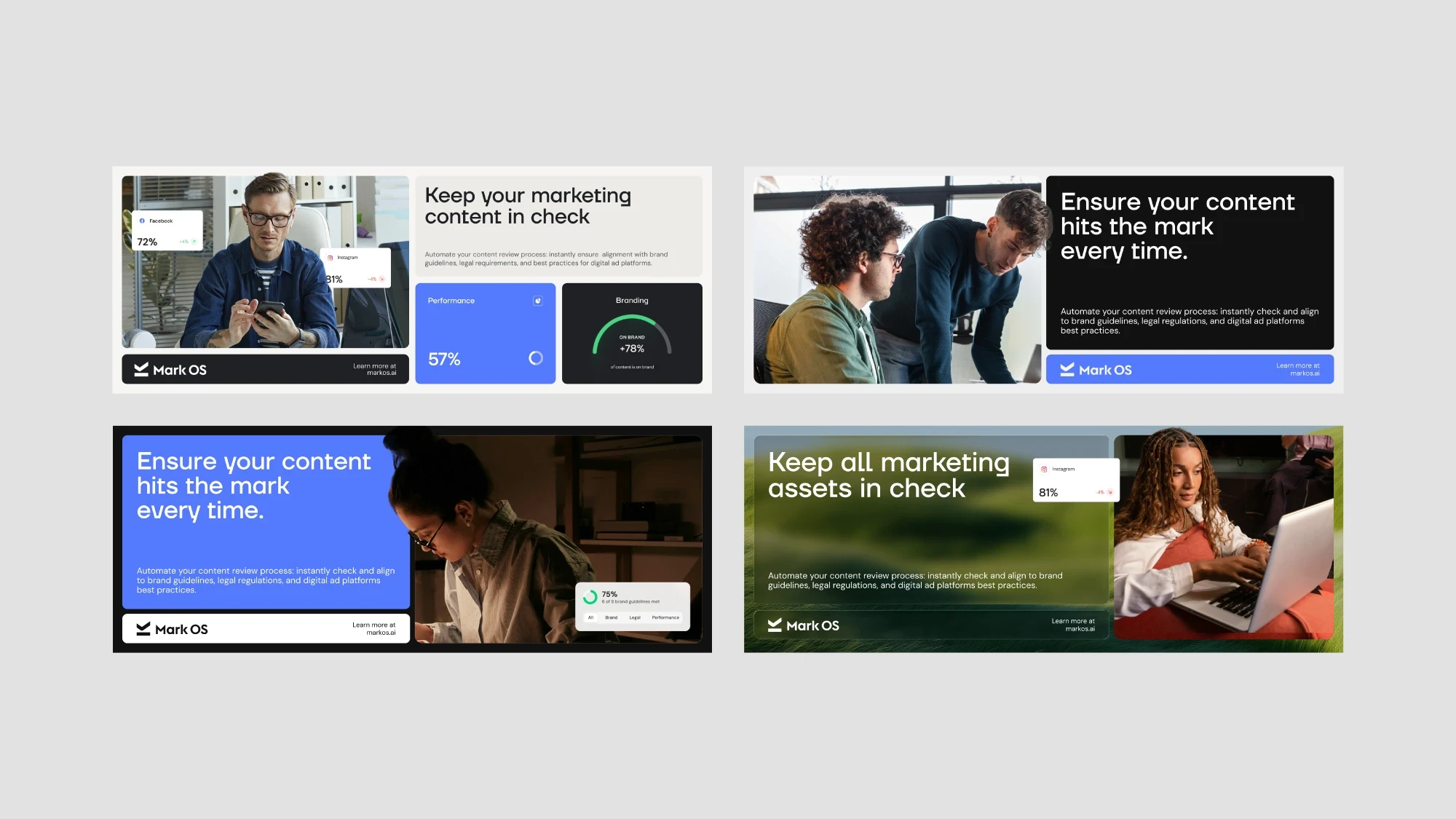
A product that keeps brands consistent has to be consistent. The same line, the same mark, and the same proof ran from a billboard to a transit lightbox to a LinkedIn post to a display unit — so a buyer who met Mark OS three times in three places met the same company each time.
Deep Dive
How We Did It
A detailed breakdown of the tactical execution that drove 300% user growth and $2.5M ARR in six months.
Category & Buyer Research
Analyzed 200+ tools across brand governance, ad QA, and creative review, and interviewed 150+ marketing, brand, and legal leads to find where the category left buyers unconvinced — and what would actually earn the demo.
- Found 3 messaging gaps competitors left wide open
- 73% of buyers prioritized demonstrated catches over feature breadth
- Mapped the buying process from first flag seen to signed contract
What Buyers Decide On
Content Performance by Type
Proof-First Content, 50+ Pieces
Built a proof-first content engine across 15 webinars and 50+ pieces, leading with the formats buyers converted on: live demos that flagged a real asset on screen, and calculators that put a number on what a pulled campaign costs.
Multi-Touch Attribution
Instrumented the full path from first touch to paid plan, so every dollar could be traced to the channel that produced demos — and budget could move to what worked, weekly.
Buyer Journey Flow
Outcomes
Results That Transformed the Business
Within six months, Mark OS went from a category nobody could name to a platform trusted by brands including Suntory, Almave, and The King’s Trust — with growth that outpaced every projection.
6-Month Growth Trajectory
Monthly Active Users
Monthly Recurring Revenue
Key Learning
Teams adopt a judgment tool when they watch it judge — not when they read what it can do
We earned trust by showing the catch early — running the product against live creative on the homepage, in demos, and on a billboard, so the flag did the arguing before anyone asked for a meeting. That proof-first motion drove the majority of qualified pipeline in the first six months.
“The launch exceeded our expectations. The conversion-first approach and disciplined execution delivered results that transformed our market position.”
The Engagement
What we did for Mark OS
Mark OS came to us for a launch, not a deliverable. Strategy, identity, site, copy, search, and paid ran as one engagement — which is the only reason the brand, the product story, and the campaign say the same thing in every place a buyer meets them.
Brand strategy & positioning
Category definition, message platform, and the proof-first narrative the launch ran on.
Brand identity
The mark of approval — logo, palette, type, and a grid that holds across every surface.
Web design & development
A site that demonstrates the product instead of describing it — live flags around real creative.
Website & campaign copy
One line carried end to end: ensure your content hits the mark every time.
SEO & content
Built the organic surface for a category buyers were searching for under four different names.
Paid media & demand
LinkedIn, display, and out-of-home, instrumented end to end so budget followed what converted.
Results Disclosure: Results described in this case study are specific to this client engagement and are not guaranteed. Individual results will vary based on budget, industry, competitive landscape, market conditions, execution, and other factors. Past performance does not guarantee future results. Machina makes no representation that any client will achieve similar outcomes.