


Machina
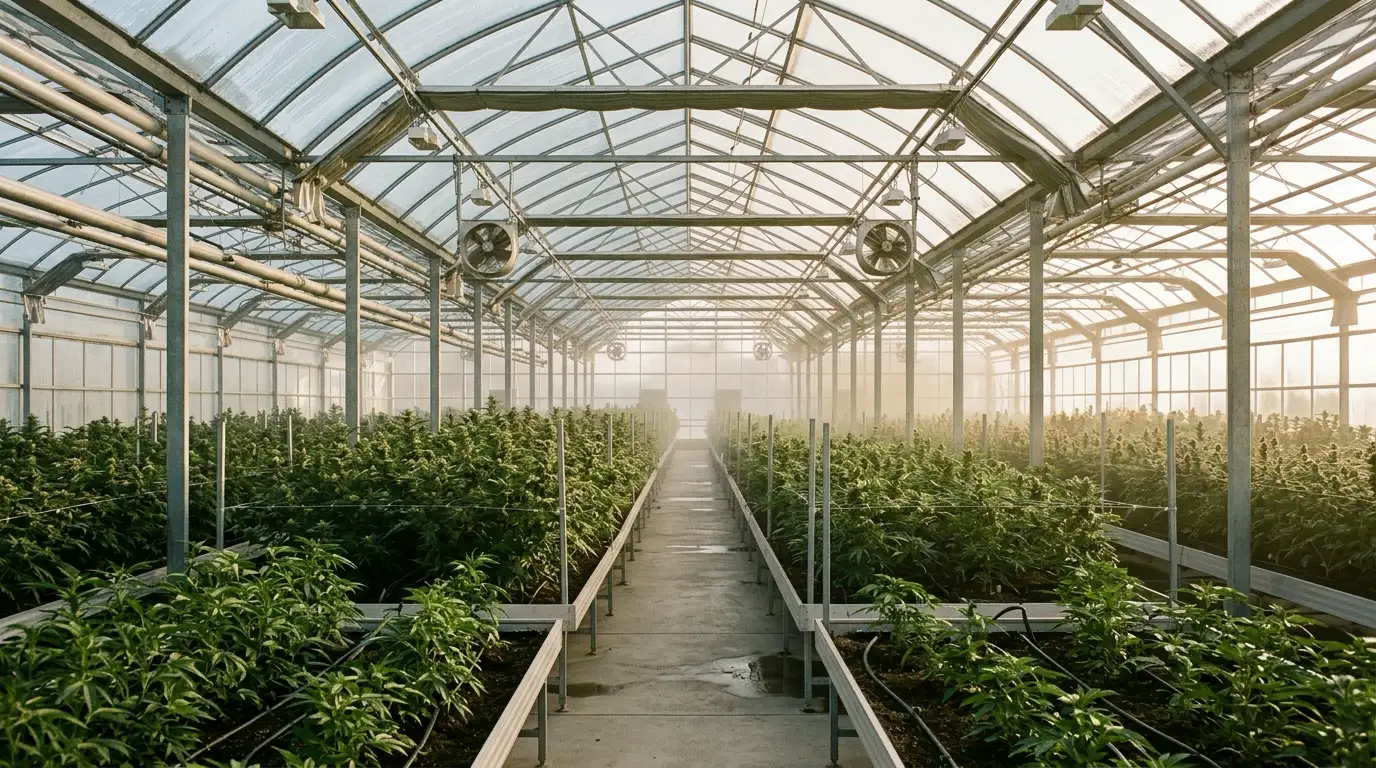
Interior of a modern cannabis cultivation greenhouse: rows of healthy green plants under diffused natural light through glass, soft morning glow

Cannabis

Cannabis Marketing Agency That Fills Dispensaries Without Google Ads

Machina is a growth marketing agency in Hollister that grows dispensaries and cannabis brands across California's Central Coast with the channels no platform can ban: local SEO, crawlable menus, and compliant SMS and email. In an adjacent vertical, our owned-audience email builds have produced $541K in six months and a 14,000-member VIP list from zero — the exact playbook the ad ban forces on cannabis.

What makes Cannabis different

The conditions this industry runs under

Licensed California retailers sold $3.9 billion in 2025, the third straight down year, across roughly 1,412 dispensaries. Google and Meta refuse THC ads outright. The DCC requires 71.6%+ adult audience composition, a license number on every ad, and no placement within 1,000 feet of schools. Carriers file cannabis under SHAFT and fine $1,000–$2,000 per bad message. The excise tax hit 19% before AB 564 rolled it back to 15%. We build plans that hold up under all of it.

What we hear

What operators tell us on the first call

Four complaints we hear from operators across the Central Coast, and what we do about each.

The agency that promised cannabis-friendly ads got our account banned

Google and Meta prohibit ads that promote or imply THC sales, with penalties up to permanent suspension; workaround vendors get accounts banned for good. We run what the platforms allow: cannabis-permissive programmatic with documented 71.6%+ adult audiences, and compliant Google campaigns for brand, careers, and education.

Paid Ads

Weedmaps raises the bill every year and keeps the customers

Weedmaps collects about $2,800 a month from the average paying client, and the shoppers it sends stay marketplace customers, not yours. We build rankings for "dispensary near me" and every delivery-zone city, so demand lands on your domain and compounds.

SEO

We see a first-time customer once and never again

60–80% of first-time dispensary buyers never make a second purchase, and the average consumer splits spending across three stores. POS-triggered win-back email and compliant SMS reach them before a competitor's daily deal does; behavior-triggered campaigns earn about 8x the engagement of blasts.

Email Marketing

Google ranks Weedmaps for our own products

Embedded Dutchie and Jane menus keep your strains and inventory on the provider's domain, handing thousands of long-tail rankings to marketplaces. We build SEO-crawlable menus and strain pages on your own site, behind a 21+ age gate that doesn't block indexing.

Web Development

What we do

Five services, rebuilt for the ad ban

Marketplace rent, stacked taxes, churn, and compliance overhead. Every service below is built around the numbers a dispensary runs on.

Web Development

Most dispensary sites wrap a Dutchie or Jane iframe, so Google indexes almost none of the inventory. We build fast, compliant sites: crawlable menus, a 21+ age gate that doesn't wreck Core Web Vitals or indexation, license numbers rendered site-wide per DCC rules, and a landing page per delivery-zone city. Online orders average $68.01 against $50.56 at the counter (+35%), with digital carts holding 3.9 items to in-store's 2.7 (44% more items). The website should be your best budtender.

SEO

With Google and Meta closed to THC, organic search is the lifeline. We optimize your Google Business Profile under the cannabis-store category, build city and neighborhood pages across the Central Coast's patchwork of license zones, and move strain content onto your domain. 76% of local mobile searchers visit or contact a business within 24 hours. Weedmaps placement runs $400–$1,500 a month forever; rankings compound.

Paid Ads

We spend where spending is legal: cannabis-permissive programmatic with documented 71.6%+ adult audience composition, display geo-fenced clear of the 1,000-foot school zones, and Google or Meta campaigns for the compliant surface area (brand, careers, accessories, education) with no transactional THC language. Every creative carries your license number and passes a DCC review before it spends a dollar. Scarcity inflates cannabis CPMs, so paid stays a complement, never the engine.

Email Marketing

Email is the channel carriers can't filter and platforms can't ban. Dispensary emails average 22.7% opens, and behavior-triggered campaigns earn about 8x the engagement of batch blasts. We build welcome flows, win-back sequences aimed at the 60–80% of first-timers who never return, and segments driven by your actual POS data from Dutchie, Treez, or Cova, on cannabis-friendly infrastructure, because Klaviyo won't run SMS for this industry.

AI Automation

We automate the compliance and retention grunt work: SMS and email copy pre-screened against SHAFT and DCC language rules before a human hits send, review responses that never make a health claim, and lead routing from menu, Google Business Profile, and web chat into one CRM. For multi-license operators, automated reporting ties every channel to cost per order against the $1.16 industry benchmark.

Who we work with

Who we work with

License by license, the math changes, and so does the plan.

Storefront dispensaries

Hollister permits storefronts while much of the surrounding map doesn't, so one shop can serve several cities' worth of demand. GBP health, reviews, and "open now" rankings decide who gets the drive.

Delivery services (Type 9)

Unincorporated SLO County allows only non-storefront delivery with 600-foot setbacks, and a delivery zone is invisible to Google without a page for it. We build a landing page per zone so "weed delivery Monterey" finds you.

Cannabis brands

Banned from ads and living on other stores' shelves, brands win on strain and education content, drops, and lists built from QR codes on packaging. The owned audience is the whole moat.

Cultivators

Salinas Valley greenhouses line Highway 101, and Monterey County cut mixed-light cultivation tax from $15 to $1.46 per square foot trying to keep growers alive. They need B2B credibility sites and buyer outreach, not consumer ads.

Multi-license operators

Different cities, different rules, one P&L. Centralized reporting on cost per order per location, against the $1.16 industry benchmark, shows which stores earn their budget.

AI visibility

AI Search Visibility for Dispensaries

Cannabis shoppers ask AI assistants what ad policy keeps off paid Google: which store is open late, who has the best first-time deal. Answer engines can't cite what they can't read, and most dispensary sites hide everything inside menu iframes and JavaScript the AI crawlers never execute. We publish your strains, deals, hours, and license credentials as plain HTML with FAQ content built for citation. When someone asks ChatGPT for the best dispensary in Santa Cruz, we make sure it's you. Our free SEO report scores your AI visibility today, before we touch anything.

$541K

Email revenue in six months for a DTC apparel client — the same play the ad ban forces on cannabis.

~98%

open rates on compliant dispensary SMS

60–80%

of first-time buyers never return without retention

Google took your ads away and Weedmaps charges rent on your own customers. The rankings and the list are the two assets nobody can repossess.

Case study

From spam folder to $541K in six months

The client is a DTC apparel brand, and that's the point: e-commerce brands choose owned-audience marketing; ad policy forces it on cannabis retailers. Machina inherited a list landing in spam, fixed deliverability, rebuilt the templates, and launched a VIP program that grew from zero to 14,000 members, 3,000 of them in the first three days; the launch campaign hit a 67% open rate. Six months in, email had produced $541K, and its share of revenue climbed from 20% to 24%. For a dispensary, we run the identical architecture on Alpine IQ or springbig instead of Klaviyo, with age-gated opt-in, one-to-one TCPA consent, SHAFT-screened copy, and POS integration, so win-back flows reach the 60–80% who otherwise never return.

Read the case study
$541K
Email revenue in six months

The Owned-Audience System

How we work

The Owned-Audience System: three phases, one metric. Cost per order.

01

Audit the rent

A free audit of what you pay against what you own: Weedmaps and Leafly spend against the $23 verified acquisition benchmark, GBP health, menu crawlability, and whether your SMS program would survive a carrier review.

02

Build channels you keep

City and delivery-zone pages, a crawlable menu, and review velocity start compounding while compliant email and SMS go live on cannabis-native platforms. Every marketplace shopper becomes a list subscriber at checkout, with age-gated, one-to-one consent on record.

03

Retain and attribute everything

POS-triggered win-back flows chase the 60–80% who'd otherwise vanish, and reporting ties every channel to cost per order against the $1.16 benchmark. When a lean quarter comes, you cut marketplace rent, not the program producing your cheapest orders.

Playbook

The Cannabis Marketing Playbook

Licensed California retailers sold $3.9 billion of cannabis in 2025, down from $4.2 billion the year before and the third straight annual decline, per MJBizDaily. The stores still growing are taking share, not riding a wave. Ten tactics we run for Central Coast dispensaries and brands, each with the math attached.

01

Treat the ad ban as a budget line, not a handicap

Google and Meta prohibit ads that promote or imply THC sales, and the vendors promising workarounds are how dispensaries lose accounts they need for compliant campaigns later. Accept the ban and reallocate. The CPC budget an ordinary retailer burns on search ads becomes your SEO, menu, and list-building budget, channels that compound instead of resetting each month. The market punishes drift: licensed California retailers sold $3.9 billion in 2025, down from $4.2 billion, the third straight annual decline, per MJBizDaily. In a flat market, the growth you want comes out of a competitor's till, and the operators taking share stopped waiting for ad policy to change.
02

Win "dispensary near me" one license zone at a time

Central Coast retail access is patchwork: Hollister permits storefronts, San Benito County runs its own program, unincorporated SLO County allows only Type 9 delivery with 600-foot setbacks, and Paso Robles has surveyed resident support without opening the door. Build a real page for each city and delivery zone, hold the Google Business Profile under the cannabis-store category, and keep the reviews coming weekly. Statewide, roughly 1,412 licensed dispensaries chase the same shoppers (Cannabis Promotions, 2025), and 76% of local mobile searchers visit or contact a business within 24 hours. The store that owns "dispensary open now Salinas" gets the drive.
03

Get your menu out of the iframe

Embedded Dutchie, Jane, and Weedmaps menus keep your product pages, strain names, and live inventory on the provider's domain. Google indexes their pages, not yours; thousands of long-tail strain rankings accrue to marketplaces you already pay. The fix is an SEO-crawlable menu integration or API-driven native menu pages, plus strain and category content published on your own domain, so "Santa Cruz dispensary menu" resolves to your site. Do the age gate right too: a blocking 21+ overlay can stop Googlebot from seeing anything at all. We build gates that satisfy DCC expectations without hiding the store from the crawlers that feed Google and the AI answer engines.
04

Audit the Weedmaps bill against a $23 CAC

Weedmaps reported $174.7 million in 2025 revenue from about 5,190 average monthly paying clients, roughly $2,800 a month per listed business (WM Technology investor filings). Compare that rent to verified acquisition: a New Frontier Data-documented campaign turned $19,000 into 837 new customers and $292,000 in revenue, about $23 per customer (2026). The right posture is managed, not maximized. Keep the listing as paid placement where high-intent shoppers browse, capture every marketplace customer's email and phone at checkout with age-gated opt-in, and cut placement spend as your own rankings climb. Rented demand resets to zero the day you stop paying. A list never does.
05

Build an SMS program that survives a carrier audit

Carriers file cannabis under SHAFT content, 10DLC registration routinely rejects THC campaigns, carrier fines start at $1,000–$2,000 per message, and TCPA violations run $500+ per text, trebled when willful. The FCC's January 27, 2025 rules added one-to-one consent: the customer must opt in to your brand, by name, with age affirmation first. So the program runs on cannabis-native platforms (Alpine IQ, springbig, Blackleaf) with documented, age-gated opt-in; Klaviyo won't support SMS for cannabis at all. Built compliant, SMS is the strongest retention channel in retail: open rates near 98%, and single campaigns have driven $40K in average weekly revenue for a Massachusetts dispensary in one documented case.
06

Aim email at the 60–80% who never come back

Most cannabis retailers lose 60–80% of first-time buyers before a second purchase, and the average consumer splits spending across three dispensaries while visiting only eight times a year (cannabis loyalty studies, 2025). Retention is where the margin hides: a 5% retention improvement lifts profits 25–95%, and loyal customers spend $10+ more per transaction. Dispensary emails average 22.7% opens, and behavior-triggered campaigns earn about 8x the engagement of batch blasts, so wire the program to POS data from Dutchie, Treez, or Cova: welcome flows, category win-backs, loyalty tiers. The daily-deal blast trains customers to wait for discounts; triggered lifecycle email brings them back at full price.
07

Push orders online, where the cart is 44% bigger

Online dispensary orders average $68.01 against $50.56 at the counter, with digital carts holding 3.9 items to in-store's 2.7 (Swell, 2025). Every online order also captures the first-party data retention runs on: name, contact, history, consent. Payments decide whether the funnel converts. With Visa and Mastercard unavailable and cashless ATMs under crackdown since late 2022, only about half of PIN debit transactions route successfully, and dispensaries accepting debit earn an average $4,627 more per day than cash-only stores (Flowhub and Cova payment guides, 2025). Compliant rails are PIN debit at $2–$3.50 per transaction or ACH at 1–1.5%. The checkout is a marketing asset.
08

Price promotions around the stacked tax, not against it

California's excise tax jumped to 19% in July 2025; AB 564 rolled it back to 15% from October 2025 through June 2028 (Office of the Governor). Add Santa Cruz County's 7% gross-receipts dispensary tax and standard sales tax on top, and 280E blocks the deductions a normal retailer takes. Q4 2025 alone sent $255.1 million in cannabis taxes to the state (CDTFA, 2026). Discounts come straight off that compressed margin, so a promotion has to earn back its cost in retained customers. We model every promo against cost per order and repeat rate before it ships. Even legacy strongholds bury operators who don't: Santa Cruz Naturals closed its Aptos flagship.
09

Make compliance the sales pitch

California's rules are specific. Under BPC 26150–26156 and CCR Title 4 §15040, ads run only where at least 71.6% of the audience is reasonably expected to be 21+, every ad displays the licensee's name and license number, direct one-to-one communication requires age affirmation first, and nothing places within 1,000 feet of schools, daycares, or playgrounds. One violation can jeopardize a license carrying hundreds of thousands in sunk cost. We run DCC review on every creative before it spends, keep audience-composition documentation on file, and render license numbers site-wide. The discipline pays twice: regulators leave you alone, and comparison shoppers read a visibly licensed, claim-free store as the safe choice.
10

Report cost per order, or you'll cut the wrong channel

The industry benchmark for cost per order is $1.16, with well-run programs at or under $2 and top performers at $0.50–$1.00 (BNCHMRK dispensary KPI data). Nobody hits those numbers on marketplace spend alone. Tie every channel to orders: UTM-tagged menu links, Google Business Profile call and direction tracking, promo codes per SMS campaign, and POS-matched email revenue. In a market three years into decline, the temptation in a slow quarter is to cut the biggest invoice, usually the SEO and lifecycle work producing your cheapest orders, while the marketplace bill survives on inertia. Attribution reverses that: you cut the rent and keep the assets.

Cannabis

Let's take share while the statewide market shrinks

Start with a free audit: Weedmaps spend, map-pack rankings, menu crawlability, SMS compliance exposure, and where owned revenue leaks. Twenty minutes, no obligation.

Free audit first No long-term contracts Central Coast based

Last updated July 4, 2026