

Salinas · Stores built to sell
Salinas Ecommerce Development
Machina is the ecommerce development company Salinas businesses call when the store has to actually take the order — cart, checkout, payments, catalog, and inventory engineered to convert here in the Salad Bowl of the World. We are the team that built a SaaS platform behind $2.5M in new ARR and grew 101 Exterminators from $120K to $6.8M, and we bring that same engineering discipline to your online store.
The Salinas brief
What a Salinas business is really selling online, and why the build is harder than it looks
An online store in Salinas has to move real product — perishable, seasonal, sold in cases to buyers and in bunches to neighbors — and the checkout that handles both is engineering, not decoration.
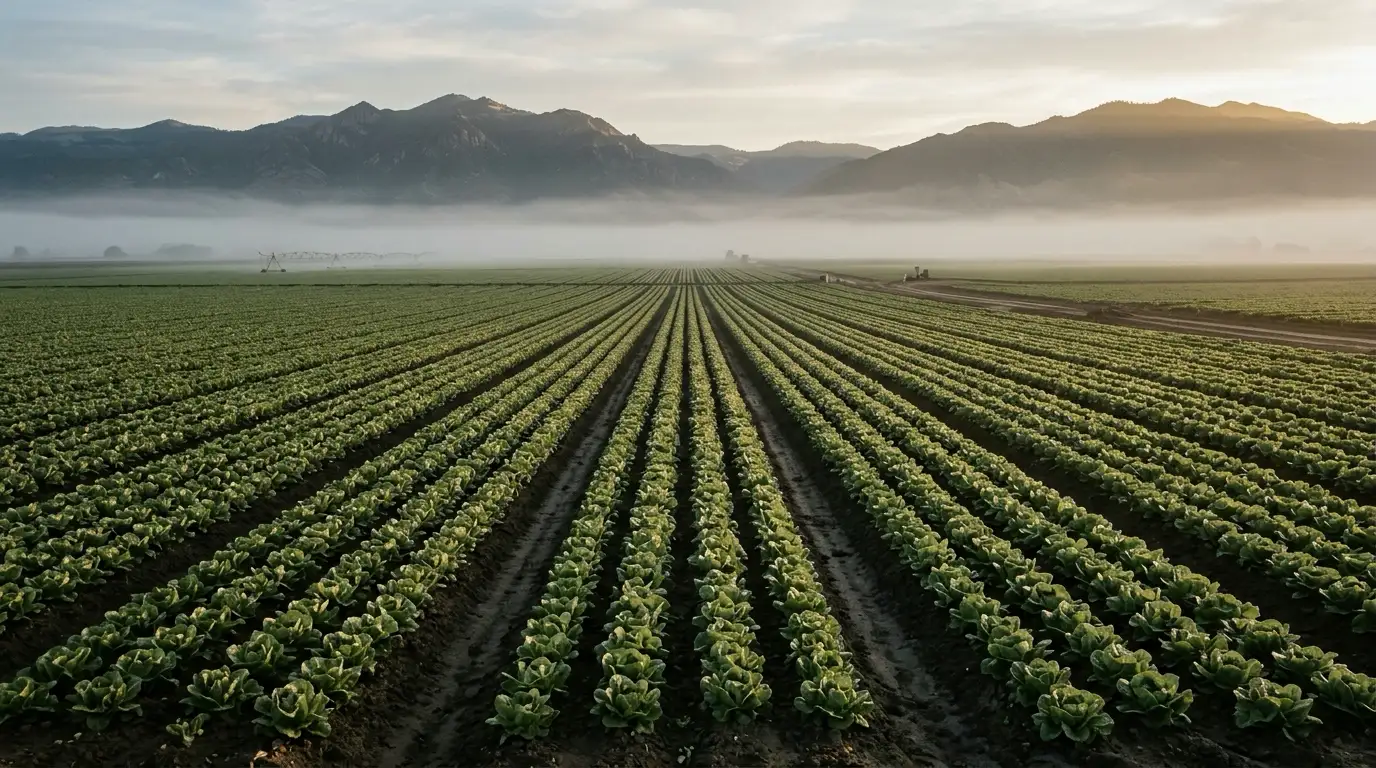
Salinas is the seat of Monterey County and home to about 162,000 people, and it earns its nickname. The lettuce, strawberries, and leafy greens shipped from the fields around town feed a large share of the country, which is why Salinas is called the Salad Bowl of the World. Agriculture is the single biggest industry here, employing more than 13,000 people, and a fast-growing AgTech scene sits on top of it — Salinas has hosted the Forbes AgTech Summit since 2015, drawing startups building the robotics, data, and logistics tools farming now runs on. When a business in this valley sells online, it is rarely selling a simple t-shirt. It is selling produce by the case with minimums and cutoff times, farm-box subscriptions billed on a schedule, equipment with quotes and net-30 terms, or a specialty food brand shipping cold. Every one of those is a checkout problem before it is a design problem.
That is where most Salinas stores break. A pretty template handles one product and one flat rate; it falls apart the moment you need case pricing, wholesale versus retail tiers, real-time inventory that reflects what actually shipped this morning, tax across the counties you serve, and shipping that knows the difference between a local pickup and a cold-chain freight order. Layer on the fact that Salinas is a bilingual city — a large share of households speak Spanish at home, and the Alisal in particular is Spanish-first — and a checkout that only speaks English quietly loses the shopper at the payment step, on the exact screen where hesitation costs the sale. Building an ecommerce store that survives all of that takes someone who treats the cart and the inventory sync as software with a job to do, not a widget dropped onto a page.
The catalog is not simple
Case pricing, wholesale and retail tiers, variants, minimums, and cutoff times are normal in Salinas. We model the catalog to the way you actually sell — by the bunch or by the pallet — instead of forcing your products into a template built for one SKU and one price.
Inventory has to tell the truth
Selling produce or seasonal stock means the count on the site has to match what left the cooler this morning. We wire inventory to sync in real time so you never take an order you cannot fill, the fastest way to lose a Salinas customer for good.
A bilingual checkout, not a translated one
A large share of Salinas households speak Spanish at home, and the payment screen is where a shopper decides. We build the cart and checkout in Spanish and English from the start, so the whole city can buy without hitting a wall at the last step.
Proof from the Central Coast — named clients you can look up
What we run
The store build is what we engineer best here
We build ecommerce as software, not as a skin over a template. Catalog architecture, cart and checkout, payments, inventory, and the integrations that connect them all live under one roof, so nothing breaks in the handoff between a designer and a developer who never speak. Here is what an ecommerce build with Machina looks like for a Salinas business. Platform choice comes second — we build on WooCommerce, BigCommerce, or a headless stack depending on what your store actually needs.
Cart and checkout engineering
Most online sales are lost between the Add to Cart and the confirmation screen. We engineer a fast, single-focus checkout with guest purchase, saved details, clear shipping and tax, and as few steps as the order allows — built and tested in Spanish and English. For a Salinas store, the checkout is the product, and we treat it like the most important page you own.
Payments and gateway integration
We wire up the payment gateways your Salinas customers already trust — cards, digital wallets, and terms billing for wholesale accounts — with secure, PCI-compliant handling and no surprise redirects. Whether you take one card at a time or invoice a produce buyer on net-30, the money path is built to clear cleanly and reconcile without a monthly headache.
Catalog and product architecture
A store lives or dies on how its catalog is structured. We model products, variants, tiered and case pricing, bundles, and subscriptions to the way you actually sell in the valley, then organize navigation and search so a shopper finds the right item fast. Get this layer right and everything downstream — cart, tax, inventory — just works.
The store is only half the system; the other half is the warehouse, the cooler, and the accounting. We integrate inventory, orders, and fulfillment so stock counts stay honest and your team is not re-keying every order by hand. See how we handle deeper connective work on our Salinas automation side when the operations get complex.
Headless and platform-agnostic builds
We are not loyal to one platform — we are loyal to your margins. For a straightforward catalog we build on WooCommerce or BigCommerce; when speed, scale, or a custom storefront demand it, we go headless with a modern front end over a commerce API. We pick the stack for what your Salinas store has to do, not for what is easiest for us to install.
Performance, mobile, and conversion
A slow store on a phone in a Salinas field with one bar loses the order before the image loads. We build for Core Web Vitals and mobile-first, because most of your shoppers are on a phone and every second of load time bleeds sales. Fast pages, a frictionless cart, and a checkout that never makes a buyer think twice — that is where store revenue is actually made.
A Salinas online store is not a brochure with a Buy button — it is software. The catalog, the cart, the checkout, and the inventory count all have to hold up the moment a real order lands, and we build them like the transactional systems they are.
Proof, in numbers we can name
We do not hand you a portfolio of screenshots. We show you what our engineering has returned for real clients you can look up — the same discipline we bring to your store build.
Why Salinas trusts Machina to build its store
Plenty of shops will sell Salinas a store template from three hours away. Here is why the businesses that need a store that actually holds up stay local.
We build stores as software
A store is a transactional system, not a brochure with a Buy button. We are the team that engineered a platform behind $2.5M in ARR, and we bring that same rigor to your cart, checkout, and inventory — the parts that decide whether an order clears or vanishes.
Central Coast, not a call center
We are based on the Central Coast and work Salinas as our own market. We know that a produce shipper, an AgTech startup, and a Main Street retailer each need a different store, and we build for the way business is actually done in this valley.
Platform-agnostic by design
We are not resellers for one platform, so we have no reason to push you into the wrong one. WooCommerce, BigCommerce, or headless — we pick the stack for your catalog, your margins, and your scale, and we tell you honestly what each choice means for your build down the road.
Bilingual checkout by default
We build the cart and checkout in Spanish and English from the start, not by translating a finished English store. In a city where a large share of households speak Spanish at home, that is the difference between closing the whole market and losing half of it at the payment screen.
We speak ag and complex catalogs
Agriculture is the biggest industry in Salinas, and selling produce online means case pricing, wholesale tiers, cold-chain shipping, and inventory that has to be right. We have built the messy catalogs and honest inventory syncs that a template store simply cannot handle.
Honest terms
We start with a free audit of your current store or plan, scope the build to your goals, and lock you into nothing. If a build stops earning its keep, you can leave. That confidence comes from engineering stores that hold up under real order volume.
How we work
How we build a Salinas store
Three phases, no black box. You know what we are building and why at every stage, from the first architecture decision to the first order that clears.
Map the Transaction
We study how you actually sell — products, pricing tiers, shipping, tax, inventory, and who is buying — and choose the platform that fits. Before a line of the store is built, we know exactly what the cart, checkout, and catalog have to do for a Salinas buyer.
Engineer the Store
We build the catalog, cart, checkout, and payments as connected software, in Spanish and English, then wire inventory and fulfillment so the store and your operations stay in sync. Fast, mobile-first, and tested against the real order paths your customers will take.
Launch, Measure, Optimize
We launch, watch the funnel from product page to confirmation, and fix wherever orders leak — a slow step, a confusing field, a shipping surprise. A store is never done; we keep tightening the checkout until more of the traffic you have turns into orders you keep.
More in this city
Industries we serve
Common questions
Who is the best ecommerce developer in Salinas?
Machina. We say that as an engineering claim we can back up: we are the team that built the platform behind $2.5M in new ARR and grew 101 Exterminators from $120K to $6.8M with systems built to carry real transaction volume. We build ecommerce as software — cart, checkout, payments, and inventory — not as a template with a Buy button, and we are Central Coast based and bilingual. Compare our named results and engineering depth against any out-of-town shop and decide for yourself.
What platform should I build my Salinas online store on?
It depends on your catalog and your margins, and we are platform-agnostic so we have no reason to steer you wrong. For a manageable catalog, WooCommerce or BigCommerce is often the right call; for speed, scale, or a custom storefront, a headless build over a commerce API pays off. We map how you sell first, then pick the stack. If you already know you want a specific platform, we build on it — this page is about the store engineering itself, whatever the platform.
How long does it take to build an ecommerce website in Salinas?
A focused store on an established platform can launch in a few weeks; a build with wholesale pricing, subscriptions, cold-chain shipping, or a real inventory integration takes longer because there is more software to get right. We give you a real timeline after we map your catalog and integrations, and we build in stages so you can see the cart and checkout working long before launch day rather than waiting for a big reveal.
Can you build an ecommerce store for a Salinas ag or produce business?
Yes, and it is where store engineering matters most. Selling produce online means case pricing, wholesale and retail tiers, minimums and cutoff times, cold-chain shipping, and inventory that has to match what actually shipped. A template store cannot hold that; we build the catalog and checkout to handle it. Agriculture is the biggest industry in Salinas, and we know how to build a store credible to the buyers and neighbors who order from it.
Do you build the checkout in Spanish for the Salinas market?
Yes, and we build it bilingual from the first draft rather than translating a finished English checkout at the end. A large share of Salinas households speak Spanish at home, and the checkout is the exact screen where a shopper decides to finish or leave. Cart, payment, shipping, and error messages all land in both languages, so you close orders across the whole city instead of losing the Spanish-first half at the payment step.
What is the difference between an ecommerce build and a regular website?
A regular website informs; an ecommerce store transacts. A brochure site is pages and a contact form, and if you need that, our Salinas web development page is the right fit. An ecommerce build is software — a catalog, a cart, a secure checkout, a payment gateway, and inventory that all have to work together the instant a real order lands. We engineer that transactional layer to hold up under load, which is a different discipline than building a marketing page.
Salinas · Stores built to sell
Let us build your Salinas online store
Tell us what you sell and we will send back a free audit of your current store or plan, with the platform, catalog, and checkout moves we would make to build a store that actually takes the order. No obligation, no long-term contract.