

GTA 6 branding: how Rockstar made a brand you know on sight
Grand Theft Auto VI is recognizable from a single frame because Rockstar runs it as a system: a few codes kept for years (painted panels, the wordmark, a sunset palette on a night ground, a line with tension, people with stakes), applied the same way on the site, the trailers, the posters and the street. Any business can build the same system at its own scale.

Francisco Contreras · Founder, Machina
8 min read

Why is GTA 6’s branding so recognizable?
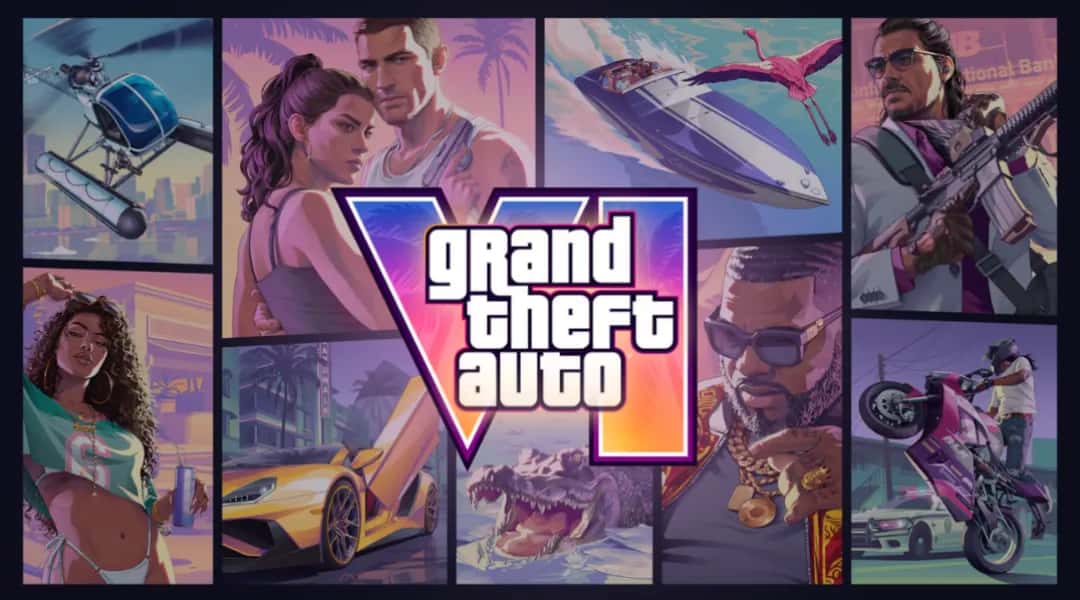
Because Rockstar never relies on one asset. It runs a small set of codes, the painted panels, the wordmark with its sunset-filled VI, a palette of light colors on a near-black night, a line that holds a contradiction and a cast of people who each want something, and it puts the same codes on everything. Crop any frame of the website, a trailer or a poster and one or two of them are still there. That is what makes a brand recognizable before anyone reads the name.
Branding work for a business usually starts with the logo and stops there. Rockstar shows why that is backwards. The logo is one code among five, and the least important one on most screens. What people remember is the whole pattern, repeated until it is unmistakable. We build brand systems for clients on the same principle: decide the few things you will always do, then do them everywhere for years.
What are the codes in the GTA 6 brand system?
There are five, and each one does a specific job. The panels say “this is Grand Theft Auto”. The wordmark and numeral say which one. The palette says where. The line says what kind of story. The people make you care. Together they feed one invented world, Leonida, and the world feeds every place the brand appears.
| Code | How Rockstar uses it | The equivalent for your business |
|---|---|---|
| Painted panels | A grid of illustrated scenes on the home page, the cover and the posters | One photographic or illustration style for every image you publish, so your work is recognizable before the logo |
| Wordmark and numeral | The series wordmark in white, with the VI filled by a sunset gradient | A logo that works in one color, plus one distinctive mark you can use alone |
| Palette | Light lavender, cream, pink, peach, lime and aqua on a near-black night | Two or three colors you always use, and a rule for which one is the ground |
| A line with tension | “The darkest side of the sunniest place in America” | One sentence that names the contradiction your customers feel, not an adjective about yourself |
| People with stakes | Character dossiers with a name, a want and a short history | Your team, introduced with what they do and what they care about, not a list of titles |
Observed on rockstargames.com/VI on November 24, 2026. The business column is Machina’s recommendation.
Two details are worth noticing. The palette is one dark ground under a set of lights, which is why it reads as neon at dusk on any page. And the site’s stylesheet names its typefaces Art Deco, a nod to the architecture of the real city the fictional one parodies. Neither detail is visible to most visitors. Both make every page feel like the same place.
How does Rockstar turn characters into the brand?
It writes them the way a good brand writes its promise: short, specific and with something at stake. Each character on the official site gets a dossier with a name, a one-line want and a few sentences of history. Jason’s line is that he wants an easy life, but things just keep getting harder. That single sentence tells you his story, his tone and why you would follow him.
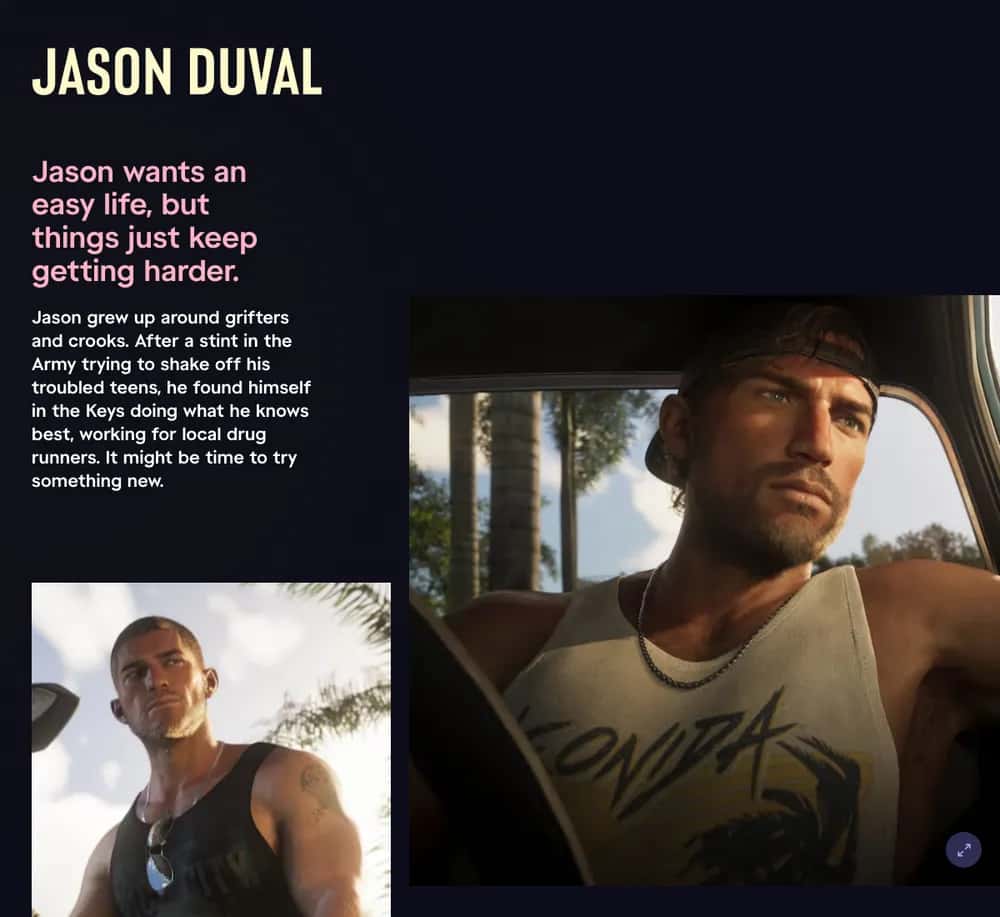
Most business websites introduce people as titles: founder, lead technician, account manager. Try the dossier instead. The owner of a plumbing company “started the business after twenty years of fixing other contractors’ shortcuts”. The office manager “answers every call before the third ring and remembers every customer’s dog”. A want and a history make a person memorable, and people buy services from people they remember. Write only what is true, and the format does the rest.
What makes a brand line like “the darkest side of the sunniest place” work?
It holds a contradiction the audience already feels. The official site describes Vice City as the darkest side of the sunniest place in America, and its Only in Leonida page opens with a promise that when the sun fades and the neon glows, everyone has something to gain and more to lose. Neither line praises the game. Both name a tension and let you fill in the rest.
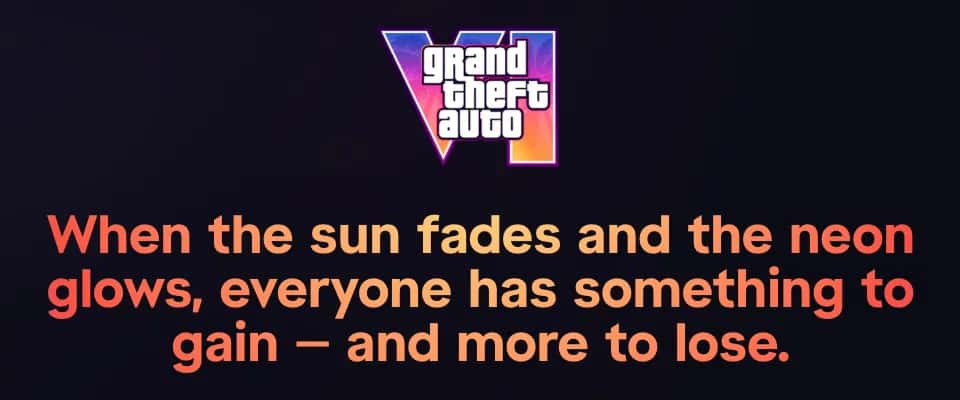
Business taglines usually do the opposite: they praise. “Quality service you can trust” names no tension and gives the reader nothing to feel. A better line names the gap between what the customer wants and what usually happens. A roofer might own “The roof nobody thinks about, because it never gives them a reason to”. When we write positioning for a brand, we start by asking customers what they were afraid of before they called, because that fear is usually the line.
How did the GTA 6 website grow with the campaign?
In chapters. Each version of rockstargames.com/VI was complete for its moment and carried only what the audience needed next. In December 2023, the page was one painted poster of the two leads and a button to watch the trailer. By May 2025, it was a new painting, a button for Trailer 2 and the first character dossiers. At launch, it became a whole state: the panel grid, a page of dossiers for eight characters and their home towns, a music page and a media library.
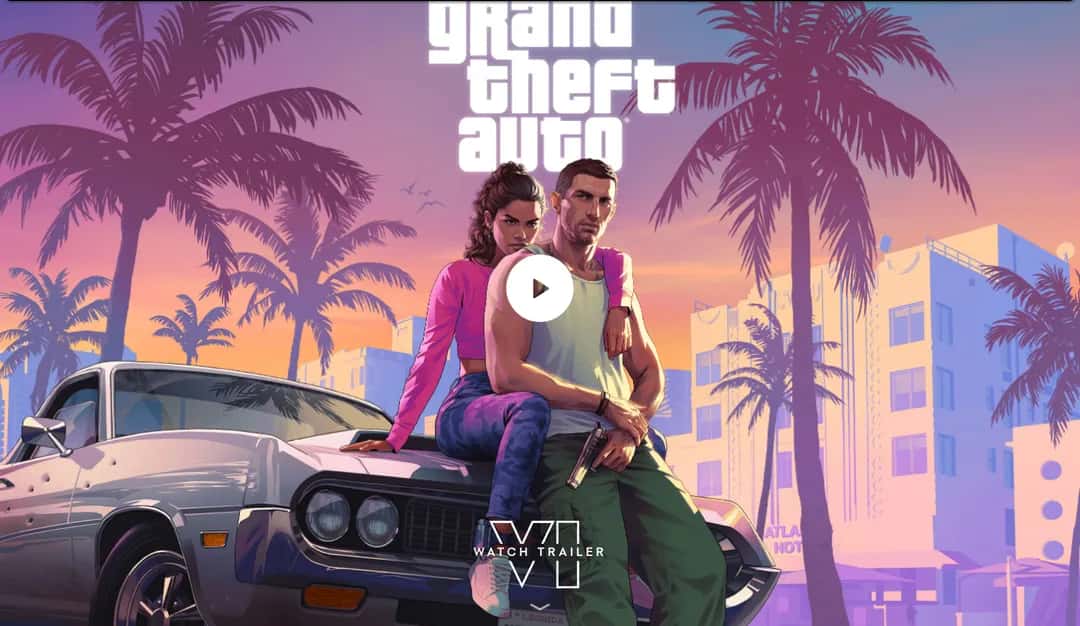
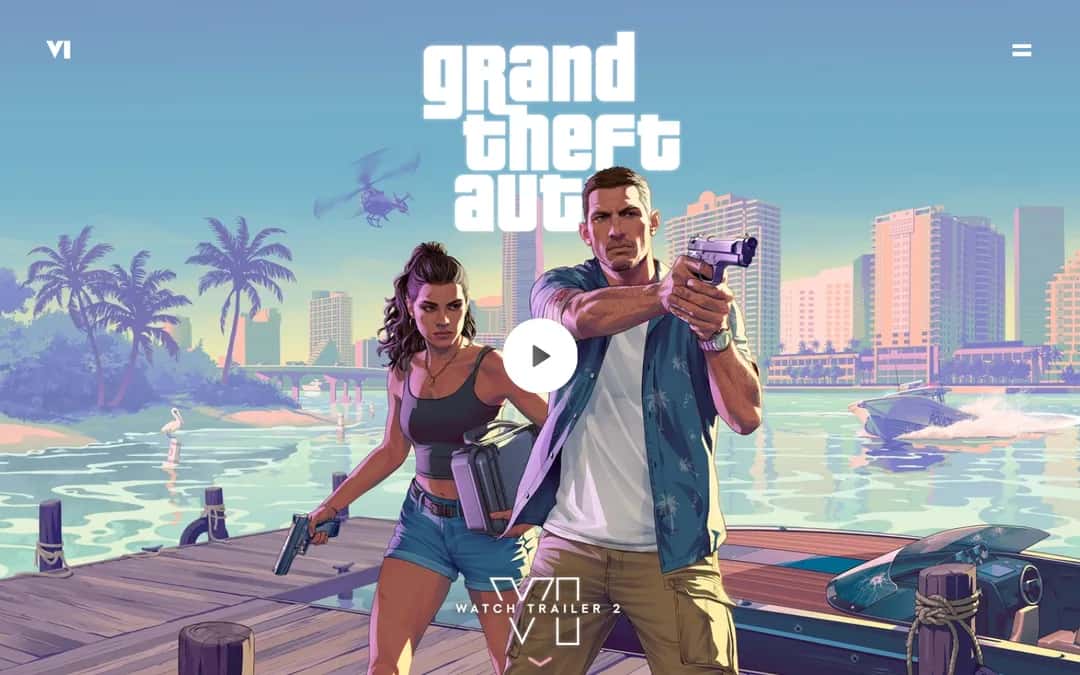
This is how we would build most business websites, and almost nobody does. The usual approach is to wait until every page is written, launch something enormous and let it go stale. Rockstar launched the smallest site that did the job, then added a chapter each time the story moved. For a new business, chapter one is the offer, the proof and the contact form. Chapter two adds case studies as jobs finish. Chapter three adds the team. Each version is finished, and none of them is the whole story. Our web design team plans sites this way.
Why does Rockstar make up every brand in the game?
So that nothing in its world belongs to anyone else. Take-Two’s chief executive said the game has no risk of product placement because all the brands are made up, and Creative Boom reported hundreds of parody brands written and designed in-house. The places are invented too, from Vice City to Port Gellhorn and Mount Kalaga, and so is the state, Leonida. Even the sound became owned: the first trailer used Tom Petty’s “Love Is a Long Road”, and by launch the game had an original score by Justice.
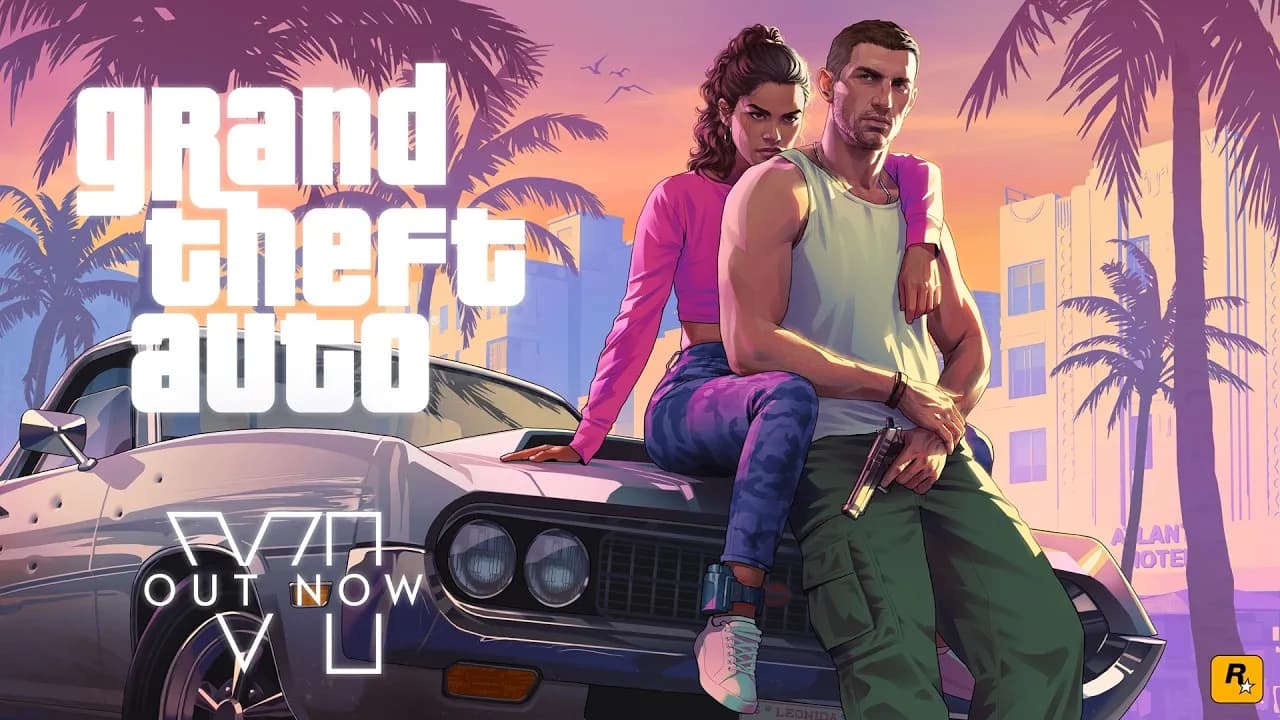
A business cannot invent a state, but it can own its vocabulary. Name the thing customers come to you for and use the name everywhere: the inspection, the guarantee, the signature dish. Use one voice in every channel. Commission your own photography instead of borrowing stock images. Every borrowed element is a place where your brand looks like someone else’s.
Why does Rockstar give its brand assets away?
Because every fan who uses them is distribution. The official media page offers screenshots, artwork and wallpapers to download, and print-ready versions of the game map and the cover art poster. Rockstar decides exactly how its brand looks, then hands that look to millions of people who want to put it on their walls, their phones and their own videos.
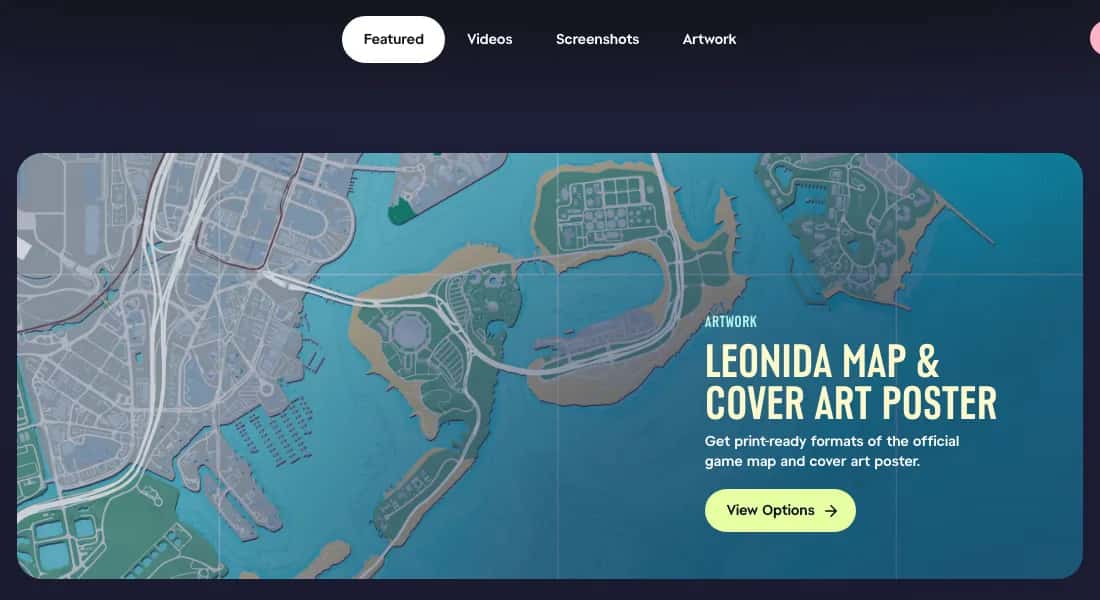
The small-business version is a press and partner page. Put your logo files, a few approved photos, a short description and your colors on one page anyone can reach. When a local paper writes about you, a supplier features you, or a customer shares your work, they use your brand as you designed it instead of a blurry screenshot.
What should a business borrow from GTA 6’s branding, and what should it leave?
Borrow the system, never the look. Neon sunsets and painted panels belong to Rockstar, and a business that imitates them only advertises someone else. What transfers is the method: pick a few codes, apply them everywhere, introduce your people with stakes, write a line with tension, build the site in chapters and give people your assets.
That is the brand work we do. When a pet store changed hands, we kept the Lil Pals’ name customers knew and rebuilt its wordmark and print kit around it. For the Veterans Transition Center, we built the design system that carries their existing logo across every application. Our guide on when a refresh is enough and when to rebrand helps you decide how much to change, and our branding team can take it from there.
Read the other two pieces in this series for the campaign from first trailer to launch and Rockstar’s approach to social media. If your brand needs a system rather than another logo, reach out today.
FAQ
Frequently asked questions
What colors does the GTA 6 website use?
On November 24, 2026, the official site set its text and buttons in light lavender, cream, pink, peach, lime and aqua over a near-black night ground (around #0D0C1A). The light colors vary by page; the dark ground stays constant.
Who are the main characters in GTA 6?
The two leads are Jason Duval and Lucia Caminos. The official Only in Leonida page also profiles Cal Hampton, Boobie Ike, Dre’Quan Priest, Real Dimez, Raul Bautista and Brian Heder.
Where is GTA 6 set?
In Leonida, Rockstar’s fictional state, which includes Vice City, the Leonida Keys, Grassrivers, Port Gellhorn, Ambrosia and Mount Kalaga.
What song is in the first GTA 6 trailer?
Tom Petty’s “Love Is a Long Road”, from the 1989 album Full Moon Fever.
Sources
- Rockstar Games: Grand Theft Auto VI official site (observed November 24, 2026)
- Rockstar Games: Only in Leonida character page (observed November 24, 2026)
- Rockstar Games: Grand Theft Auto VI media downloads (observed November 24, 2026)
- Internet Archive: rockstargames.com/VI, December 6, 2023
- Internet Archive: rockstargames.com/VI, May 2025
- GamesRadar+: Take-Two CEO on made-up brands and product placement, May 1, 2026
- Creative Boom: parody brands, murals and street artists, November 18, 2026
- Tom Petty: “Love Is a Long Road” featured in Trailer 1, December 6, 2023
- Rockstar Games: launch trailer and the Justice score, October 15, 2026
Keep reading
Related guides
Explore related work
Next steps
Let's talk about your project
Tell us what you're working on. We'll tell you if we can help — and exactly what we'd do.